How Much Does Underground Utility Installation Cost?
Underground utility installation in the Bay Area typically costs $15 to $60 per linear foot for a single line installed complete, with trenching alone running $5 to $40 per foot depending on depth, soil, and what sits on the surface. A short residential service run usually lands between $2,000 and $15,000. A commercial site utility package, with multiple lines, deeper cuts, and street restoration, routinely reaches six figures.
This is Total Underground Construction’s plain-language guide to what that money actually buys. We install water, sewer, storm, gas, electrical, and fire lines across the Bay Area every week under CSLB License 1094194, Class A General Engineering, so the ranges here come from the same math we use to build real bids.
When we say underground utility installation, we mean both the simple version and the hard one: a 60-foot power run across a lawn, and a joint trench down a San Francisco street with traffic control and an inspector watching the backfill. If you are a homeowner staring at a quote that seems high, a developer trying to pencil site work before you close on a lot, or a general contractor sanity-checking a sub’s number, the same cost logic applies to all three of you.
By the end of this guide you will know the 2026 per-foot ranges for each utility type, the six factors that move a quote up or down, when directional boring beats an open trench, and the Bay Area line items (permits, locates, traffic control, restoration) that national cost guides leave out. We have organized it in five parts: the cost ranges, the cost drivers, trenching versus boring, Bay Area specifics, and how to read a contractor’s quote. You can also skip the reading entirely and use the calculator above for an instant estimate on water and sewer lines.
Let’s start with the number everyone wants first: cost per foot, by line type.
2026 Cost Ranges by Utility Line
Each utility carries its own per-foot range because each is buried at a different depth, in a different material, with different testing and inspection requirements. The table below combines 2026 national cost-guide data from HomeGuide, Angi, and HomeAdvisor with the 15 to 25 percent premium we consistently see on Bay Area labor, permits, and disposal.
| Utility line | Trench-only cost per foot | Installed cost per foot | Typical residential project total |
|---|---|---|---|
| Electrical conduit (power) | $5 to $14 | $10 to $25 | $1,000 to $12,500 |
| Communications / fiber conduit | $5 to $12 | $5.50 to $25 | $600 to $5,000 |
| Gas line | $5 to $15 | $15 to $50+ | $1,500 to $10,000 |
| Water service line | $15 to $50 | $30 to $60 | $1,700 to $8,000 |
| Sewer lateral | $25 to $40 | $40 to $180 | $3,000 to $25,000 |
| Storm drain | $25 to $40 | $40 to $150 | Site-specific |
| Fire service line | $25 to $50 | $50 to $150+ | $5,000 to $30,000+ |
Two honest caveats. First, these are planning ranges, not quotes; nobody can price a trench without knowing what is above it and below it. Second, the per-foot number is only part of your total. Mobilization, permits, and surface restoration are often billed separately, and on short runs those fixed costs can matter more than the footage. That is exactly why we built our cost calculators: they model the add-ons national averages skip. The calculator above handles water and sewer lines; for fire protection, our commercial fire sprinkler cost calculator does the same job for sprinkler systems.
What Actually Moves the Price of a Utility Trench
Six factors control most of the spread in the table above: depth, surface material, soil conditions, access, groundwater, and restoration requirements. Length matters less than people expect, because a longer run spreads fixed costs over more feet and usually lowers the per-foot rate.
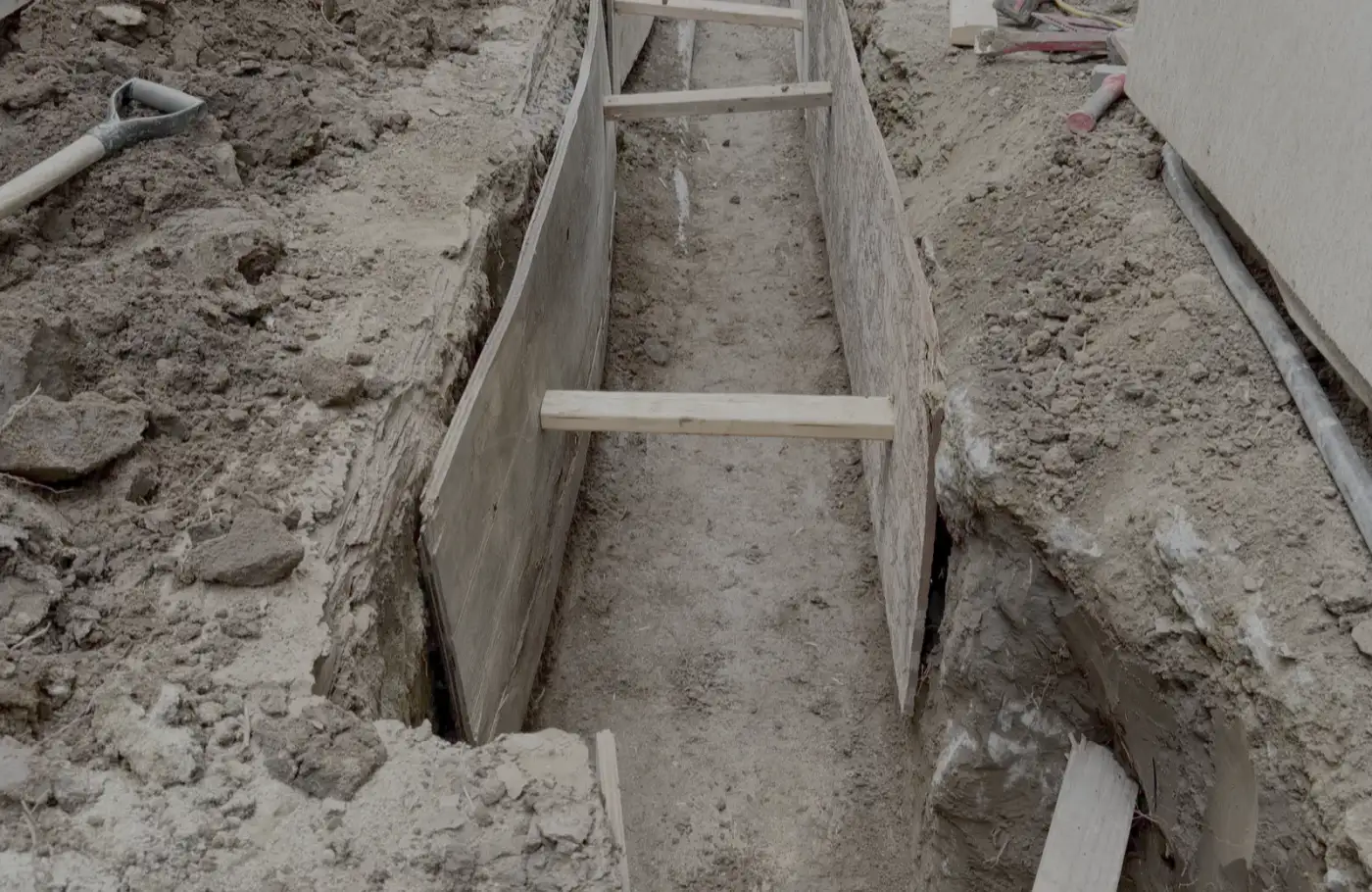
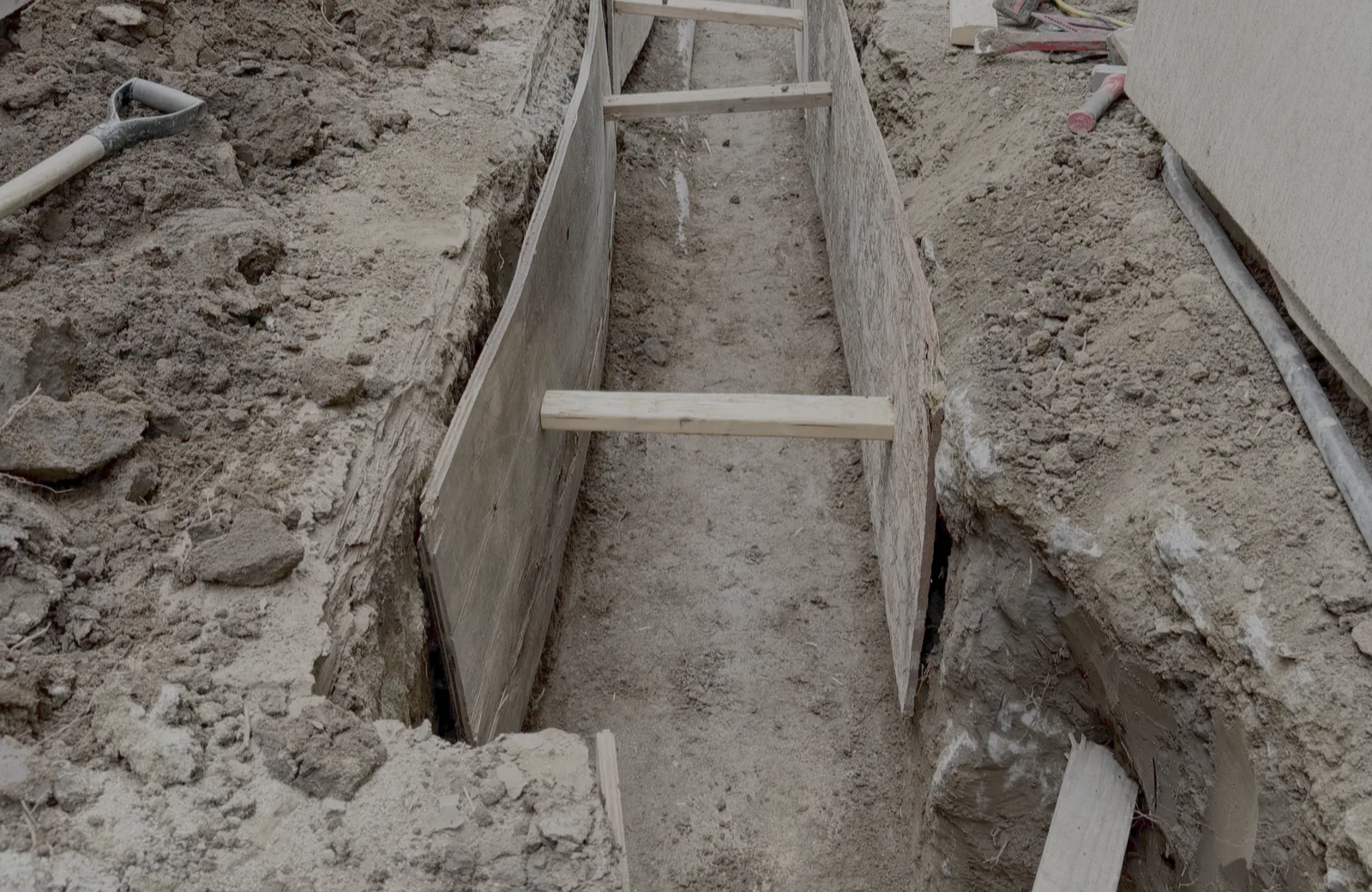
Depth. Every utility has a minimum burial depth, and depth is the strongest single driver because deeper cuts mean more spoils, more shoring, and more compaction on the way back.
| Utility | Typical burial depth (cover) |
|---|---|
| Gas service | 24 inches minimum |
| Electrical service | About 30 inches |
| Water service | 30 to 42 inches |
| Gravity sewer | 4 to 10 feet, set by the grade needed to reach the main |
Local codes and utility specifications control the final number. For power runs, our guide to installing underground electrical conduit up to code shows what those requirements look like in practice.
Surface material. The cheapest trench is the one through open ground. Cutting and restoring hard surfaces raises the rate fast:
| Surface being cut | Trenching cost per foot | Restoration add-on per foot |
|---|---|---|
| Dirt or lawn | $5 to $12 | Minimal |
| Asphalt | $12 to $24 | $4 to $12+ |
| Concrete | $15 to $30 | $4 to $12+ |
| Mixed surfaces | $18 to $36 | $4 to $12+ |
Soil. Bay Area soil is its own line item. East Bay adobe clay digs slow and compacts stubbornly, hillside lots from Oakland to San Carlos hit rock, and anything near the shoreline can put you in groundwater by four feet. Each of those adds equipment time, and equipment time is the core of every excavation bill.
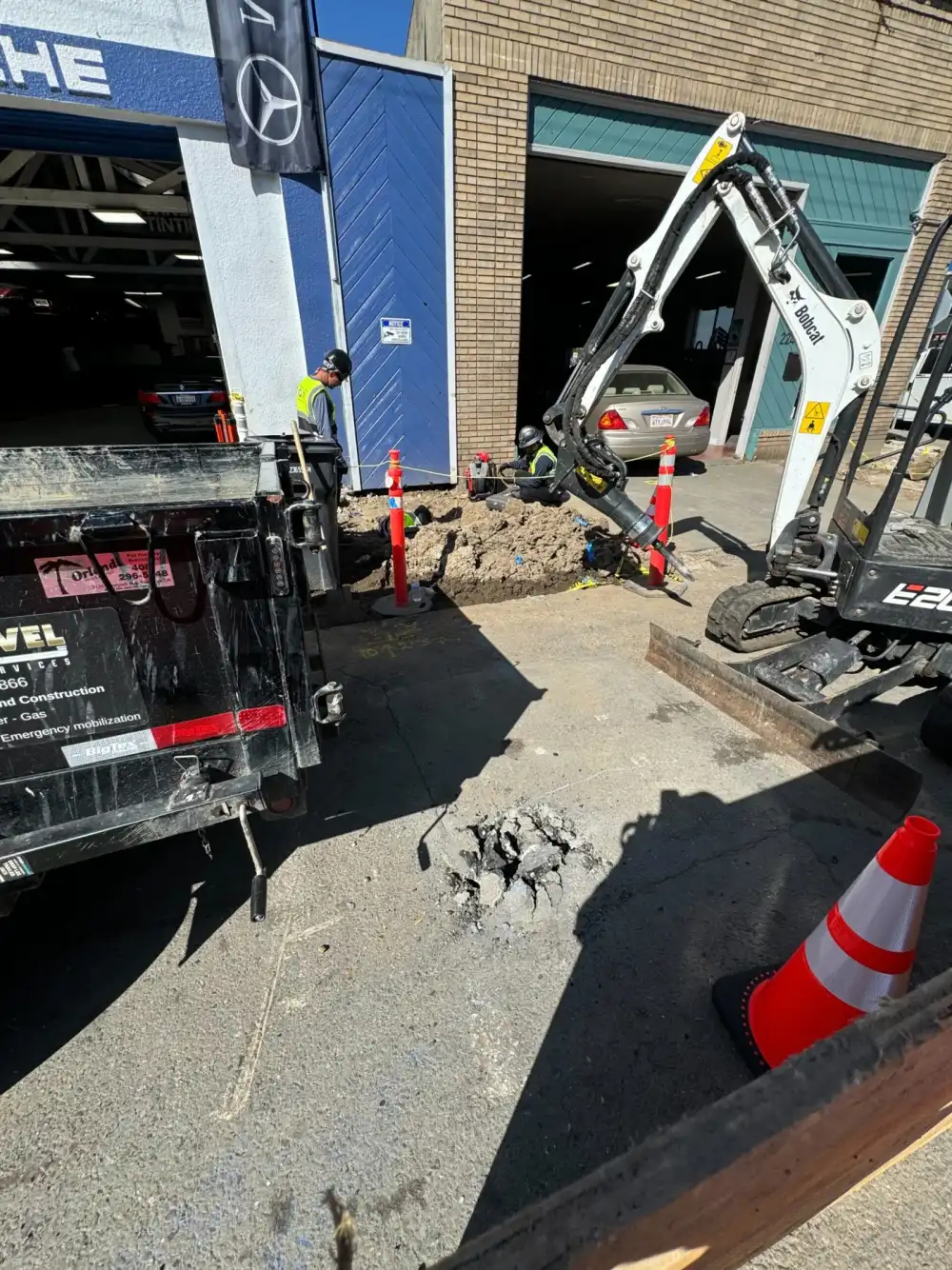
Say you are a San Leandro homeowner who needs a new 60-foot water service, and 20 of those feet run under a concrete driveway. The 40 feet of lawn might price at $25 per foot, while the driveway section prices at $45 plus concrete replacement. The line itself did not change; the surface did. That one detail is why two neighbors with identical pipe lengths can get quotes $4,000 apart. And if your project is replacing a failing line rather than running a new one, our guide to water line repair costs walks through that version of the math.
Open Trench vs. Directional Boring: Which Costs Less?
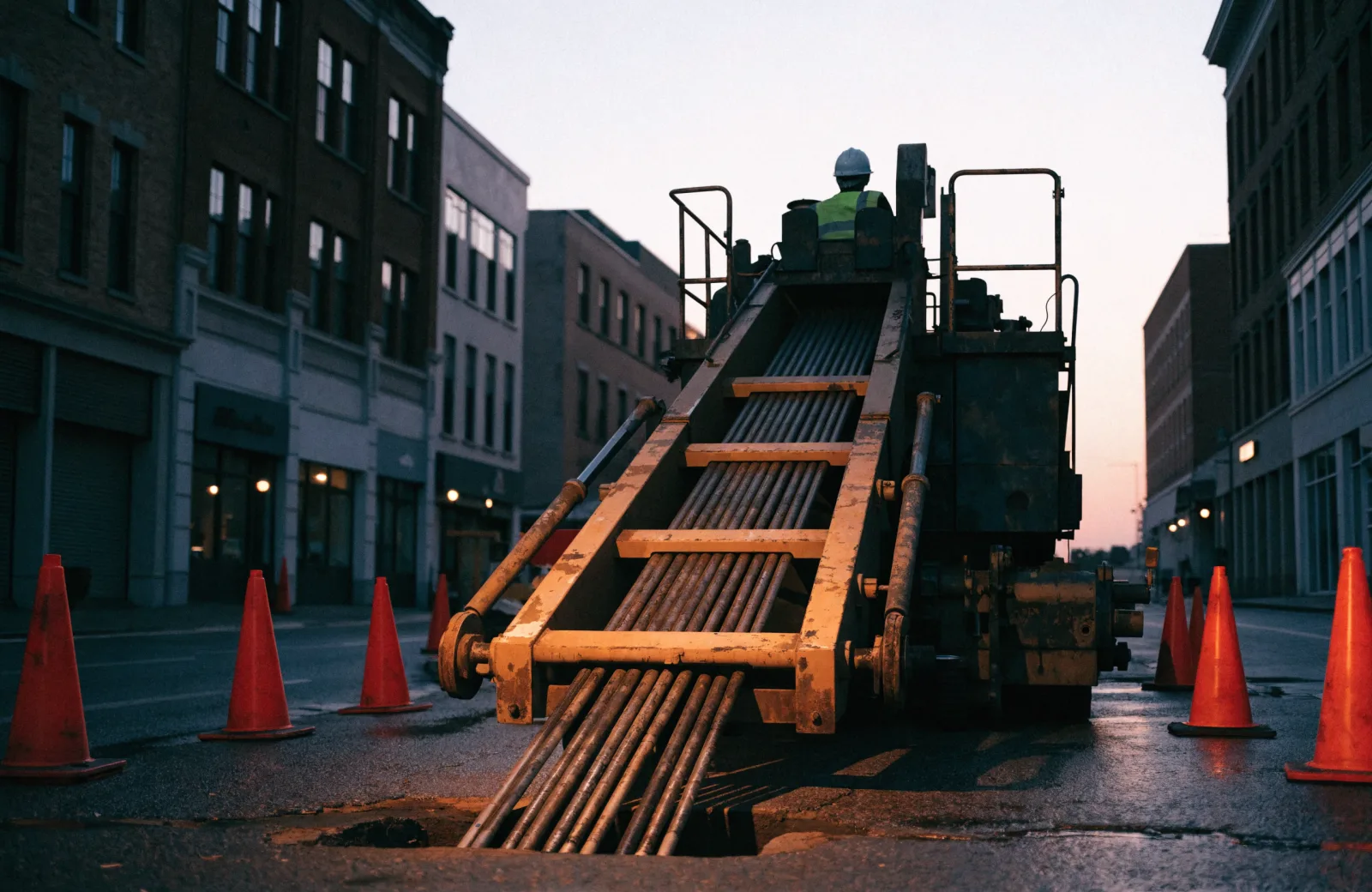
Open-cut trenching is cheaper per foot ($5 to $12 in soft ground), while directional boring costs $10 to $30 per foot in normal soil and $25 to $100+ in rock or congested corridors. But the per-foot comparison is misleading: boring needs no surface demolition and almost no restoration, so on developed property the total for boring frequently comes in below the total for trenching.
The decision usually forks on what is on the surface:
- If the route crosses open lawn or dirt, trench it. You pay the lowest rate there is, and restoration is a rake and some seed.
- If the route crosses a driveway, mature landscaping, a patio, or a public street, get a boring price. Avoiding a street cut also avoids traffic control, plating, slurry seal requirements, and several weeks of encroachment paperwork.
Picture a small developer in Hayward running 120 feet of new gas and electric to a backyard ADA-compliant duplex, with a city sidewalk and a neighbor’s shared driveway in the path. An open cut would need two concrete cuts, plates, and full flatwork restoration, roughly $6,000 in surface work before any pipe goes in. A bore at $28 per foot costs more per foot and still saves about $2,500 total, and the neighbor keeps their driveway. That is the pattern: boring wins whenever the surface is worth more than the dirt. Our directional boring cost guide breaks the per-foot pricing down by soil and crossing type.
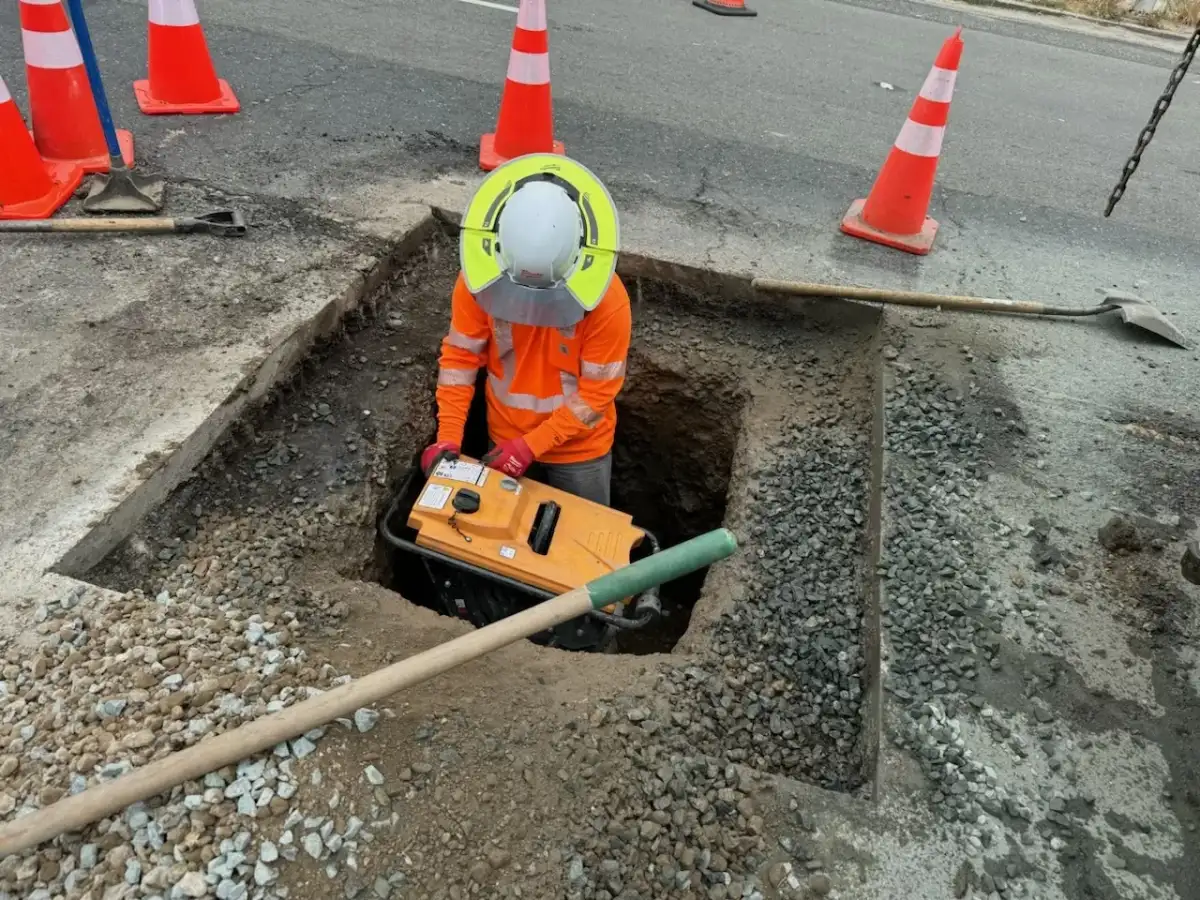
For sewer laterals specifically, where pipe bursting and lining also enter the picture, our trenchless vs. traditional sewer repair comparison covers that decision on its own.
We run both methods in-house, which means our recommendation is not tied to the only machine we own. Some contractors only trench, and their advice tends to follow their equipment.
The Bay Area Cost Factors National Guides Skip
Plan on $1,000 to $5,000 of your Bay Area utility budget going to items that never appear in national per-foot averages: permits, utility locates, trench safety compliance, and traffic control. On small projects these fixed costs can be 20 to 30 percent of the total.
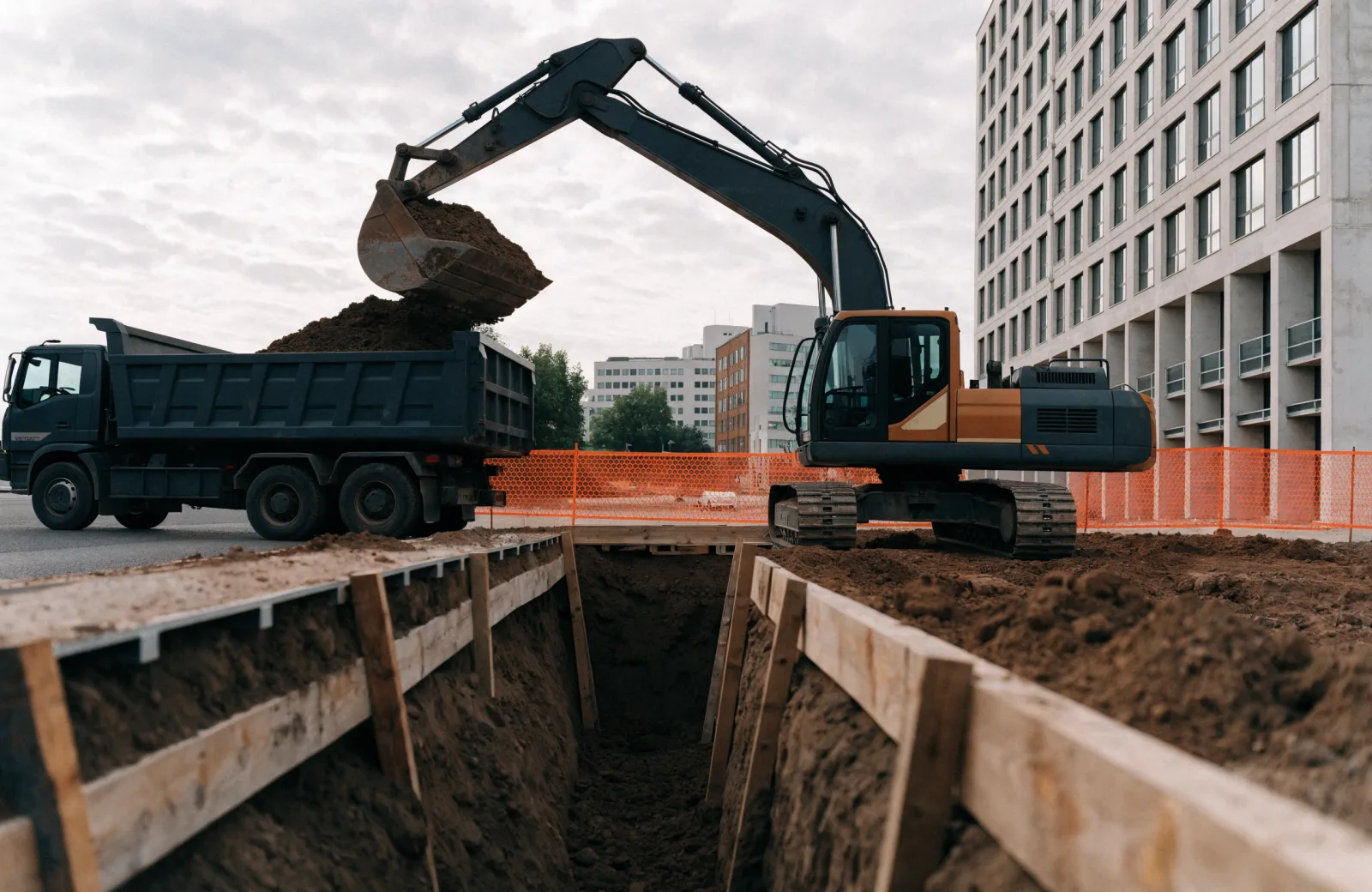
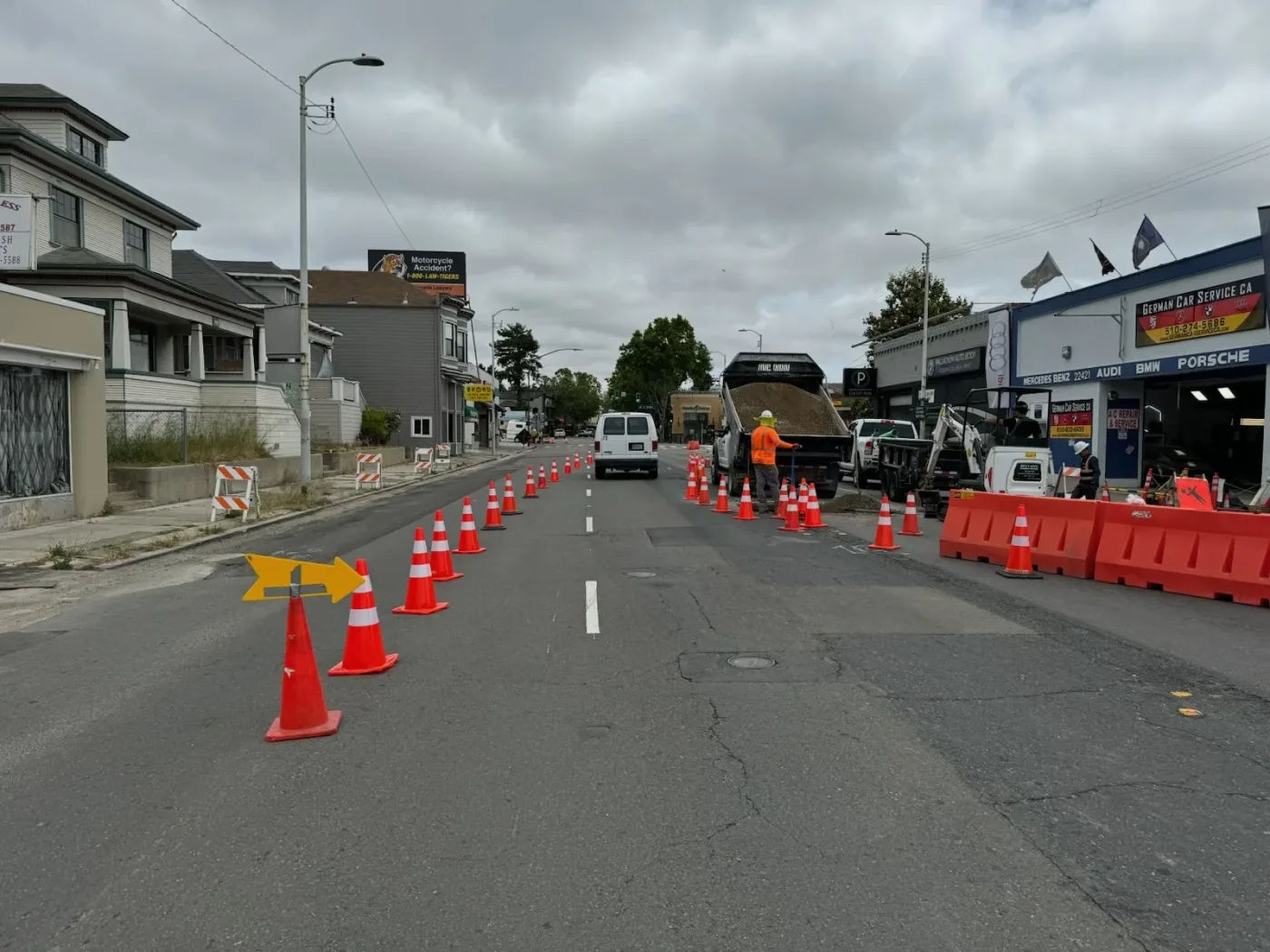
Permits. Most cities charge $500 to $2,000 for excavation or plumbing permits, and any work in the public right-of-way (which includes most water, sewer, and gas tie-ins) needs an encroachment permit on top. San Francisco and Oakland add traffic control plans and, in some corridors, moratorium streets you cannot cut at all without special approval.
Utility locates. California law requires calling 811 before any dig so existing lines get marked. The marking service through USA North 811 is free, but the two-working-day wait has to be built into the schedule, and potholing to verify a marked line’s exact depth is billed time.
Trench safety. Under Cal/OSHA rules, trenches five feet or deeper that a worker will enter require protective systems, and excavations of that depth need a permit from the California Division of Occupational Safety and Health before work starts. Shoring, benching, or a trench box adds real cost, and a contractor whose bid ignores it is telling you something about how they operate.
Wet season. From roughly November through March, rain can shut a trench down, pump-outs get billed, and compaction tests fail in saturated soil. If your project can wait for the dry season, your budget benefits.
How a Joint Trench Cuts the Per-Foot Cost
A joint trench, one excavation shared by electric, gas, and communications lines, is the single biggest cost saver in underground utility work, often cutting 30 to 40 percent versus digging separate trenches for each line. You pay for one mobilization, one cut, one backfill, and one restoration instead of three.
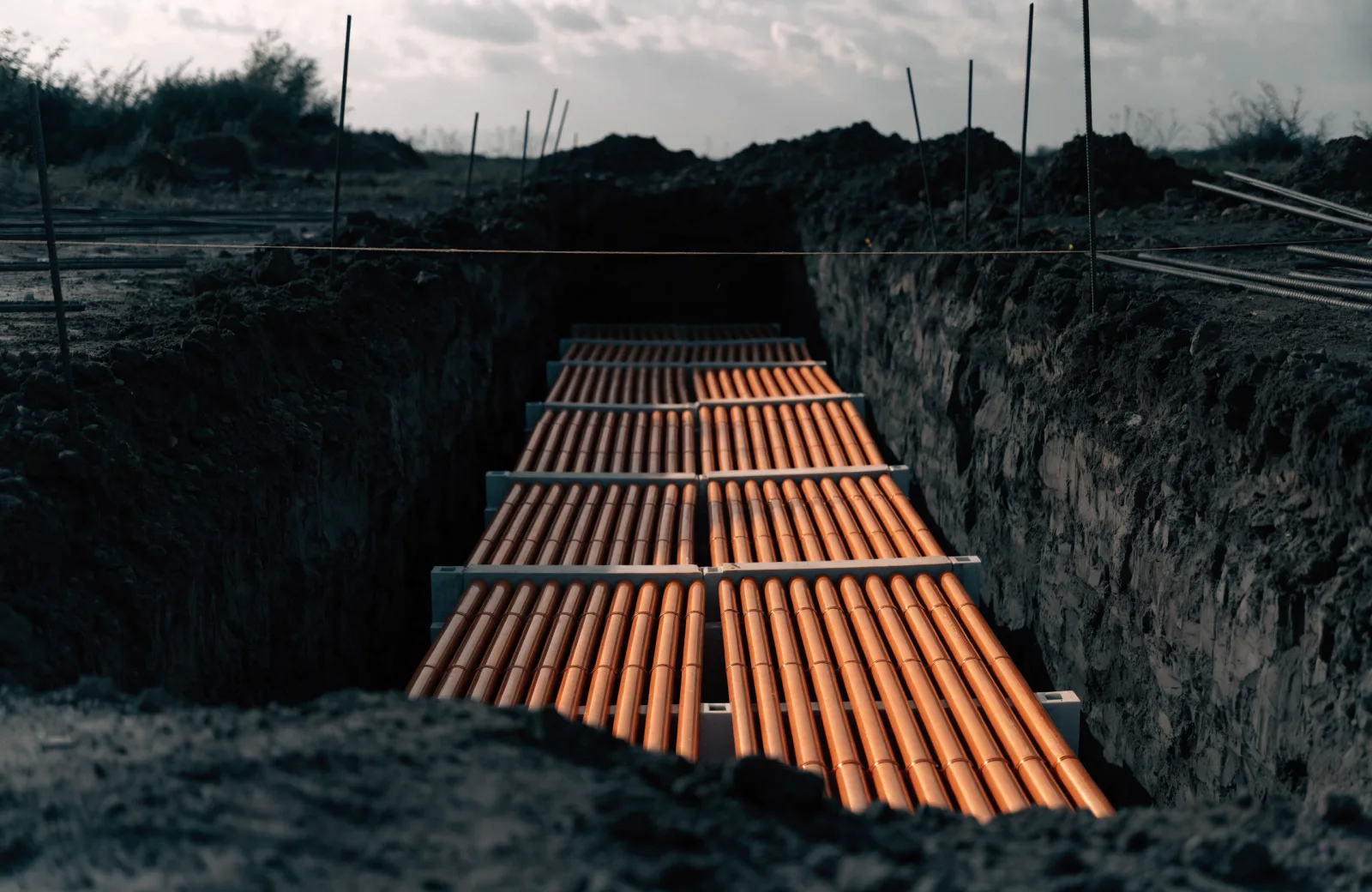
PG&E’s new-service process is built around joint trenches for exactly this reason: the utility supplies the specifications for separation and depth, and your contractor digs one compliant trench to serve everything. Our guide to PG&E applicant installation covers who digs what under PG&E’s Rules 15 and 16 and how the inspections run. Our PG&E gas line services team handles that coordination, including the inspections. The savings compound on longer runs.
Imagine a general contractor pricing site utilities for four townhomes in Fremont, with 200 feet from the street to the back units. Trenched separately, power, gas, and fiber might each run $18 to $25 per foot, roughly $12,000 to $15,000 combined. As a joint trench at $30 to $38 per foot, the same scope lands near $6,000 to $7,600. Same lines, same depths, one hole. If you are getting separate bids from an electrician, a plumber, and a low-voltage sub, nobody may be pricing the joint trench unless you ask for it.
The deciding factor is timing: a joint trench only works if the utilities are planned together. If the gas line is going in this month and the electrical upgrade is “someday,” you lose the savings. Sequence the project so everything that can share the trench does. Our joint trench guide for developers covers the PG&E separation rules and site sequencing that decide whether the savings hold.
How to Read an Underground Utility Contractor’s Quote
Work crossing a street or a public right of way needs a Class A General Engineering licence, which is the scope covered on our underground construction services page.
A trustworthy underground utility quote itemizes at least six things: mobilization, excavation, pipe and materials, backfill and compaction, surface restoration, and permits or locates. A single lump-sum line that says “install water line” makes it impossible to compare bids, and impossible to see what happens to the price when something changes underground.
The fear of being overcharged is reasonable here, because most people buy this work once or twice in a lifetime and have no benchmark. The fix is not haggling; it is comparing scope. One bid that excludes restoration will always look cheaper than the bid that includes it, right up until the change order arrives.
There is also a format fork worth knowing. For a defined short run, a fixed price with a rock or groundwater contingency clause protects you best. For longer or less predictable work, unit pricing (a rate per foot, per depth band) is fairer to both sides, because you only pay for the conditions actually encountered. If a contractor offers only one format regardless of project, ask why.
Before you sign anything:
- Get two or three itemized bids for identical scope, and reject any that will not itemize. Our breakdown of the Bay Area’s top underground utility companies is a fair place to build that shortlist.
- Verify the license class at the CSLB. Underground utility work in the right-of-way is Class A General Engineering territory, not a handyman job.
- Ask who pulls the permits and schedules the 811 locates. The answer should be the contractor.
- Ask what happens if the crew hits rock, groundwater, or an unmarked line, and get the mechanism in writing.
Fifteen minutes of comparing itemized scope usually saves more than any negotiation will.
Frequently Asked Questions
How much does it cost to trench 100 feet for utilities? Around $500 to $1,200 for the trench alone in open ground, based on 2026 national averages of $5 to $12 per foot. With Bay Area labor rates, difficult soil, or hard surfaces in the path, 100 feet can run $1,500 to $4,000 or more before the utility itself is installed.
How deep do underground utilities need to be buried? Typical minimums are 24 inches of cover for gas services, about 30 inches for electrical, 30 to 42 inches for water services, and 4 to 10 feet for gravity sewer depending on the grade needed to reach the main. Local codes and utility standards control, so your contractor should confirm depths during design.
Is directional boring cheaper than trenching? Per foot, no: boring runs $10 to $30 per foot versus $5 to $12 for open-ground trenching. Per project, often yes: boring avoids surface demolition, restoration, and traffic control, so under driveways, landscaping, or streets the total is frequently lower.
Do I need a permit to trench on my own property in the Bay Area? Almost always, yes. Utility work typically requires a plumbing, electrical, or excavation permit even on private property, and an 811 locate request is required by California law before any dig. Work touching the street or sidewalk adds an encroachment permit.
How long does underground utility installation take? A simple residential service run usually takes one to three days including inspection. Bores, street cuts, and multi-line site packages run one to several weeks, with permits and utility coordination, not digging, consuming most of the calendar.
Get an Exact Number from Total Underground Construction
Ranges get you a budget; a site walk gets you a price. Total Underground Construction installs water, sewer, gas, electrical, and fire lines across the Bay Area with in-house trenching and boring crews, which means one contractor, one trench plan, and one accountable number. Start with the calculator above for a fast estimate, then request a free on-site estimate through our underground construction services team and we will put a firm number on your exact site conditions.