The best underground utility construction companies in the Bay Area for commercial, developer and public work are the ones you can check: an active Class A license, their own crews doing the underground work, and a record of public agency contracts. The five companies below meet all three tests, and every fact about them links to its source. They are listed alphabetically, not ranked.
Disclosure: Total Underground Construction (Total UC), an underground contractor in San Leandro, publishes this page. That is why Total UC is not on the list. A short, separate note about us sits at the end, after the list.
This page is for developers lining up site utilities, general contractors building a bid list, owners and managers of commercial property with a main, lateral or fire line to replace, and public agency staff who want to know who else is out there. If you need a plumber for a house, this is the wrong list.
How we chose these companies
Every company here passed three tests, checked between 1 and 4 October 2026. We did not score price, reviews or company size, because none of those tell you whether a firm can legally and competently build your underground scope.
- The company holds an active license from the California Contractors State License Board (CSLB) that includes Class A, General Engineering. The CSLB defines Class A work as fixed works that need specialized engineering knowledge and skill, and its list of covered work names sewers, sewage systems, water supply and pipelines (CSLB classification descriptions). We also note other classes each company holds.
- The company’s own website describes underground utility work (water, sewer, storm drain, gas, electric or joint trench) as its business, and says the work is done by its own crews, workforce or equipment fleet. We link that page for each company.
- The company has at least one underground contract with a Bay Area public agency, shown in the agency’s own award, resolution log, staff report or announcement.
A company also had to be based in the nine Bay Area counties. We left out Total UC, because we publish the page, and Next Level Plumbing, a Total UC partner.
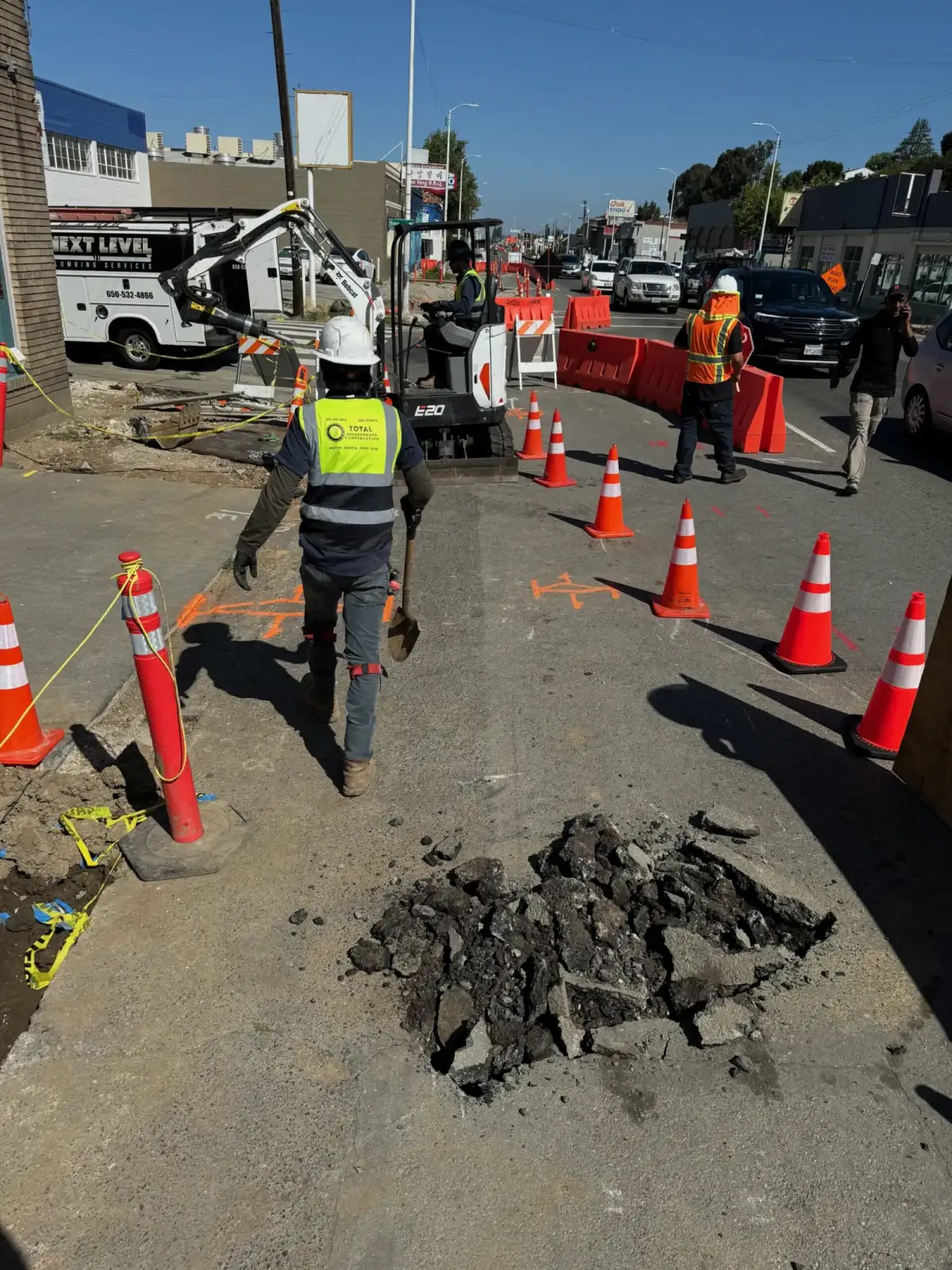
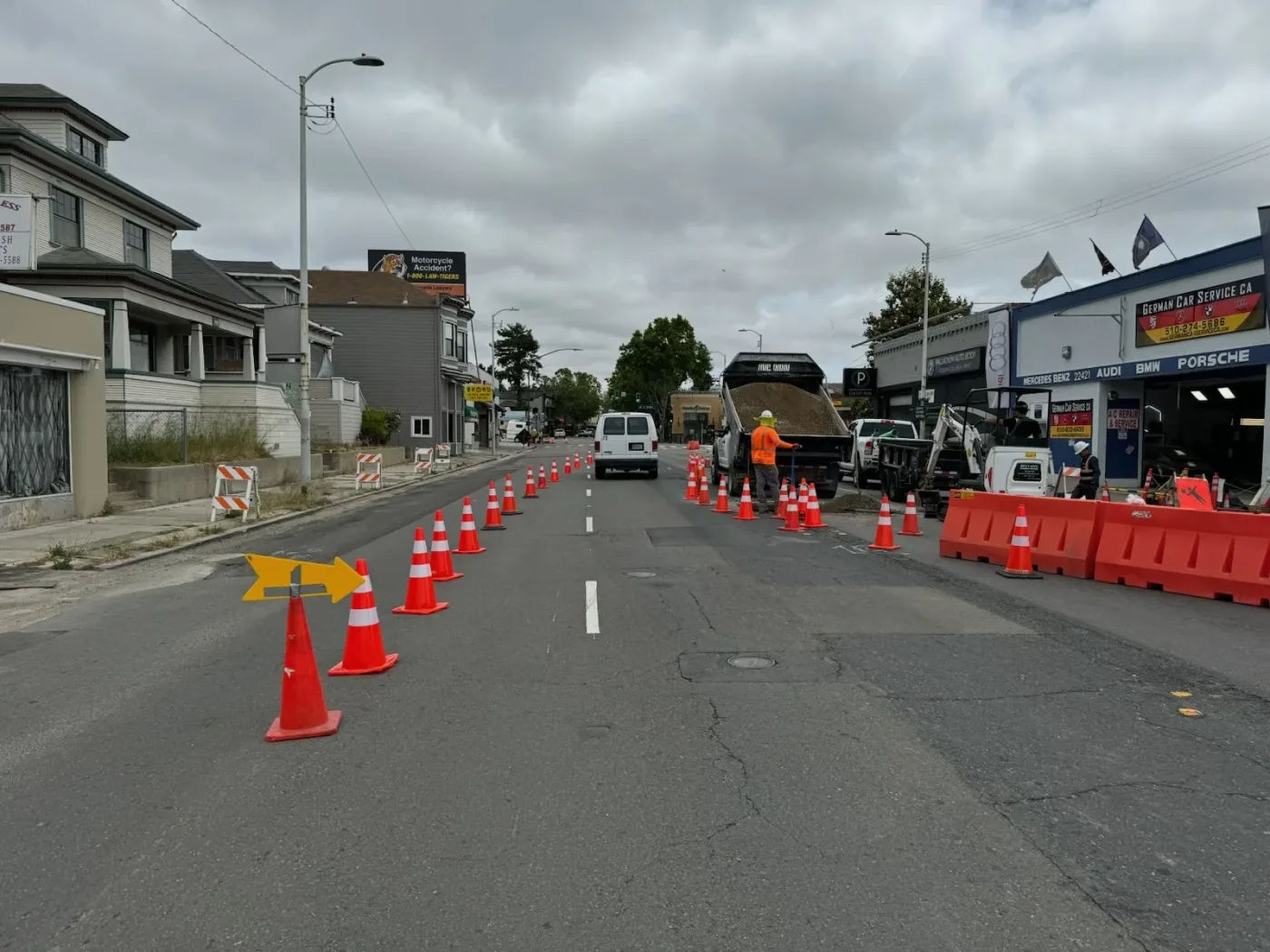
A Total UC street utility job in San Leandro. Photos on this page are of our own work, not of the companies listed.
Picture a project manager at a Peninsula developer who searches “underground construction companies” and gets a directory of 15 names. Nothing on that list separates the excavation sub from the firm that has built water mains to a city’s standards. The three tests above are the quickest way to make that cut.
What the list does not tell you: whether a company has room for your job this quarter, what its bonding limit is, or how it prices. You still need to ask those questions, and the checklist further down shows how.
Bay Area underground utility contractors at a glance
| Company | Base | CSLB license and classes | Underground work it describes | Public agency record |
|---|---|---|---|---|
| A. Ruiz Construction Co. & Associates | San Francisco | #427657: A, B | Underground utilities, earthworks, emergency response | SFPUC water main (2023) and sewer (2025) contracts |
| DALEO, Inc. | Gilroy | #458944: A, C-10 | Water, gas, electric and telecom | City of Palo Alto water main contract (2015) |
| Ghilotti Construction Company | Santa Rosa | #644515: A, C-8, C-12, C-21, C-42 | Storm drains, water and sewer lines, joint trench | Sonoma County $14.8 million infrastructure contract (2024) |
| JMB Construction, Inc. | South San Francisco | #715324: A | Sewer, storm, water, gas and fuel pipelines | SFPUC water main and service line contracts (2023) |
| K.J. Woods Construction, Inc. | South San Francisco | #701797: A, B | Water mains, sewers, storm drains, trenchless | SFPUC sewer and water contracts (2024, 2025) |
All five licenses showed as current and active on the CSLB website on 4 October 2026. SFPUC is the San Francisco Public Utilities Commission.
The five companies, with sources
A. Ruiz Construction Co. & Associates (San Francisco)
A. Ruiz describes itself as a general engineering and building contractor with expertise in civil engineering, seismic upgrading, earthworks, underground utilities, demolition and emergency response (company homepage). Its careers page talks about working “directly in the field with our crews and supervisors” (careers), and the company says it has been incorporated since 1978 (business profile).
- CSLB #427657, Classes A and B, expires September 2028 (CSLB record).
- SFPUC awarded A. Ruiz Contract WD-2848, an 8 inch ductile iron water main replacement on Gold Mine Drive, for $7,750,985 on 20 September 2023 (SFPUC 2023 resolution log), and Contract WW-730, Various Locations Sewer Replacement No. 18, for $7,745,522 on 24 June 2025 (SFPUC 2025 resolution log).
- Best suited to San Francisco water main and sewer replacement, and public agency work that needs a contractor with both A and B licenses.
DALEO, Inc. (Gilroy)
DALEO says it “performs all facets of underground construction” in the Bay Area, Sacramento Valley and Central Valley, with its own managers, supervisors, skilled operators and utility workers. Its work covers water, gas, electric and telecom, including directional drilling, rocksaw trenching and vault placement. The company started in Oklahoma in 1979 and set up in the Bay Area two years later (about DALEO).
- CSLB #458944, Classes A and C-10 (Electrical), expires September 2028 (CSLB record).
- The City of Palo Alto approved a water main replacement contract with DALEO (Water Main Replacement Project 25) on 23 February 2015, and a later 2015 change order for emergency water main work raised the not to exceed amount to $4,599,031 (Palo Alto staff report). This is the oldest record on the page; we did not find a newer agency document.
- Best suited to South Bay dry and wet utility installs where one firm handles gas, water, electric and telecom.
Ghilotti Construction Company (Santa Rosa)
Ghilotti Construction Company (GCC) says it self-performs the critical parts of its projects, including grading, excavating and paving, storm drains, water lines, sewer lines and underground utilities, with its own craft workforce (self-perform page). Its underground work includes sewer lines and pump stations, joint trench, water lines and storm drains (underground page). The company traces its roots to a Marin County stone masonry business started in 1914 (history) and is employee owned (about).
- CSLB #644515, Classes A, C-8, C-12, C-21 and C-42, expires May 2028 (CSLB record).
- In May 2024 Sonoma County awarded GCC a $14.8 million contract to build sewer lines, utilities, streets and other infrastructure for the Tierra de Rosas development in Roseland (Sonoma County announcement).
- Best suited to North Bay and regional site development where one contractor self-performs the wet utilities, joint trench and site work.
- Ghilotti Construction Company (Santa Rosa) and Ghilotti Bros., Inc. (San Rafael) are separate companies with separate licenses. An earlier version of this page mixed them up.
JMB Construction, Inc. (South San Francisco)
JMB says it has over 100 employees and a large equipment fleet, and that it focused mainly on pipeline construction in its early days after starting in 1990 (about JMB). Its services include sewer, storm, water, gas and fuel pipelines (services).
- CSLB #715324, Class A, expires November 2027 (CSLB record).
- SFPUC awarded JMB Contract WD-2889, As-Needed Water Service Line Replacements, for $26,663,850 on 24 January 2023, and Contract WD-2801, water main replacement, earthquake resistant ductile iron main installation, sewer replacement and paving on York and Hampshire Streets, for $18,353,105 on 14 February 2023 (SFPUC 2023 resolution log).
- Best suited to Peninsula and San Francisco water and sewer pipeline work, including water service line replacement programs.
K.J. Woods Construction, Inc. (South San Francisco)
K.J. Woods says it keeps a fully trained workforce, owns a fleet that includes excavators, trenchless drilling and pipe bursting rigs, and runs its own repair and maintenance facilities. Formed in 1994, it has built wet and dry utilities, sanitary sewers, storm drains and water mains up to 72 inches in diameter, using open cut, slip lining, pipe bursting and horizontal directional drilling (about K.J. Woods).
- CSLB #701797, Classes A and B, expires January 2027 (CSLB record).
- SFPUC accepted K.J. Woods’ work on Contract WW-711, Wawona Area Stormwater Improvement and Vicente Street Water Main Replacement, at a final $29,164,740 on 9 April 2024 (SFPUC 2024 resolution log), and awarded it Contract WW-741R, Various Locations Spot Main Sewer Replacement No. 1, for $6,188,000 on 28 January 2025 (SFPUC 2025 resolution log).
- Best suited to San Francisco sewer, storm and water main work where trenchless methods are on the table.
Companies we checked that did not make the list
Several well known names did not meet all three tests on the dates we checked. For each one we could not document at least one test from a primary source, which says nothing about the quality of their work.
- Underground Construction Co., Inc. (Benicia) holds an active Class A license (CSLB #760750), but its website describes gas and electric distribution, airport fueling and telecom work rather than water, sewer or storm (company site). We found no Bay Area agency underground contract.
- Ghilotti Bros., Inc. (San Rafael), McGuire and Hester (Oakland), Pacific Underground Construction (San Jose) and Sheeran Pipeline (San Francisco) all hold Class A licenses and describe their own underground crews or workforce, but we did not find an agency award document for underground work.
- Ranger Pipelines, Mountain Cascade and Preston Pipelines have large public pipeline records or licenses that fit, but we could not document every test (an own-crew statement, or a Bay Area agency award) from a primary source.
- Cratus, Precision Engineering and D’Arcy & Harty have no working company website describing their scope, so they failed test 2.
- Express Plumbing and Bay Area Trenchless were on an earlier version of this page. Both hold Class A licenses (CSLB #778428 and #631706), but we did not document a public agency underground contract for either on the dates we checked.
If a company above sends us the missing document, we will check it and update the page.
How to check any underground contractor yourself
You can verify the three things that matter most in about 15 minutes, and you should do it for every name on your bid list, including the five above. Licenses lapse, insurance expires and companies change hands.
- Search the company on the CSLB license check. Confirm the status is active, Class A (or C-34 Pipeline for pipeline-only scope) is listed, and the workers’ compensation policy is current.
- Check public works registration. Any contractor who bids or performs public work in California must register with the Department of Industrial Relations (DIR). Registration costs $400 and covers one fiscal year, July 1 to June 30 (DIR public works FAQ), so confirm it is current for this year.
- Ask what they self-perform, and get it in writing: which parts of your scope their own crews do, and which they subcontract. Paving, traffic control, boring and testing are the usual subs. For what boring adds to a bid, see our directional boring cost guide.
- Ask for two comparable jobs with the same pipe type, similar depth and a similar agency or owner. Call the owner’s inspector or project manager as well as the general contractor.
Picture a developer in Fremont with a 40 unit townhome project. Two underground bids come in $180,000 apart. Read the exclusions and the cheaper one leaves out the street tie-in, traffic control and the city’s encroachment permit. That $180,000 comes back as a change order in month three. Our underground utility installation cost guide breaks down what a complete bid should include.
Which kind of underground contractor fits your project
The right contractor depends on who will own the finished pipe and who is paying for it. Sort your project first, then build the bid list.
- If you are a developer with a new subdivision or commercial pad, you need a Class A firm that handles wet utilities (water, sewer, storm) and, ideally, joint trench for electric, phone and cable in one mobilization. Ask whether they have built to your water district’s standards, because the district inspects and then owns the main.
- If you are a public agency, or a prime bidding public work, filter for DIR registration first, then for a track record with agencies like yours. Expect prevailing wage, certified payroll and the agency’s own inspectors on every public job.
- If you own a commercial building and need one lateral, water service or fire line replaced, a large heavy civil firm may not bid a job that small. Look for a smaller Class A or C-34 contractor that does service work, and confirm they will pull the city or district permit.
- If your job is PG&E gas or electric service work, ask about the PG&E Applicant Installer program and the Operator Qualification (OQ) records of the actual crew doing the work. Our page on PG&E trenching and conduit installation shows what those OQ records look like.
Say you manage a business park in San Leandro and the fire marshal flags a failing underground fire line. A heavy civil firm that builds large transmission mains may not even bid it. You need a contractor that does underground fire service work on commercial sites and will pull the permit itself.
If your project is an existing line that needs inspecting, cleaning or lining rather than new construction, our list of pipeline inspection and maintenance companies covers that work.
Underground utility contractor FAQ
What license does an underground utility contractor need in California?
Most underground utility work on public and commercial sites is done under a Class A General Engineering license, which the CSLB says covers sewers, water supply and pipelines. A C-34 Pipeline license covers installing pipelines for water, gas or petroleum, including the trenching, boring, shoring and backfill. A C-42 Sanitation System license covers storm drains and sewage disposal structures. Check the classification on the CSLB license lookup before you sign.
Do underground contractors have to call 811 before digging?
Yes. California law requires anyone excavating to notify the regional notification center at least two working days, and no more than 14 calendar days, before digging, except in an emergency (Government Code 4216.2). In Northern California that center is USA North 811. Our guide to subsurface utility engineering explains how crews map lines beyond the 811 marks.
How do I know if a contractor can bid public works?
Search the company on the DIR public works contractor registration lookup. California requires contractors and subcontractors who bid or perform prevailing wage public work to register with DIR each fiscal year.
Are these companies ranked?
No. They are listed alphabetically. Each one passed the same three tests, and which one fits best depends on your scope, location and owner, as the section on project types explains.
Why is Total UC not on this list?
Because Total UC publishes it. A company ranking itself in its own “best of” list is not a fair test, so we left ourselves out and kept the criteria public.
Where Total UC fits
Total UC is not on the list above because we wrote it, but if you are building a bid list you may want one more number to call. Total Underground Construction holds CSLB license #1094194, Class A General Engineering, active through July 2028 (CSLB record). Our crews in San Leandro self-perform water, sewer, storm, gas and fire line work, PG&E trenching and conduit, and vacuum excavation for general contractors, developers and property owners. Our underground construction capabilities and qualifications page lists the scope we keep in house and how to request our qualification package.
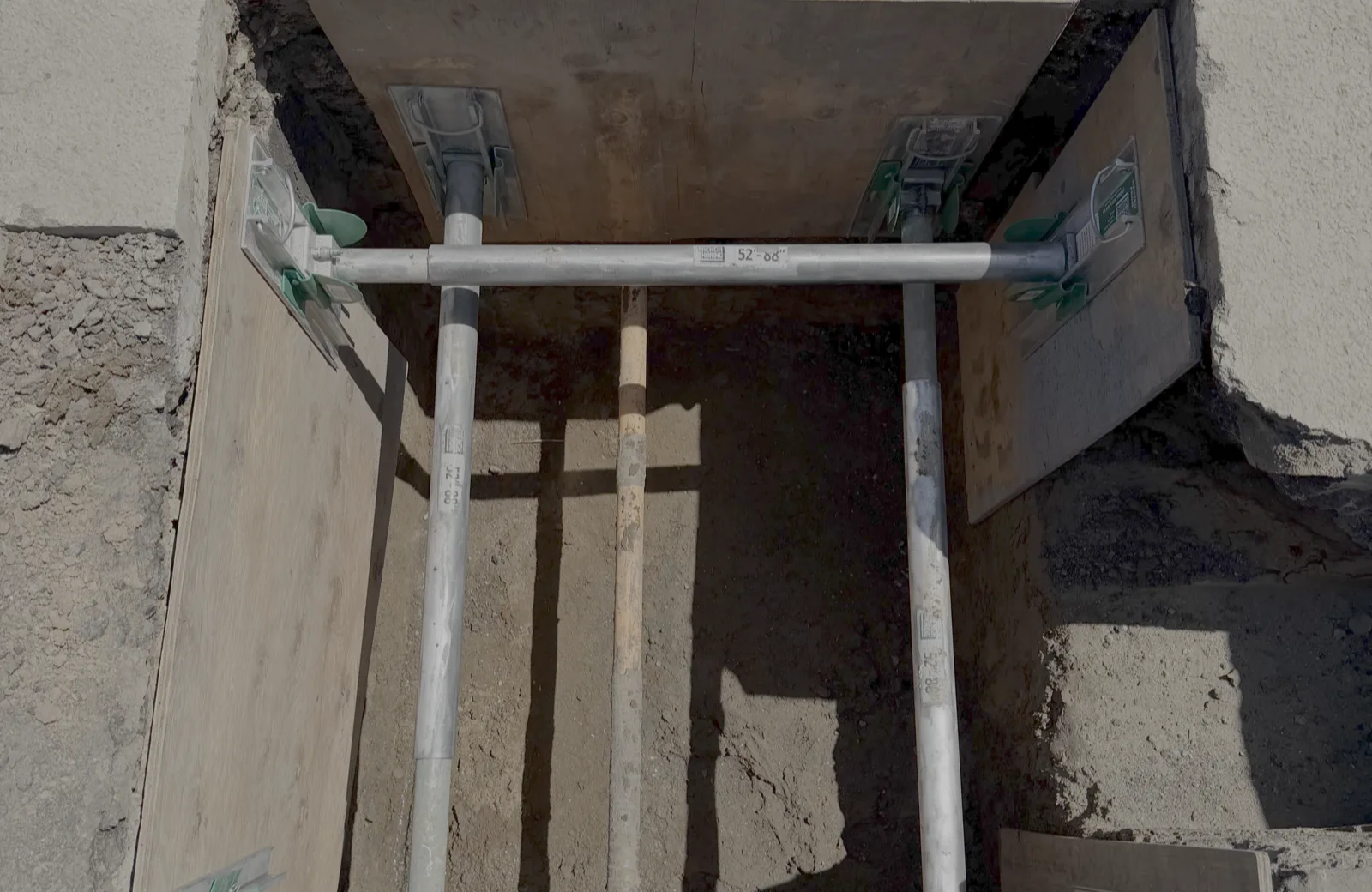
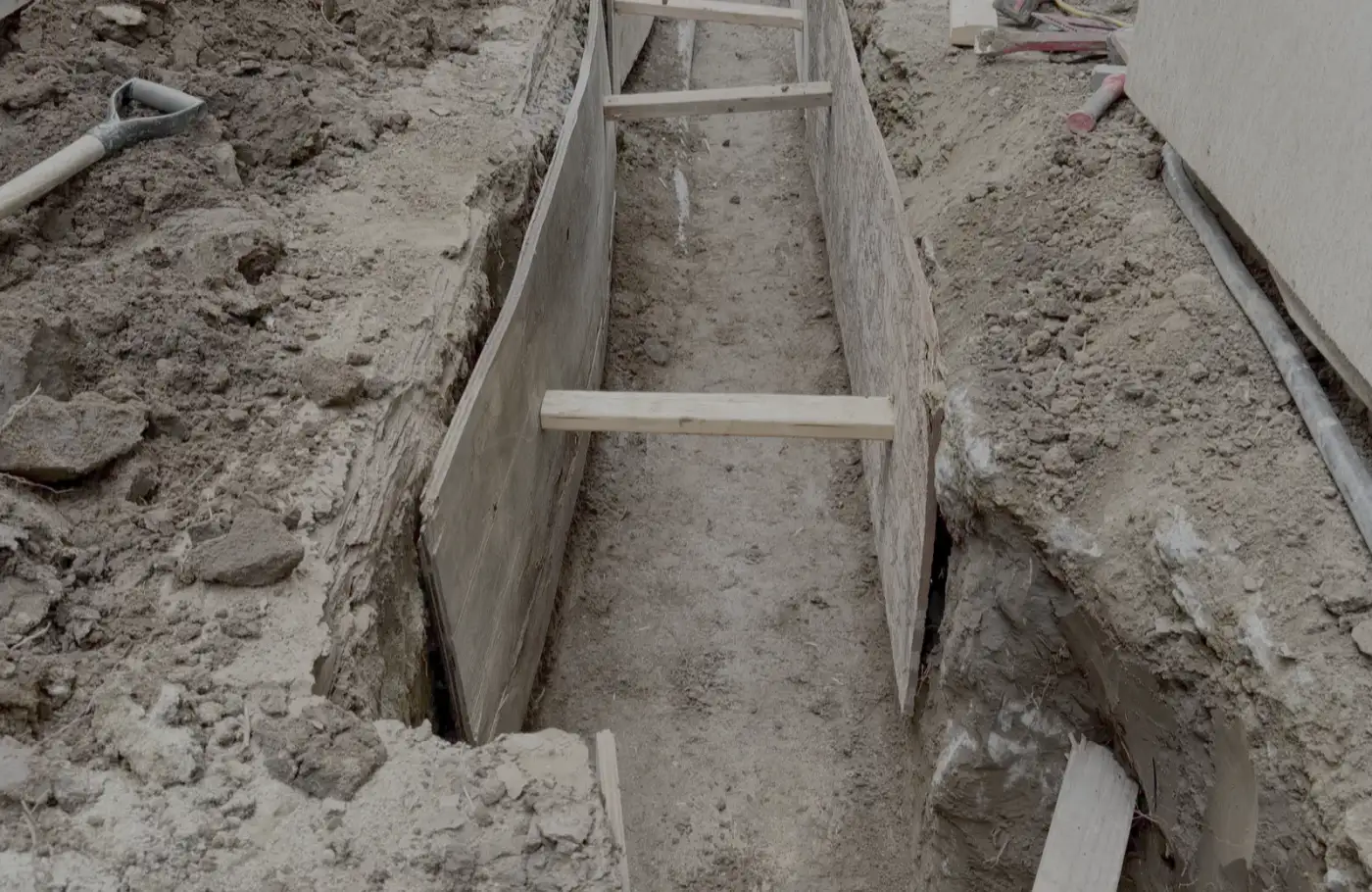
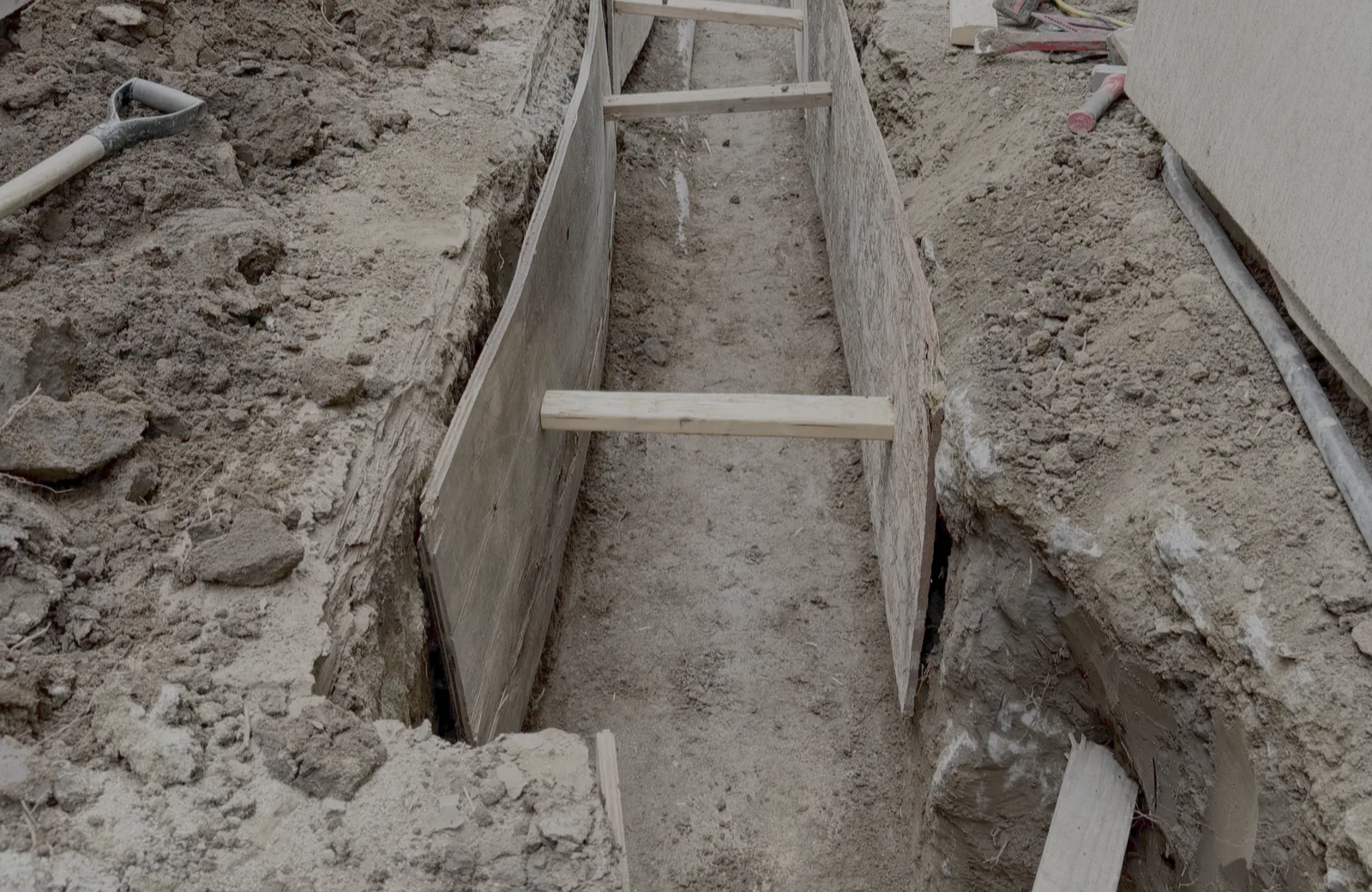
Shoring set by a Total UC crew for a PG&E gas mainline upgrade.