Most articles about tree roots in a sewer line will tell you that roots seek water, that they get in through cracks, and that you should call a plumber. All true, and none of it helps you decide what to do on the day your kitchen sink backs up for the third time this year.
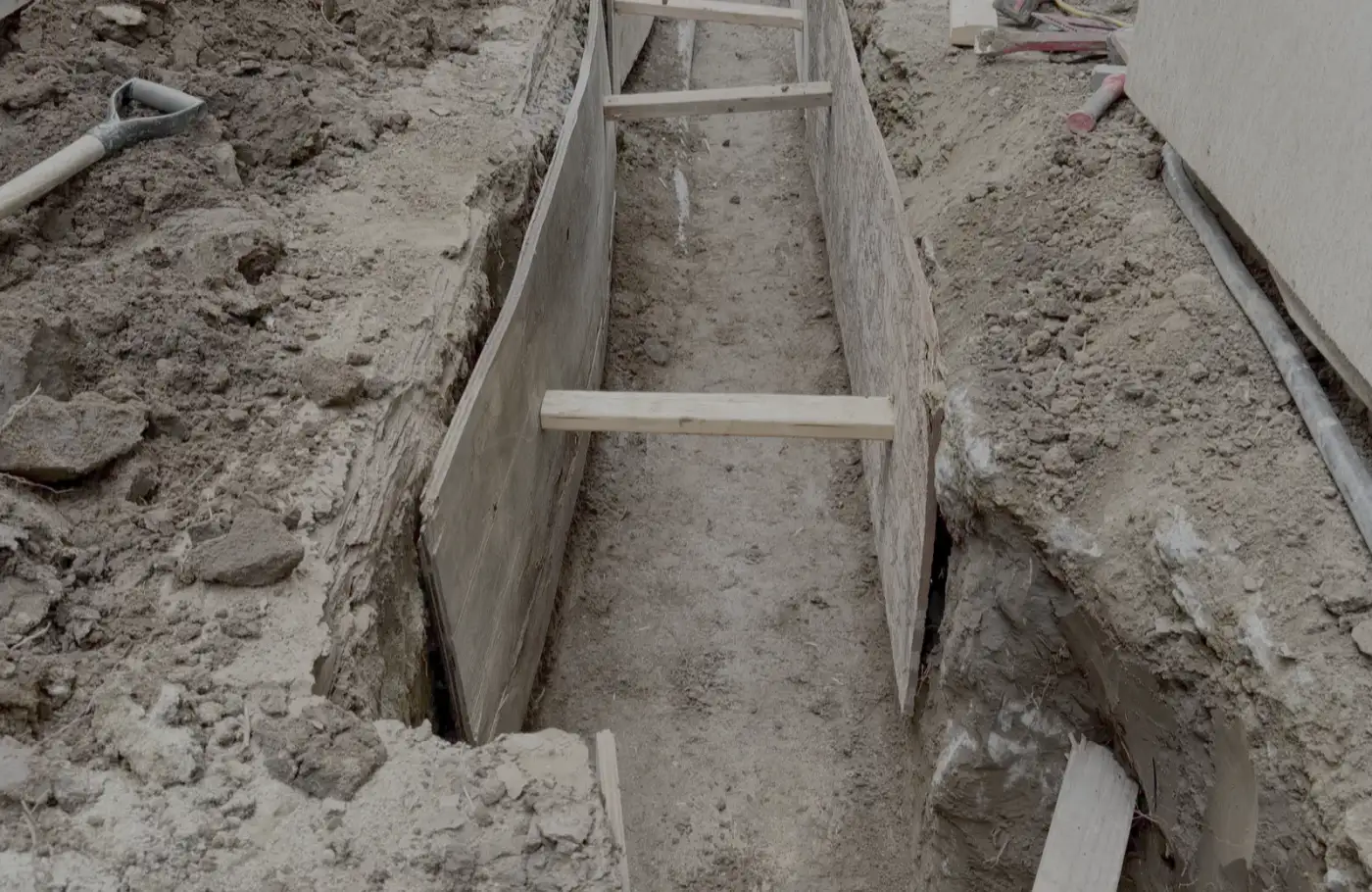
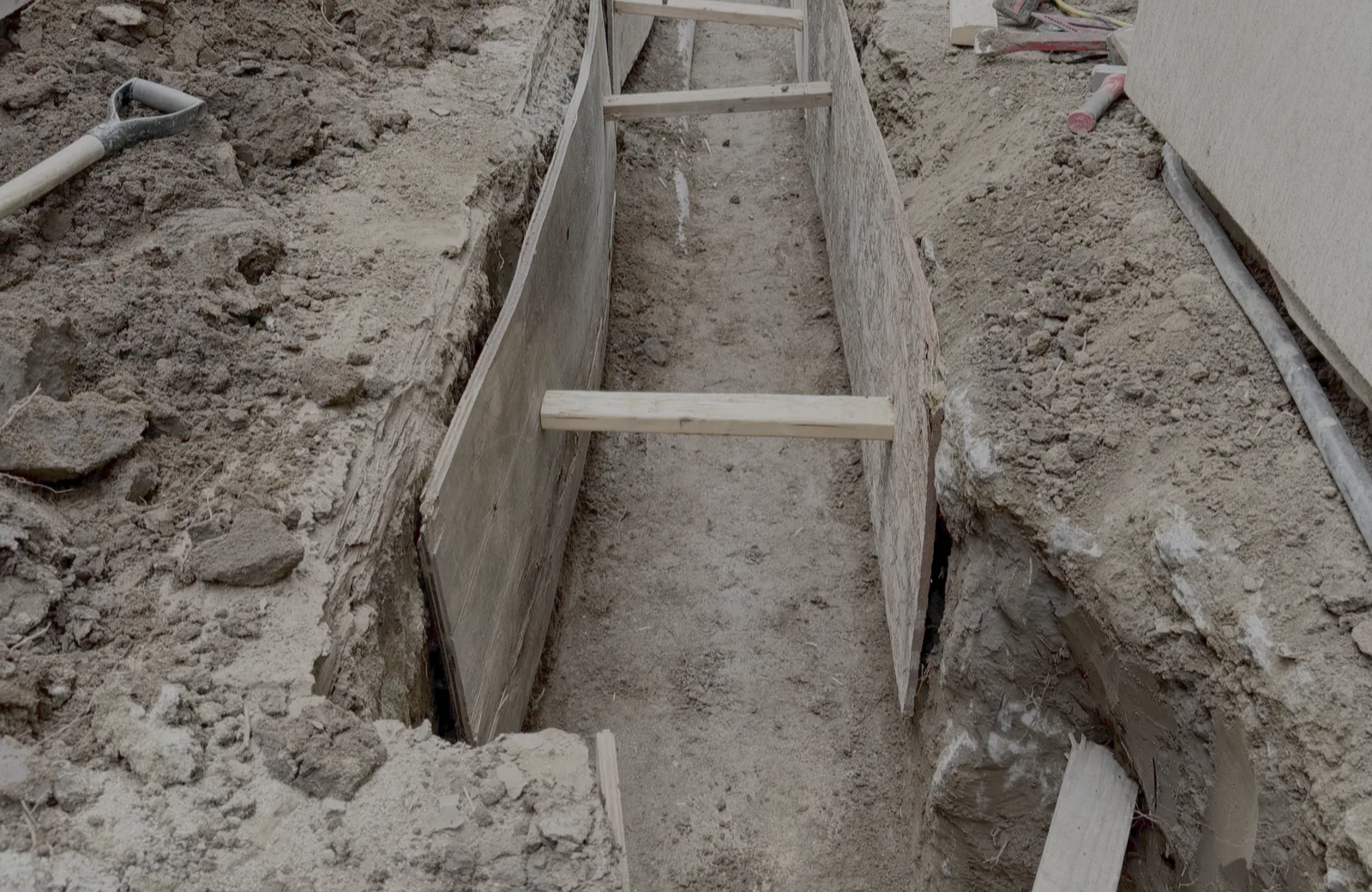
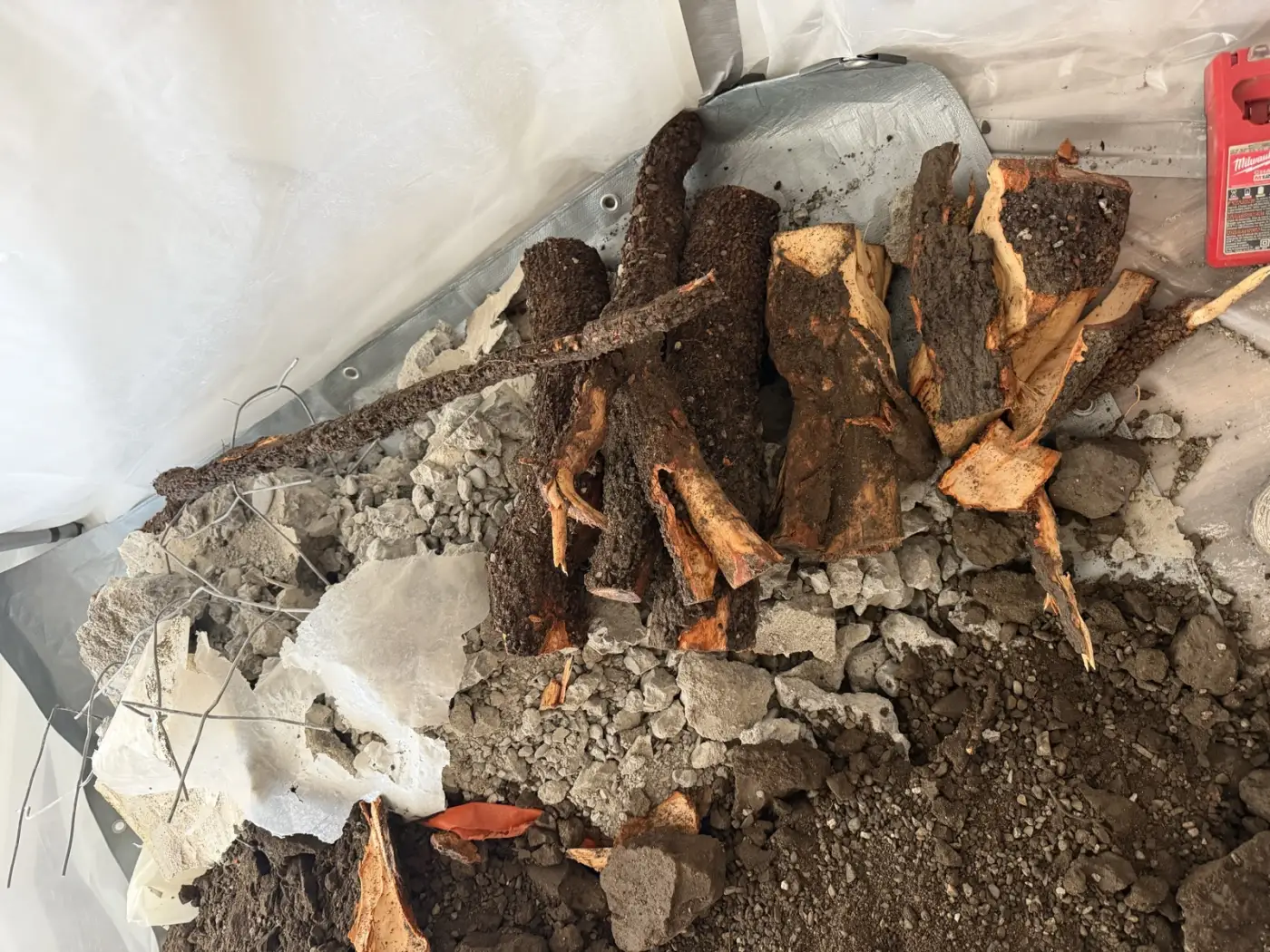
This one is different in one specific way. We dig these lines up. When a homeowner in Pleasanton called about a blockage this month, we opened the slab inside the kitchen, and the trench underneath was packed with tree roots, some of them four inches thick, wrapped around a cast iron drain line and growing into it. The photographs in this article are from that job.
That matters because the most common question homeowners actually ask about this is not “how do roots get into pipes.” It is “my plumber says I have roots, and I have no way to know whether that is true.” Seeing what it looks like underground answers that better than any list of warning signs.
Here is what this covers: how roots really get in, what intrusion looks like with the ground open, how to read your own symptoms, what cutting and jetting and chemicals each genuinely buy you, how to tell when the pipe is finished, what changes when the line runs under your slab, what drives the cost, and who pays when the tree belongs to the city.
If you are somewhere between “the drain is slow again” and “someone quoted me thousands of dollars,” this is written for you.
How tree roots get into a sewer line in the first place
Tree roots get into a sewer line through openings that are already there. They do not drill through sound pipe. As North Carolina State University’s Cooperative Extension puts it, roots “cannot create cracks in your sewer pipe, they can only exploit existing cracks or gaps”. A hairline root finds a loose joint or a fracture, reaches the water and nutrients inside, then thickens season after season until it is holding the pipe open like a wedge.
That distinction matters more than it sounds. If roots only enter through existing faults, root intrusion is not really a tree problem. It is a pipe condition problem that a tree found. The tree is why you noticed.
This is also not a rare event. A peer-reviewed review of root intrusion published in the Journal of Infrastructure Systems found that roots are responsible for more than half of all sewer blockages, with older jointed pipe, shallow pipe, and small-diameter pipe the most affected.
Older Bay Area housing stock is exactly that profile. Clay and cast iron lines with joints every few feet, installed decades ago, sitting shallow under lawns and slabs, with mature trees planted over them long after the pipe went in.
Picture a 1958 ranch house with a liquidambar in the front yard that was a sapling when the owners moved in. The tree did not attack the pipe. The joints loosened over sixty years of soil movement, and the tree found the only reliable water source in a dry September.
What root intrusion actually looks like when you open the ground
Root intrusion underground does not look like the thin hair-like strands most photographs show. In a line that has been feeding roots for years, it looks like firewood. On the Pleasanton job we cut root sections out of the trench that were four inches across, dense enough to need a saw, stacked on plastic sheeting next to the broken slab concrete.
This is the part almost nobody gets to see. On r/HomeImprovement recently, a homeowner posted a photo of what came out of their line and asked whether it looked like roots to anyone else, because their plumber had rodded the line and told them it was roots. That is the real question. When a camera goes down a pipe you see a dark mass. When a rod comes back you see shreds. Neither tells you how far it has gone.
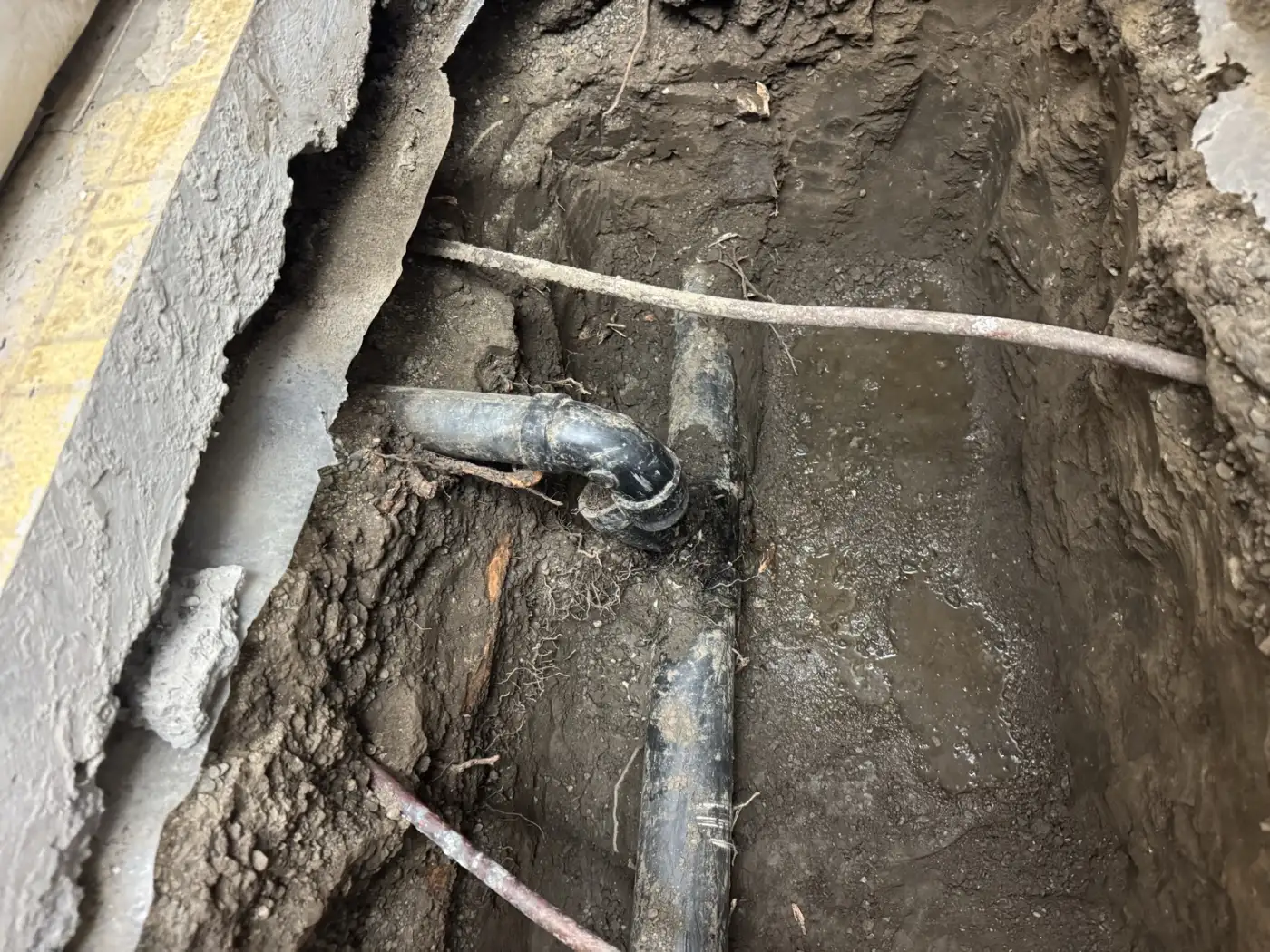
What the open trench told us that no camera could: the roots were not sitting inside the pipe, they were surrounding it. The line was inside a root mass, not the other way around. Cutting the interior would have cleared the channel and left the structure exactly as compromised as it was that morning.
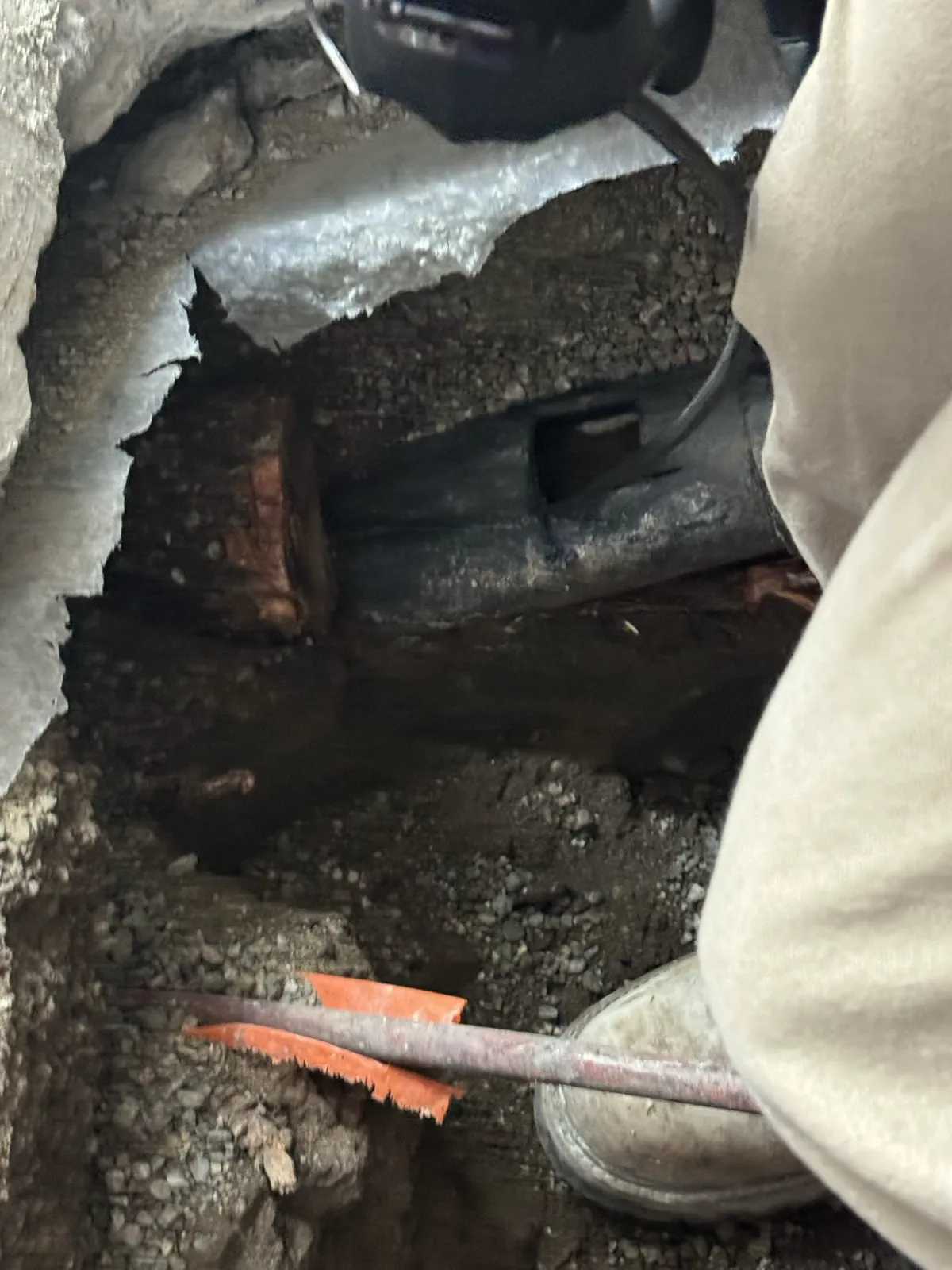
That second photograph is the entry point: a root running directly into a break in the cast iron. Once you have seen that, the choice between cutting and replacing stops being a judgment call.
The signs you have roots, and what each one tells you
The signs of root intrusion are the same as any main line blockage, so the useful question is not whether you have symptoms but which fixture shows them first. The lowest drain in the house backs up first, because that is where a blocked main line surfaces. Where the trouble starts tells you roughly where it sits.
Multiple fixtures slow at once. This is a main line signal, not a fixture signal. One slow sink is a sink problem. A slow sink, a slow tub, and a gurgling toilet together is a line problem.
Gurgling when another fixture drains. Air is being pushed back through the trap because the line cannot clear. Flush the toilet and listen to the shower drain.
Backups that return on a schedule. Roots regrow. If your line clears every spring and blocks again by autumn, you are watching a growth cycle, not a series of unrelated clogs.
Sewage smell with no visible backup. Often means the line is cracked enough to leak before it is blocked enough to back up.
One patch of lawn greener than the rest. A leaking line fertilises the ground above it.
Say your downstairs toilet gurgles every time the washing machine drains, and the guest bath tub has been slow since spring. Two fixtures, both low, both on the same side of the house, worsening over months. That pattern points at the main line rather than either fixture, and roots are the most likely cause of a main line that degrades slowly instead of blocking overnight.
What a camera inspection can and cannot tell you
A camera inspection tells you that roots are present, roughly how far down the line they are, and whether the pipe has visibly separated or collapsed. That is genuinely useful and it is the right first step. What a camera cannot tell you is how much pipe is left.
The lens sees the inside surface. It does not see the wall thickness behind that surface, how much of the joint is still seated, or how far the root mass extends into the soil around the pipe. A line can look survivable on camera and be structurally finished.
Ask the technician three things: how deep is the intrusion, is the pipe still round, and are the joints still holding. If the answer to the last two is uncertain, the camera has reached the limit of what it can settle.
On the Pleasanton job the camera told us there was a blockage and roughly where. It did not tell us we would find four-inch roots wrapped around the outside of the line. We learned that when the ground opened.
Cutting, jetting, and chemicals: what each one actually buys
Cutting, jetting, and chemical treatment all clear the channel and none of them repairs the pipe. That is the honest summary. They restore flow, they buy time, and on a sound line with minor intrusion that can be exactly the right call. On a failed line they are a subscription.
Homeowners say this more bluntly than the industry does. A top-voted comment on r/HomeImprovement: “You can clear the pipe and kill the roots but if the tree stays up it will be back in 6-12 months.” That is a fair description of the cycle.
Mechanical cutting (rodding). A blade cuts the root mass out of the channel. Fast, cheapest, and the roots regrow from the same entry point.
Hydro jetting. High-pressure water scours the interior more thoroughly than a blade and clears the grease and scale that come with it. Better cleaning, same limitation: the opening the roots came through is still there.
Chemical root treatment. Foaming herbicide kills root tissue inside the pipe and slows regrowth. It does not remove the mass and it does not repair the fault.
The cost logic is real, and it cuts both ways. The same peer-reviewed review found that root removal runs about one-sixth the cost of replacing or renewing the pipe, which is precisely why maintenance is rational when the pipe is sound. It is also why a homeowner can spend six years paying one-sixth of a replacement, annually, and replace the pipe anyway.
Picture a homeowner who has jetted the same line every spring for five years at several hundred dollars a visit. The line still backs up. The tree is still there. The joint the roots come through is still open. Nothing has gone wrong with the work, and nothing has changed either.
How to tell when the pipe itself is finished
The pipe is finished when the fault the roots use cannot be closed without replacing the pipe. Four conditions push a line from maintainable to replaceable, and any two together usually settle it.
- The intrusion repeats within a year of clearing. Regrowth on that timeline means the opening is substantial, not hairline.
- The pipe is no longer round. Ovalling or a visible offset at a joint means the structure is moving, and the next stage is collapse.
- The material has reached its age. Cast iron and clay both have finite service lives, and a jointed line installed in the middle of the last century is at the end of one.
- Roots surround the pipe, not just the interior. This is the one only excavation reveals, and it is the one that ends the argument.
If your line meets one of these, maintenance is still defensible. If it meets two, you are choosing between replacing it on your schedule and replacing it on the pipe’s schedule, which is usually a holiday weekend.
There is a real branch here. If the line runs through open yard and the pipe still holds its shape, trenchless rehabilitation is often the right answer: less disruption, no trench across the lawn, and it seals the joints the roots were using. If the pipe has lost its shape, or the run passes under a slab, or the damage is at a fitting rather than along a straight run, lining is not available and the section has to come out.
When the line runs under your slab
When the damaged section runs under a concrete slab, the job changes from a plumbing repair into a small excavation project, and that is the version almost nothing written about tree roots covers. The line cannot be reached from outside. The floor has to be opened, the trench dug by hand inside the room, the pipe replaced, and the slab restored.
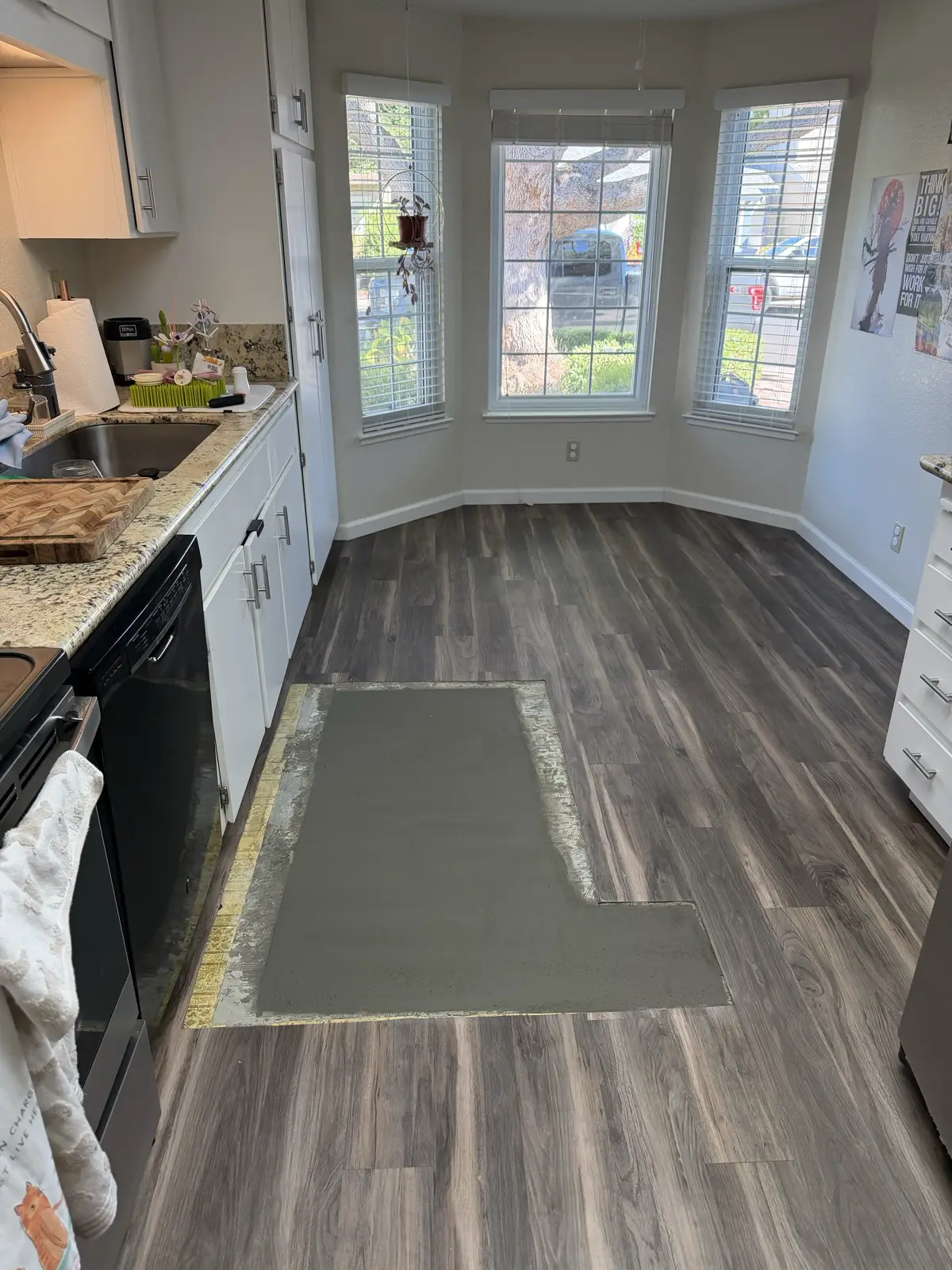
That is the Pleasanton job. The blockage was under the kitchen. We cut the slab inside the house, excavated the trench, removed the roots, replaced the damaged pipe, and poured the slab back so the surrounding floor stayed where it was.
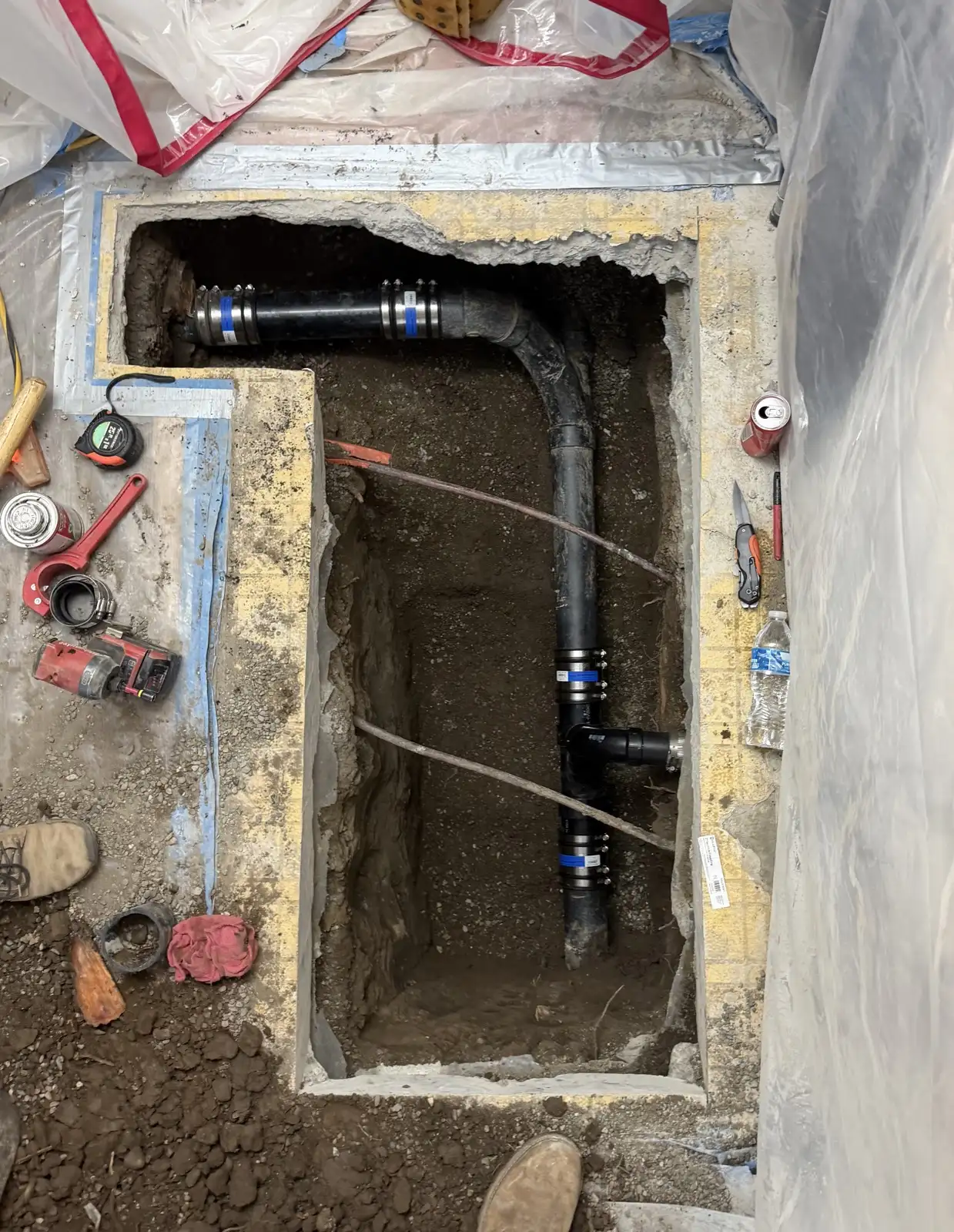
What that work involves, and why it is priced differently from a yard dig:
- Containment. Plastic sheeting, sealed edges, and dust control, because this is happening inside somebody’s kitchen rather than in a trench out front.
- Concrete cutting. The cut is laid out to the line of the pipe, not to the shape of the room, which is why the finished patch is rarely a neat rectangle.
- Hand excavation. No machine fits inside a kitchen. The trench comes out with shovels, and the spoil goes out the way it came in.
- Shoring where the trench is deep enough to need it, which is a safety requirement rather than an optional extra.
- Bedding and backfill compacted properly, because a slab poured over loose fill will crack.
- Slab restoration matched to the existing floor level so the flooring around it stays intact.
This is also the practical reason to ask who is doing the work. Cutting and patching a structural slab, shoring a trench, and compacting backfill are general engineering work. A drain cleaning company is not set up for it, and the part of the job most likely to go wrong later is not the pipe, it is the concrete over it.
What drives the cost of a root-damaged sewer line
The cost of fixing a root-damaged sewer line is driven by access far more than by the pipe. The pipe is inexpensive. Reaching it is not. Two jobs replacing the same twenty feet of line can differ several times over, purely on what sits above it.
The factors that move the number:
- Where the line runs. Open lawn is the cheapest access. Under a driveway, under mature landscaping, or under a slab each add a restoration trade to the job.
- Depth. A deeper trench means more spoil, more time, and shoring once it passes the depth where that becomes required.
- Length of the failed section. Whether a single fitting is replaced or an entire run.
- Method. Trenchless lining avoids restoration cost but is only available on a pipe that still holds its shape.
- Restoration. Concrete, flooring, hardscape, and landscape repair are real line items, not afterthoughts.
- Permits and inspection, which apply to sewer work in most Bay Area jurisdictions.
One useful reference point from the research: root removal runs roughly one-sixth the cost of pipe replacement. That ratio is the whole decision in miniature. Six cleanings equal one replacement, and the replacement is the one that stops the problem.
Whose problem is it when the tree belongs to the city
In most jurisdictions the homeowner owns and maintains the sewer lateral from the house all the way to the city main, including the portion running under the sidewalk or the street. That ownership generally does not change because the tree that damaged it is a street tree on public land.
This is the answer people least want and most need. Rules do vary by city, and some jurisdictions share responsibility or run assistance programmes, so check locally rather than assuming. What is worth doing in every case:
- Get the camera inspection recorded, with footage and distance measurements saved rather than described.
- Photograph the excavation if the line is opened, including the root mass and the entry point.
- Note the species and location of the tree relative to the line.
- Check your city’s published policy on lateral responsibility and any cost-sharing programme before you pay for the work.
Documentation is the entire game here. A claim against a municipality or an insurer rests on evidence gathered while the ground was open, and that window closes when the trench is backfilled.
Does homeowners insurance cover root damage
Standard homeowners policies usually do not cover the sewer line itself when roots are the cause, because insurers treat root intrusion as gradual damage and wear rather than a sudden event. What a policy is more likely to cover is the resulting damage inside the house, and even that depends on the policy.
The distinction that matters: the pipe is usually excluded, the water damage from the backup may not be. Many carriers sell a separate sewer backup or service line endorsement covering exactly this gap, often for a modest annual premium, and it typically has to be in place before the loss.
Two things to do before assuming either way. Read the exclusions section for the words “gradual,” “wear and tear,” and “tree roots,” which is where the answer usually lives. Then ask your agent directly whether you carry a service line endorsement, because the answer is frequently no and homeowners are frequently surprised.
Keeping roots out after the line is fixed
Once the failed section is replaced with modern pipe and sealed joints, root intrusion stops being an annual event, because the openings the roots were using no longer exist. That is the main prevention measure and everything else is secondary.
Worth doing anyway: keep new plantings a sensible distance from the run, favour species that are not aggressive water seekers, know where your lateral actually runs before you plant or hardscape, and have the line inspected periodically if mature trees sit over it. If part of your line is still original, an inspection every couple of years is cheap insurance against discovering the rest of it the hard way.
Talk to Total Underground Construction About Your Sewer Line
We are a Class A General Engineering contractor in San Leandro, and we self-perform this work: the camera inspection, the excavation, the pipe replacement, and the concrete that goes back over it. That matters most on the jobs other contractors sub out, which are usually the ones under a slab or under a driveway.
If your line backs up on a schedule, or someone has told you there are roots and you want a second opinion from the people who would actually dig it up, we will tell you honestly whether you are looking at a cleaning or a replacement. Learn more about our sewer line repair and replacement work, or call for a free estimate.