How much does hydro jetting cost?
Hydro jetting a residential sewer line costs $350 to $600 nationally, with an average of $475, according to Angi’s 2026 cost guide. In San Francisco, Angi puts hydro jetting a main sewer line at $660 to $1,150. Commercial jobs run wider: State Industrial Products puts a commercial hydro jetting job at $500 to $2,500.
Those are the headline numbers, and they hide a lot. A restaurant’s grease line, a shared lateral under a 12-unit building and a single-family sewer line are three different jobs that happen to use the same machine. This guide is written mostly for the people who pay for the bigger ones: restaurant operators, commercial property managers and HOA boards in the East Bay. Homeowners will find their numbers here too.
One note on how we built it. Total Underground Construction is a Class A licensed underground contractor in San Leandro, and we do not publish our own price list here. Every dollar figure below comes from a named, linked source, so you can check it, and the ranges are shown source by source instead of blended into one tidy number that nobody actually charges.
We’ll cover the price ranges first, then what drives a commercial quote, the grease and FOG rules restaurants work under, how shared lines work in apartments and HOAs, when a maintenance schedule pays off, and when jetting is the wrong fix altogether.
Hydro jetting cost at a glance
Published hydro jetting prices run from $350 to $1,400 for a home sewer line and from $500 to $3,000 for a commercial job, depending on which source you read. The table below collects the most current ranges, and each row names its source, because the sources disagree more than most cost guides admit.
| Service | Published range | Source |
|---|---|---|
| Hydro jetting, residential sewer line (national) | $350 to $600, average $475 | Angi, updated July 2026 |
| Hydro jetting (national, all jobs) | $600 to $1,400, average $1,000 | HomeGuide, July 2025 |
| Hydro jetting, main sewer line, San Francisco | $660 to $1,150 | Angi San Francisco, January 2026 |
| Commercial hydro jetting job | $500 to $2,500 | State Industrial Products |
| Commercial sewer line | Up to $3,000 | Bob Vila, January 2024 |
| Grease interceptor pumping, 500+ gallons (Bay Area) | $400 to $900 per service | North Bay Restaurant Services |
| Small indoor grease trap service (Bay Area) | $125 to $285 per service | North Bay Restaurant Services |
| Sewer camera inspection, San Francisco | $375 to $2,500+ | Angi San Francisco |
| Snaking a main line, San Francisco | $190 to $475 | Angi San Francisco |
Two cautions before you use these numbers. First, Angi and HomeAdvisor publish identical figures because they belong to the same company, so treat them as one source, not two. Second, the commercial figures come from a chemical supplier, a home improvement site and a grease hauler, because the big consumer cost guides do not publish commercial jetting prices at all. A trade directory, Grease Trap Locator, says outright that there is no defensible national price for restaurant hydro jetting. So a commercial quote has to start with the line itself.
Why Bay Area quotes run above national averages
Expect Bay Area hydro jetting quotes to land above the national figures, mostly because labor costs more here. Plumbers in the San Francisco-Oakland-Fremont metro earn a mean of $44.41 an hour, about 28 percent above the national mean of $34.70, according to May 2025 federal wage data from the Bureau of Labor Statistics. Sewer pipe cleaners show a wider gap: $36.01 an hour locally against $25.72 nationally.
Those are wages, not billing rates, but the billing rates follow them. Angi lists San Francisco sewer labor at $85 to $380 an hour, against $45 to $200 nationally. That is why the San Francisco jetting range ($660 to $1,150) starts above the national average.
Older pipe adds to it. Many older East Bay homes and commercial buildings still drain through clay or cast iron, and those lines need a camera look and careful pressure choices before anyone opens up a jetter. That inspection time shows up on the invoice.
What drives a commercial hydro jetting quote
A commercial hydro jetting quote is driven by five things: how much pipe there is, how big it is, how you get into it, when the work can happen, and what is in the line. The machine is a small part of the bill. The hours to find, open, clean and prove the line are most of it, which is why commercial plumbing work is quoted per job rather than off a menu.
- Footage and diameter. A 4 inch kitchen branch and 300 feet of 6 inch building sewer are different jobs. Bigger lines need more water flow, and pressure alone will not clean them. A trailer jetter like the US Jetting 4018 runs 4,000 PSI at 18 gallons a minute for 4 to 24 inch pipe, while a truck combo unit like the Vactor 2100i trades pressure for volume at 2,500 PSI and 80 gallons a minute.
- Access. Every cleanout you have is time you are not paying for. No cleanout means pulling a toilet, going through a roof vent or cutting one in. Yelp’s cost guide puts cutting in a cleanout at $800 to $1,500, and HomeGuide lists a two-way cleanout at $2,000 to $5,000.
- Timing. A kitchen that cannot close at lunch, or an office lobby that cannot have a hose through it at 10 a.m., pushes the work to early mornings, nights or weekends. HomeGuide lists emergency service as adding $150 to $500 or more.
- What is in the line. Grease, roots, scale and grit each take different nozzles and different passes. Grease is the big one: the EPA’s report to Congress on sewer overflows found grease behind 47 percent of reported sewer blockages and roots behind 22 percent.
- Proof. Commercial clients usually want before and after camera footage for the file, the landlord or the city. A camera pass is its own line item, and in San Francisco Angi lists it at $375 to $2,500 or more.
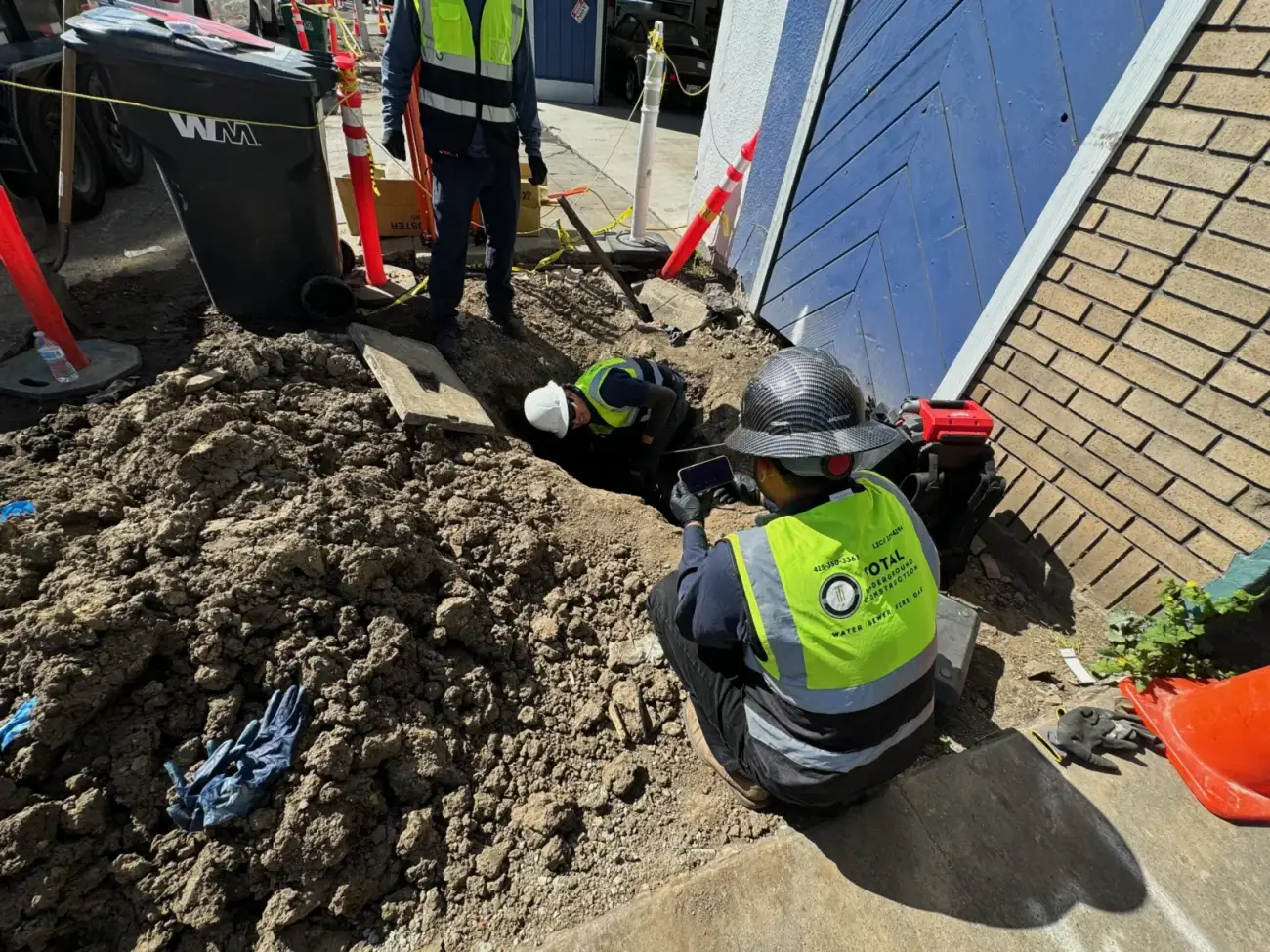
One thing that should not drive the price is a big PSI number. Professional sewer jetters work at roughly 1,500 to 4,000 PSI. Spartan Tool, which builds jetters, warns that running a 4 inch line at 5,000 PSI risks tearing a clay tile line apart or separating the hubs on cast iron. If a sales pitch leans on pressure figures in the tens of thousands, that is industrial hydro blasting, not sewer cleaning.
Restaurants: grease lines, interceptors and the FOG inspector
For a restaurant, hydro jetting and grease interceptor pumping are two separate services, and you will usually pay for both. Pumping empties the interceptor. Jetting cleans the pipe between your sinks and the interceptor, and from the interceptor to the street, where grease that slipped past still sticks to the pipe wall.
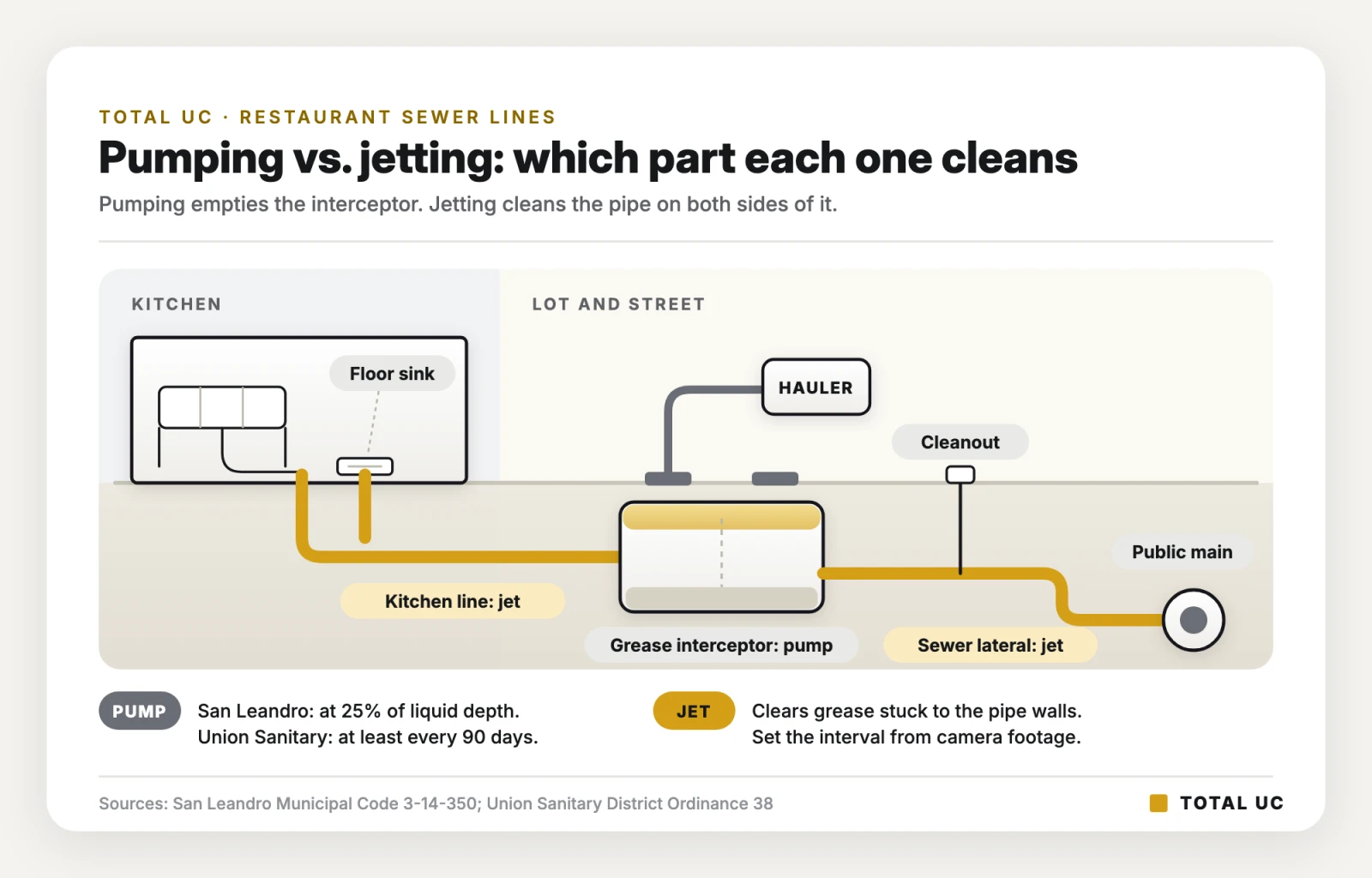
Your sewer agency sets the pumping rules, not the plumber. In San Leandro, Municipal Code section 3-14-350 requires an interceptor to be pumped in full once grease and settled solids reach 25 percent of its liquid depth, by a state-licensed hauler, with records kept for at least three years. In Fremont, Newark and Union City, Union Sanitary District’s FOG ordinance requires every food service business to have an interceptor and pump it at least every 90 days. Oro Loma Sanitary District, which covers San Lorenzo and parts of Castro Valley, Hayward and San Leandro, requires a regular cleaning schedule and three years of records.
None of these agencies requires you to jet your own side sewer on a calendar. What they do is make grease expensive when it escapes. Union Sanitary District’s ordinance lets it bill a business for sewer maintenance and overflow cleanup caused by poor interceptor upkeep. So the jetting schedule is a business decision, not a compliance one, and the inspector’s question is simply whether your grease is staying out of the public main.
For pricing, North Bay Restaurant Services puts Bay Area interceptor pumping at $400 to $900 per service for 500 gallon and larger units, and $125 to $285 for small indoor traps. The closest published example of the jetting side is State Industrial’s school kitchen case: a moderate grease clog in a large system, about two hours on site, $1,700 to $1,840 all in.
Picture a busy taqueria in San Leandro with an in-ground interceptor out back. The hauler pumps it every quarter and the paperwork is clean, but the floor sink by the prep line keeps backing up on Friday nights. The trouble is the 40 feet of pipe feeding the interceptor. It is lined with grease, and pumping never touches it. Jetting that line once, then timing future jetting to the pump-outs, fixes the Friday problem without adding a third service call.
If you run a restaurant, here is where to start:
- Pull your last three pumping manifests and check the dates against your agency’s rule (25 percent in San Leandro, 90 days in Union Sanitary District territory).
- Note every drain that backs up, and when. A pattern on your busiest nights points at the lines, not the interceptor.
- Ask for one camera pass of the kitchen line to the interceptor, then decide on a jetting interval from what the footage shows.
- Book jetting on the same visit as a pump-out when you can, before prep starts.
Apartment buildings and HOAs: shared lines, shared bills
In a multi-unit building, one jetting visit on the shared building sewer or lateral usually costs less than chasing unit-by-unit complaints, because one blockage downstream backs up every unit above it. The harder question is usually not the price. It is who pays.
For a condominium or other common interest development, California’s Davis-Stirling Act, Civil Code section 4775, makes the association responsible for repairing and maintaining the common area unless the declaration says otherwise, while owners maintain their own separate interest. A sewer line serving the whole building usually sits in common area. The branch line under one unit may not. Check your CC&Rs before you approve the work, not after the invoice arrives.
If the property is in Oakland, Alameda, Albany, Emeryville, Piedmont or the Stege Sanitary District area, the EBMUD Regional Private Sewer Lateral Ordinance applies on top of that. It requires a compliance certificate when a property sells, when permitted work exceeds $100,000, or when the water meter size changes, and it sets separate HOA deadlines. Associations responsible for more than 1,000 feet of lateral faced a compliance deadline of July 12, 2026, with extensions to July 12, 2029 for systems over 5,000 feet or needing more than half replaced. San Leandro and Hayward sit outside this ordinance, though Oro Loma Sanitary District started its own point of sale lateral program on August 1, 2026 (sales in common interest developments are exempt).
Picture a 24-unit condominium in Oakland. A ground floor owner reports sewage in a shower drain for the second time this year. The management company’s first instinct is to send a plumber to that unit. A camera run from the building cleanout shows the real story: roots at a joint in the common lateral 60 feet out. Jetting clears it for now, and the same footage tells the board whether that lateral will pass an EBMUD test or needs repair before it does.
Who pays depends on where the blockage is:
- If the blockage is in a line that serves more than one unit, treat it as a building expense and schedule the whole run, cleanout to street.
- If it is in a branch that serves one unit, check the declaration. In many associations that branch is the owner’s responsibility, and the camera footage is what settles it.
- If you own a small rental building outright, there is no split. One whole-building jetting visit with a camera report beats several tenant callouts, and the report goes in your maintenance file.
Shared sewers are only one piece of what we handle for property managers and HOAs; water, gas and fire service lines under common areas follow the same who-owns-what logic.
Scheduled maintenance vs. calling when it backs up
A maintenance schedule pays off when buildup is certain and a backup is expensive. It does not pay off on a line that has never given you trouble. The deciding factor is what is going into the pipe, not the calendar.
- If you run a commercial kitchen, schedule it. Grease buildup is guaranteed, and a backup during service costs more than the jetting does. Tie the interval to camera findings and your pump-outs.
- If you manage an older building with trees near the lateral, schedule from the camera. Roots grow back through the same joints, so jetting buys you a year or two and then the roots return. HomeGuide’s sewer cleaning guide puts the typical residential interval at 18 to 24 months; a root-prone line may need it sooner.
- If you manage an office or retail building with no backup history, do not buy a jetting plan. Buy a camera inspection every couple of years and jet only when it shows a reason.
That last point is where a lot of money gets wasted. One recent thread among plumbers on Reddit looked at camera footage of a rusty but working cast iron line and a $1,450 quote to descale, jet and treat it. The top replies said to leave it alone and camera it again in two years. We agree with them. Jet a line when the camera or the backup history gives you a reason.
If you do set up a schedule, a written agreement should spell out which lines are covered and how many feet, the interval, whether camera footage is included at each visit, how after-hours work is priced, and how fast someone responds to an emergency. Neither Angi nor HomeGuide publishes maintenance contract prices, so compare quotes on those terms rather than on a monthly number alone. Property managers and HOAs who want this handled as one plan can look at our Total Subscription maintenance plan.
Hydro jetting vs. snaking vs. chemical drain cleaning
Snaking costs less per visit and is often the right call for a single soft clog. Hydro jetting costs more because it cleans the whole pipe wall instead of punching a hole through the blockage. Chemicals are the cheapest and the least useful for anything beyond a slow sink.
| Factor | Hydro jetting | Snaking (cable) | Chemical drain cleaner |
|---|---|---|---|
| Typical cost | $350 to $600 (Angi); $660 to $1,150 in San Francisco | $200 to $500 for a sewer line (HomeGuide); $190 to $475 in San Francisco | $10 to $70 a bottle (State Industrial) |
| What it does | Scours grease, scale and roots off the pipe wall | Opens a channel through the clog | Dissolves some soft clogs |
| Roots | Cuts and flushes them | Cuts a path through them | Little effect on established roots |
| Grease | Strong | Weak; grease reseals the opening | Moderate at best |
| How long it lasts | 2 to 3 years for most homes (HomeGuide) | Shorter; the buildup is still there | Short |
| Best for | Grease lines, recurring clogs, roots, pre-inspection cleaning | A single, simple clog | A minor slow drain |
One exception: a cable is fine for a one-time clog from something flushed that should not have been. If the same line has been snaked twice in a year, that is the sign to jet it and put a camera on it.
For restaurants, chemical drain openers are the wrong tool. San Leandro’s ordinance bans emulsifying chemicals, solvents and enzymes from going to the interceptor, because they just move the grease downstream into the public sewer.
When hydro jetting is the wrong fix
Hydro jetting cannot fix a pipe that is broken, offset, sagging or collapsed. If a line backs up again within days or weeks of being jetted, stop paying for more cleaning and get a sewer camera inspection, because the problem is the pipe, not what is in it.
A recent post from a small commercial space in an older San Francisco building describes this exactly: the line was snaked, came back within days, was jetted, and the gurgling toilets returned after about ten days. That pattern almost always means a structural defect, such as a belly where waste settles, an offset joint that catches debris, or a crack roots keep coming through.
Say you own a two-story retail building with a dentist upstairs and a cafe on the ground floor. You have paid for jetting twice this year, and a $1,100 camera quote feels like one more bill. It is the cheapest one you will pay, because it tells you whether you need a spot repair, trenchless sewer repair or a full sewer line repair, and it ends the cycle of paying for cleanings that cannot work.
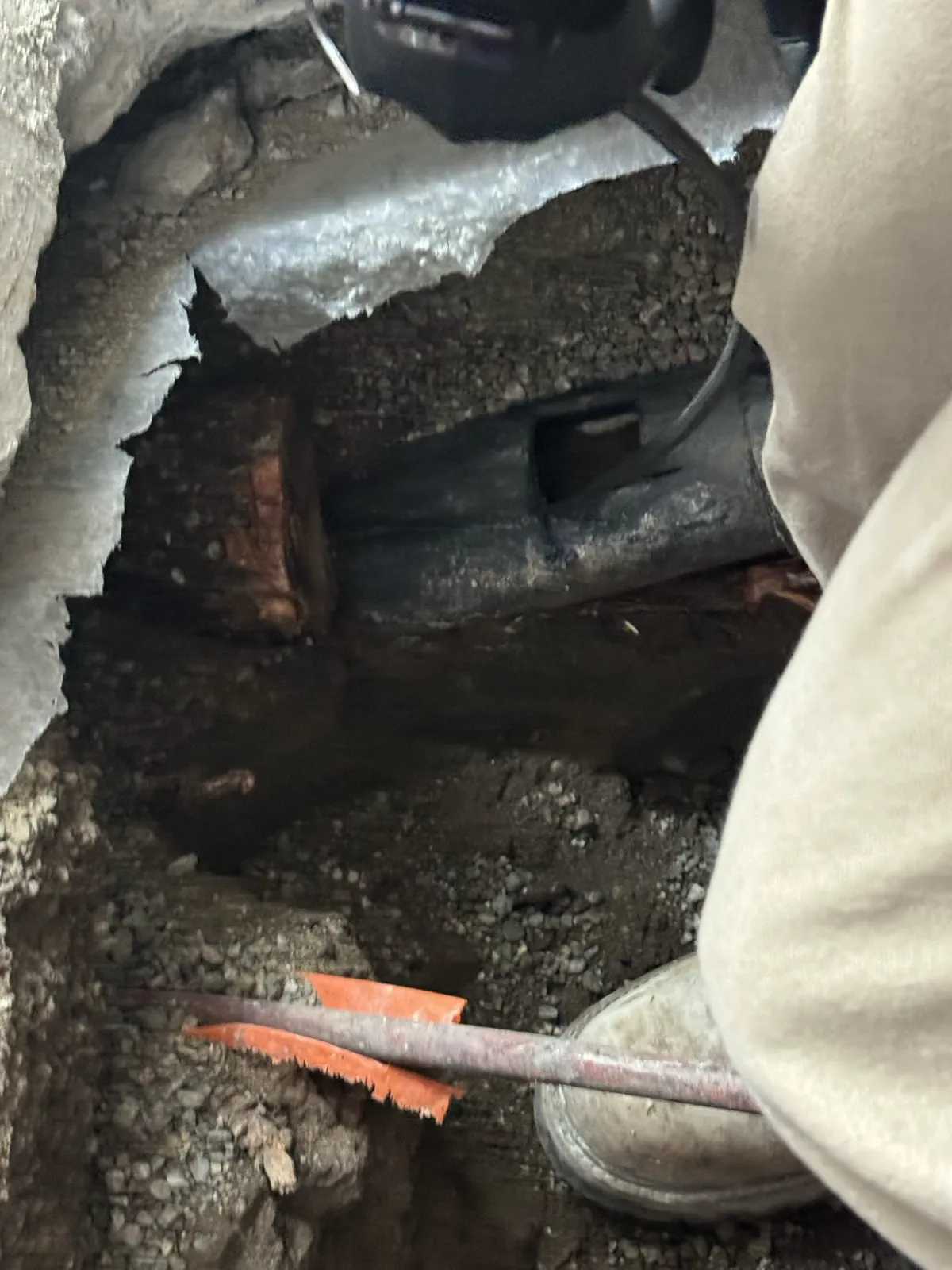
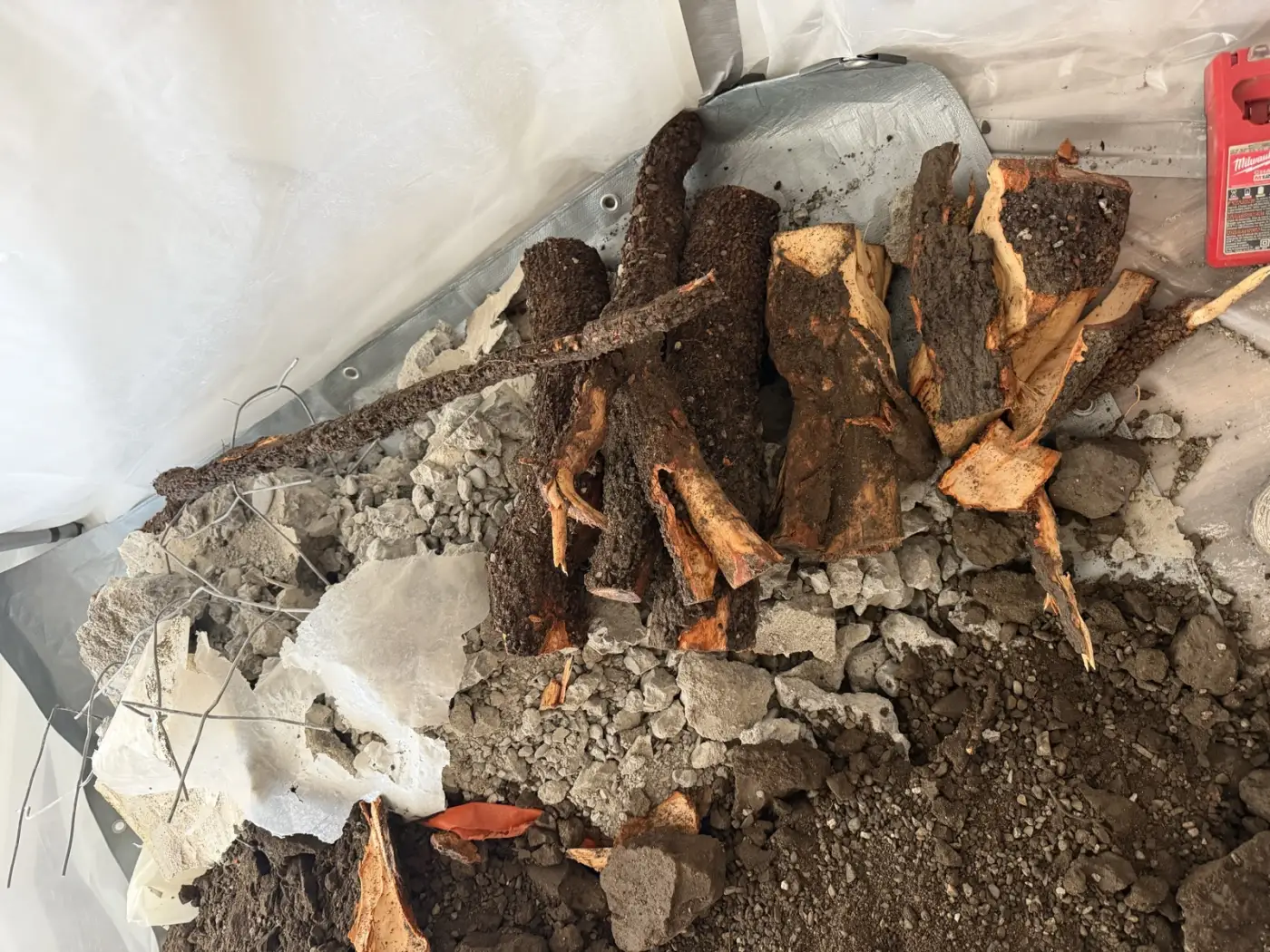
Some pipe should not be jetted hard at all. Orangeburg (bituminous fiber) pipe and badly corroded cast iron can fail under pressure, which is why a camera look comes first on older lines. For lines where roots are the recurring cause, our guide to tree roots in a sewer line covers when cutting and jetting stop being worth it.
How to read a hydro jetting quote
A fair hydro jetting quote tells you what line is being cleaned, how far, from which access point, and how you will know it worked. If a quote is a single number with none of that, you cannot compare it to anything.
Price spreads on this job are wide. In one Reddit thread a homeowner asked whether $1,200 was reasonable for 45 minutes of jetting, and a plumber replied that his company charges $2,000 to $4,000 to jet a two to three bathroom house. Both can be honest prices for different scopes. The quote is what tells you which scope you are buying.
Look for these line items:
- The line and the footage, for example “6 inch building sewer, cleanout to property line, about 80 feet”
- Access, meaning which cleanout, and whether a toilet pull or a new cleanout is included
- Camera inspection, before, after or both, and whether you get the video
- Time of day, with any after-hours or weekend premium stated up front
- Disposal, for grease and debris pulled from commercial lines
- What happens if the camera finds damage, so the repair conversation is not a surprise
Be wary of bundles. Descaling, jetting and root foam on a line with no backups and no findings on camera is the classic upsell. And always check the license: anyone can look up a contractor on the Contractors State License Board site before signing.
Hydro jetting cost for homeowners
For a single-family home, most hydro jetting jobs fall between Angi’s $350 to $600 national range and Angi’s $660 to $1,150 San Francisco range for a main sewer line. HomeGuide’s broader national range is $600 to $1,400. Where your job lands depends on the same factors as a commercial one, at a smaller scale: line length, access and what is in the pipe.
A kitchen or bathroom drain line sits at the low end. One California plumber quoted in Yelp’s cost guide charges a flat $500 to jet a sink and $1,000 for a sewer line or toilet. A main sewer line or lateral lands in the middle to upper end, and higher still with no cleanout. Add a camera inspection, which runs $125 to $500 on HomeGuide and more in San Francisco.
If you just bought an older East Bay home and the drains are already slow, start with a camera inspection and a cleaning together, and keep the footage. It is your baseline for the next 20 years of that sewer line. If you have been snaking the same line every few months, one jetting visit plus a camera look usually costs less than another year of snaking, and it tells you whether roots are coming through a crack that needs repair.
Signs you need hydro jetting
These are the warning signs that a line has buildup jetting can clear, as opposed to a single clog:
- Several slow drains at once. One slow fixture is a local clog; several point to the main line or building sewer.
- The same drain backing up again and again, especially after snaking.
- Gurgling from drains or toilets when another fixture runs.
- Sewer odor near floor drains, cleanouts or outside.
- Water coming up in the lowest fixture, such as a floor drain or ground floor shower, when something upstairs drains.
- In a commercial kitchen, floor sinks slowing during the busiest service.
If you see any of these, schedule a drain cleaning visit with a camera before it becomes a full backup. Our guide to the signs of a blocked main sewer line covers how to tell a main line problem from a single fixture.
What to expect during a hydro jetting service
A hydro jetting visit follows the same sequence for a house or a restaurant; commercial jobs just take longer. HomeGuide puts a typical job at 2 to 5 hours.
- Assessment. The technician finds the access points and asks about symptoms and history.
- Camera inspection. A camera goes down the line to locate the blockage and check the pipe material and condition before any pressure goes in.
- Setup. The jetter is connected and the nozzle and pressure are chosen for the pipe size and material.
- Jetting. Water is run through the line in passes, usually working the nozzle upstream and pulling debris back toward the access point.
- Verification. A second camera pass confirms the line is clear and shows anything that needs repair.
- Report. You get the findings and a recommendation: nothing further, a maintenance interval or a repair.
For commercial clients, ask in advance for the footage and a short written summary. It is the document your landlord, board or sewer agency inspector will want to see.
Hydro jetting cost FAQs
How much does commercial hydro jetting cost?
State Industrial Products puts a commercial hydro jetting job at $500 to $2,500, and Bob Vila reports a commercial sewer line can cost up to $3,000. The big consumer cost guides do not publish commercial ranges, so the real number depends on footage, pipe size, access, grease load and whether the work has to happen after hours.
How often should a restaurant hydro jet its drain lines?
No East Bay sewer agency we reviewed sets a required jetting interval for a restaurant’s own lines; the rules cover interceptor pumping. Base the jetting interval on camera findings and how quickly grease returns, and time it with your interceptor pump-outs so one visit covers both.
Who pays to hydro jet a shared sewer line in a condo or HOA?
Under California Civil Code section 4775, the association maintains the common area unless the declaration says otherwise, and owners maintain their separate interest. A line serving the whole building is usually common area. A branch serving one unit may be the owner’s responsibility, so check the CC&Rs before the work starts.
Is hydro jetting safe for old pipes?
Hydro jetting is safe for most sound pipe when the pressure is matched to the material. Professional sewer jetters run at roughly 1,500 to 4,000 PSI. Orangeburg pipe and badly corroded cast iron may not take it, which is why a camera inspection should come first. If the camera shows structural damage, a trenchless repair may make more sense than cleaning.
How long does hydro jetting last?
HomeGuide estimates results last 2 to 3 years for most homes. Commercial kitchens see grease return much faster, and lines with root intrusion may need service sooner, because jetting clears roots but does not close the joint they came through.
Is it cheaper to snake or hydro jet a drain?
Snaking is cheaper per visit: HomeGuide lists $200 to $500 to snake a sewer line, against $350 to $600 for hydro jetting on Angi. Jetting often costs less over time on lines that keep clogging, because it removes the buildup that makes the clog come back.
Does insurance cover hydro jetting?
Routine drain cleaning is generally treated as maintenance, not a covered loss. Damage from a sewer backup may be covered depending on your policy and any sewer backup endorsement, so ask your agent or your building’s carrier before you assume either way.
Hydro jetting from Total Underground Construction
Pricing a hydro jetting job well comes down to knowing the line: how long it is, what it is made of, how you get into it and what is building up inside. Total Underground Construction is a Class A licensed underground contractor based in San Leandro, and we work on the whole run, from the kitchen branch out to the lateral, for restaurants, property managers, HOAs and homeowners across the East Bay. When you are ready for a quote built on your actual line, start with our hydro jetting and vacuuming services.