Smell gas right now? Leave the building, then call 911 and PG&E at 1-800-743-5000 from a safe distance. Don’t use switches, your phone or any flame on the way out.
Gas line repair is not a DIY job. Any repair to gas piping, including a fitting that seems loose, needs a licensed plumber or contractor, and it should end with the line being tested before the gas goes back on. An earlier version of this page said homeowners could tighten connections, replace gaskets or fix small cracks themselves. We’ve removed that advice. We’re a licensed underground contractor, and it isn’t something we’d tell any homeowner to try.
Why gas line repair belongs with a professional
- A smell that fades isn’t a fix. Tightening a fitting can make the odor go away without the line actually holding. A proper repair ends with a pressure test, not a sniff test.
- Looking for the leak is part of the danger. PG&E says never to use a flashlight, match or candle to look for one, and the federal pipeline safety agency, PHMSA, warns that phones and electrical switches can ignite gas in the air.
- Restoring the gas is a job in itself. PG&E says a PG&E representative or another qualified professional should turn service back on and relight pilots.
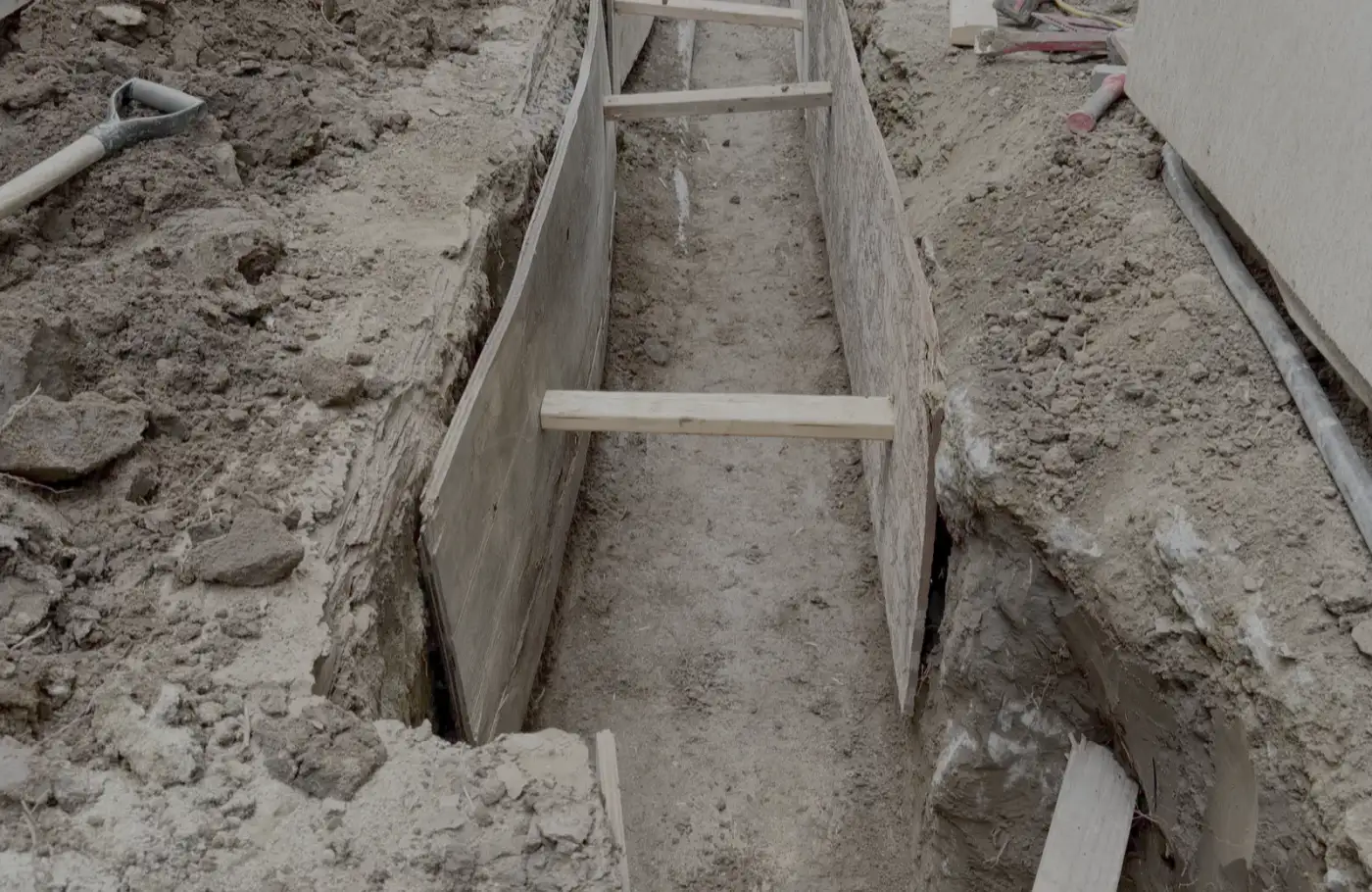
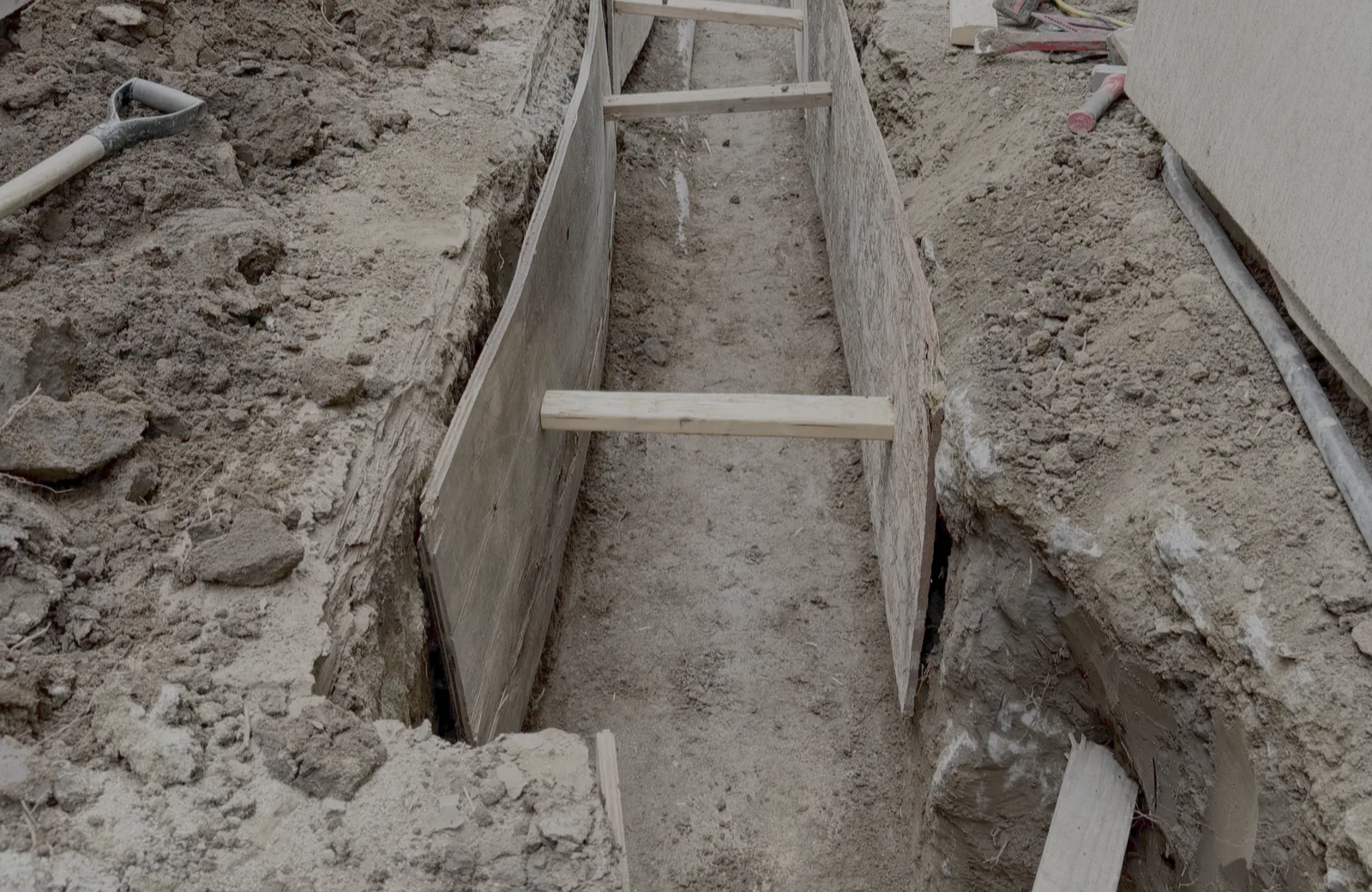
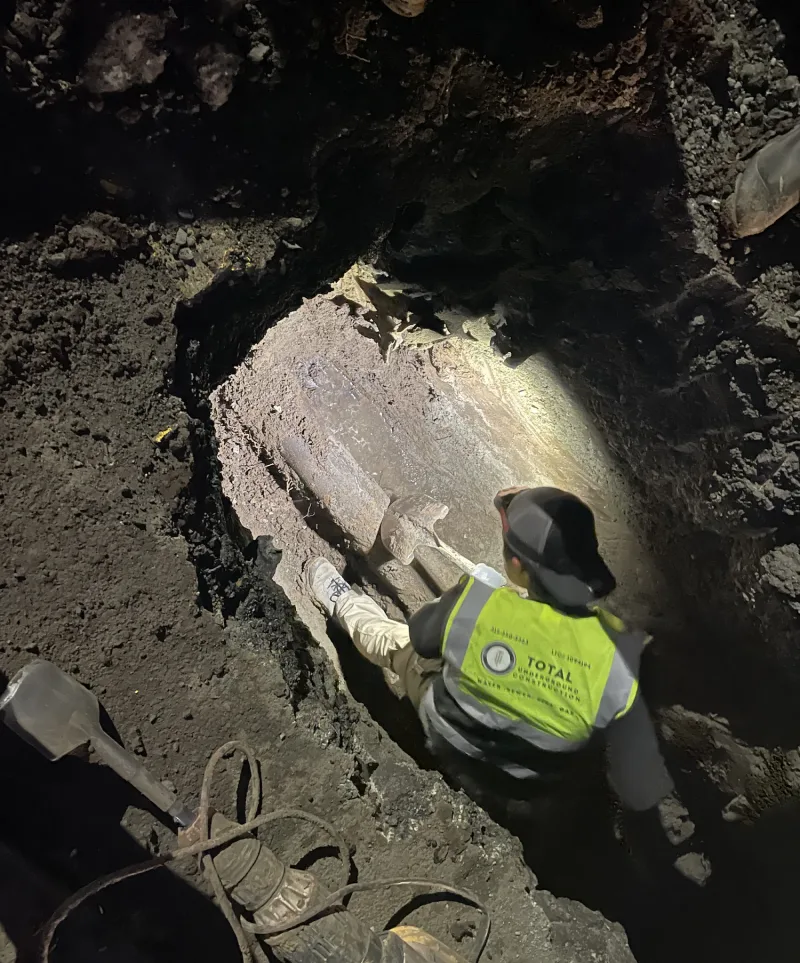
- Buried lines add excavation risk. A leak between the meter and the house means digging near a live gas line, with other utilities often nearby.
Who is responsible for which part of the gas line
PG&E maintains the gas system up to and including your meter. Everything past the meter is customer-owned, and the property owner is responsible for maintaining it, according to PG&E’s notice on customer-owned gas lines. That includes buried pipe from the meter to your building, the piping inside it, and lines to other gas equipment. PG&E recommends a licensed plumber or contractor to locate, inspect and repair those lines.
| Where the problem is | Who handles it |
|---|---|
| At the meter or on the street side of it | PG&E |
| Buried line from the meter to your building | A licensed plumber or contractor you hire |
| Piping inside the building or to appliances | A licensed plumber or contractor you hire |
What a homeowner can safely do
- Know the warning signs. A rotten egg smell, a hissing or roaring sound, dirt spraying into the air, or a patch of dead vegetation along a gas line are all signs PG&E lists.
- Keep CO alarms working. The U.S. Consumer Product Safety Commission recommends carbon monoxide alarms on every level of the home and outside sleeping areas.
- Schedule periodic inspections of your customer-owned lines with a licensed plumber or contractor, as PG&E recommends.
- Call 811 before digging, knowing that 811 does not locate customer-owned gas lines. Have a buried line from your meter located before you or anyone else excavates.
What to leave to a professional
- Tightening, taping or sealing any gas fitting or joint
- Replacing gas connectors, valves or sections of pipe
- Digging up or repairing a buried gas line
- Turning gas service back on after a leak or shutoff
For what to do in the moment and how a proper repair works, read our gas leak repair guide and what to do in a gas line emergency. If the problem is a buried line on your side of the meter, see our gas line repair service or call Total Underground Construction at (415) 350-3363.