Smell gas right now? Stop reading and get out. Take everyone with you. Don’t flip a light switch, use your phone or light anything on the way out. Once you’re well away from the building, call 911, then call PG&E at 1-800-743-5000.
This page used to be a step-by-step guide to repairing a gas line yourself. We took those steps down. We’re a licensed underground contractor, and a leaking gas line isn’t a job we’d tell any homeowner to take on with a wrench and a roll of tape. What follows is the guide we should have published in the first place.
Gas leak repair covers both a leaking fitting behind a stove and a corroded line buried between your meter and your house. Either way, the first thing to settle is whose pipe is leaking, because that decides who makes the repair and who pays for it.
If you just smelled gas near the water heater and you’re wondering whether tightening a fitting will do it, read the next three sections before you touch anything. If PG&E has already been out and told you the leak is on your side of the meter, the repair is now yours to arrange. And if the leak is somewhere under the yard, a driveway or a parking lot, that’s underground work, and it’s what we do.
We’ll go in order: what to do right now, how to tell it’s a leak, who’s responsible for the repair and what a proper repair involves, with a short FAQ at the end. You’ll finish knowing who to call at each step, so start with the part that can’t wait.
What to do if you smell gas
If you smell gas, leave the area and call 911, then call PG&E at 1-800-743-5000. That’s the order PG&E’s gas safety guidance gives, and it doesn’t change with how strong the smell is. After you call, PG&E’s help center says it will send someone right away to investigate and make the situation safe.
- Get everyone out. Don’t go looking for the source on your way.
- Don’t make a spark. No light switches, no garage door opener, no matches, and don’t start the car. The federal pipeline safety agency, PHMSA, warns that phones and electrical switches can ignite gas in the air.
- Call from a safe distance. PHMSA says to call 911 from a neighbor’s house or somewhere well away from the leak. Then call PG&E.
- Let PG&E make it safe, then find out whose side it’s on. If the leak is on your side of the meter, your next call is a licensed plumber or contractor.
Say you catch a faint whiff near the water heater late at night, and by morning it’s gone, so you’re tempted to write it off. PG&E adds that odor to natural gas so you can detect even small amounts of it, which means a faint smell is exactly what the odor is supposed to catch.
How to tell it’s a gas leak, and when it might be carbon monoxide
The most reliable sign of a gas leak is the smell. PG&E adds a distinctive sulfur-like, rotten egg odor to the natural gas it delivers, so if you smell it, treat it as a leak.
PG&E lists these other signs:
- A hissing, whistling or roaring sound from a gas appliance or from underground
- Dirt spraying into the air
- Continual bubbling in a pond or creek
- Dead or dying vegetation in an area that’s usually moist
Most of those point underground, toward the buried pipe between the meter and the building. If a strip of your lawn keeps dying no matter how much you water it, and it runs from the meter toward the house, mention that when you call PG&E.
Carbon monoxide is a different danger
Headaches, dizziness or nausea indoors aren’t something to wait out, and they may have nothing to do with the smell. Carbon monoxide (CO) is colorless and odorless, so the rotten egg odor won’t warn you about it. The U.S. Consumer Product Safety Commission lists headache, dizziness, weakness, nausea, vomiting, sleepiness and confusion as symptoms of CO poisoning. If you suspect it, get outside to fresh air immediately, then call 911. CPSC recommends CO alarms on every level of the home and outside sleeping areas.
Can you fix a gas leak yourself?
No. A leaking gas line needs a licensed plumber or contractor, and we don’t recommend that any homeowner tighten or tape one, however small the leak looks. PG&E points customers to a licensed plumber or contractor for repairs to the gas piping on their property (more on that below).
Here’s why we hold that line, even for leaks that look easy:
- A smell that goes away isn’t a fix. Tightening a fitting might make the odor fade, but that doesn’t tell you the line is holding, which is why a proper repair ends with a pressure test.
- Tape and sealants aren’t repairs. Whatever the label says, we don’t recommend putting any of them on a leaking gas line.
- Hunting for the leak is part of the danger. PG&E says never to use a flashlight, match or candle to look for one.
Picture someone who smells gas at the stove, finds a forum thread that says to just snug the fitting, and does it. The smell fades by dinner. Nobody put a gauge on the line afterward, so nobody knows whether that joint, or the one behind it, is still seeping into the cabinet.
Who fixes a gas leak: PG&E or you?
It depends on which side of the gas meter the leak is on. PG&E maintains the system that delivers natural gas up to and including the meter. Everything past the meter is customer-owned, and the property owner is responsible for maintaining it, according to PG&E’s notice on customer-owned gas lines.
PG&E defines customer-owned lines broadly: all above ground or buried pipe running from the meter to your house or business, plus any lines from the building to other gas equipment or appliances. PG&E says it typically doesn’t maintain or inspect those lines, and that a licensed plumber or contractor can help you locate, inspect and repair them.
So the answer forks at the meter:
| Where the leak is | Whose pipe it is | Who makes the repair |
|---|---|---|
| At the meter, or on the street side of it | PG&E’s | PG&E |
| On the buried line from the meter to your building | Yours | A licensed plumber or contractor you hire |
| On piping inside the building, including the line behind the dryer or stove | Yours | A licensed plumber or contractor you hire |
| On a line from the building to other gas equipment | Yours | A licensed plumber or contractor you hire |
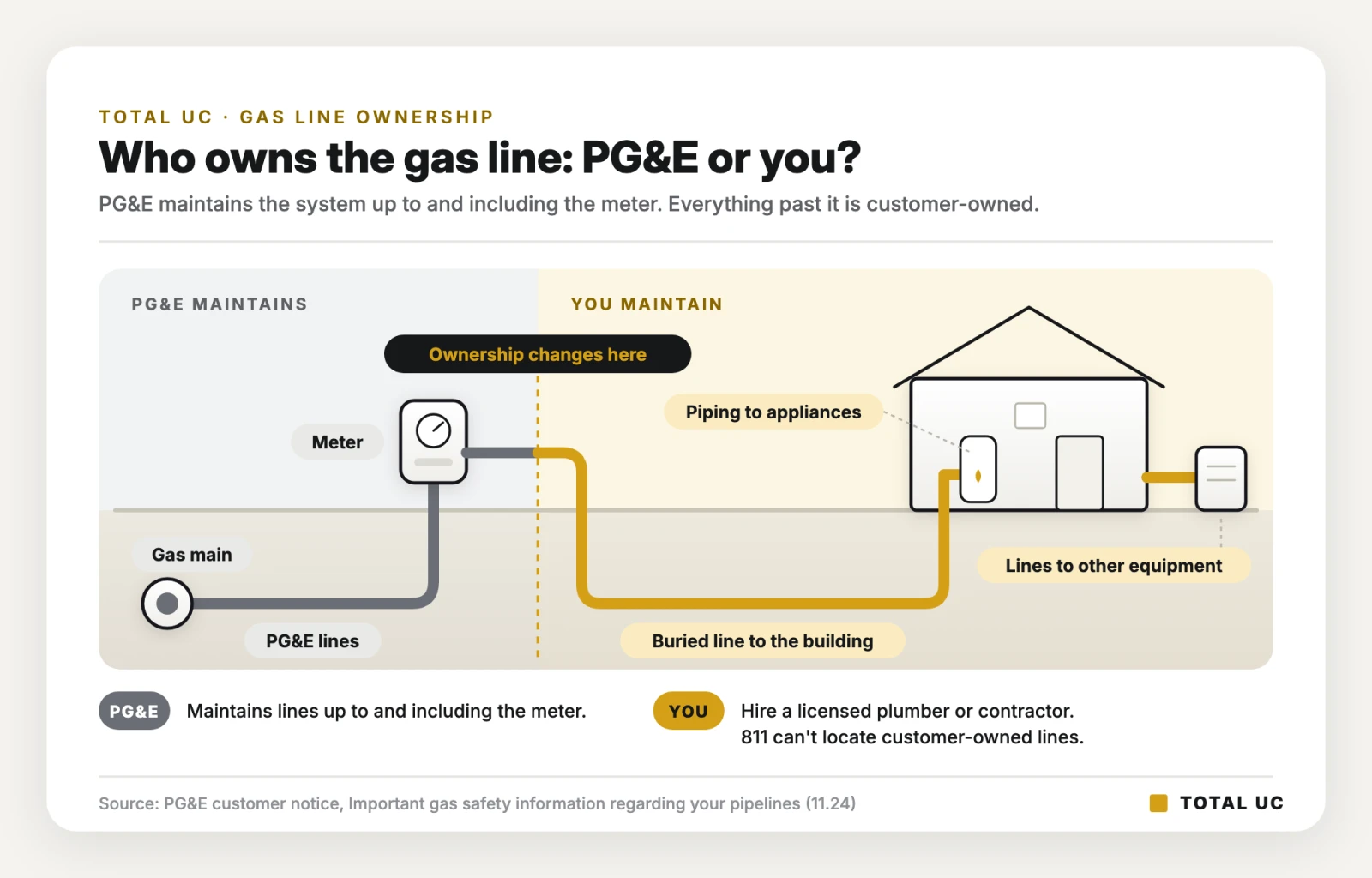
You don’t have to work out which side it’s on before you call. That’s what the first call is for.
Say you own a fourplex and a tenant smells gas along the side yard. PG&E comes out, makes the site safe and tells you the leak is on the buried line a few feet past the meter. From there, the repair is your project: finding the exact spot, digging, replacing the pipe and testing it before gas service is restored.
If nothing is leaking yet, PG&E recommends having your gas lines inspected periodically for leaks and corrosion. That’s what a gas line inspection is for.
How a licensed contractor repairs a gas leak
A professional gas leak repair comes down to four jobs: find the leak, repair or replace the failed pipe, pressure test the line and get gas service safely restored. How big a job that is depends almost entirely on where the leak is.
- Find it. On exposed pipe at an appliance or in a crawlspace, that can be quick. On buried pipe, the line has to be located before anyone digs.
- Repair or replace. A failed fitting or connector gets replaced. When a buried run has corroded through in one spot, we usually recommend replacing the run instead of patching the hole, because the rest of the line has spent the same years in the same soil.
- Test it. We pressure test repaired lines and document the result before we close out the job. That test is how you know the repair holds.
- Restore service. A PG&E representative or another qualified professional does the safety check to restore gas and relight pilots.
Where the leak is sets the size of the job:
| Where the leak is | What the repair involves |
|---|---|
| Exposed pipe or an appliance connection indoors | Usually a service visit: find the leak, replace the failed fitting or pipe, pressure test |
| Buried line under lawn or open dirt | Locate the line (811 won’t mark it), open a trench, replace the pipe, pressure test, backfill |
| Buried line under a driveway, slab or parking lot | Locate the line, then often bore a new line instead of trenching through the surface |
When the leak is in a buried gas line
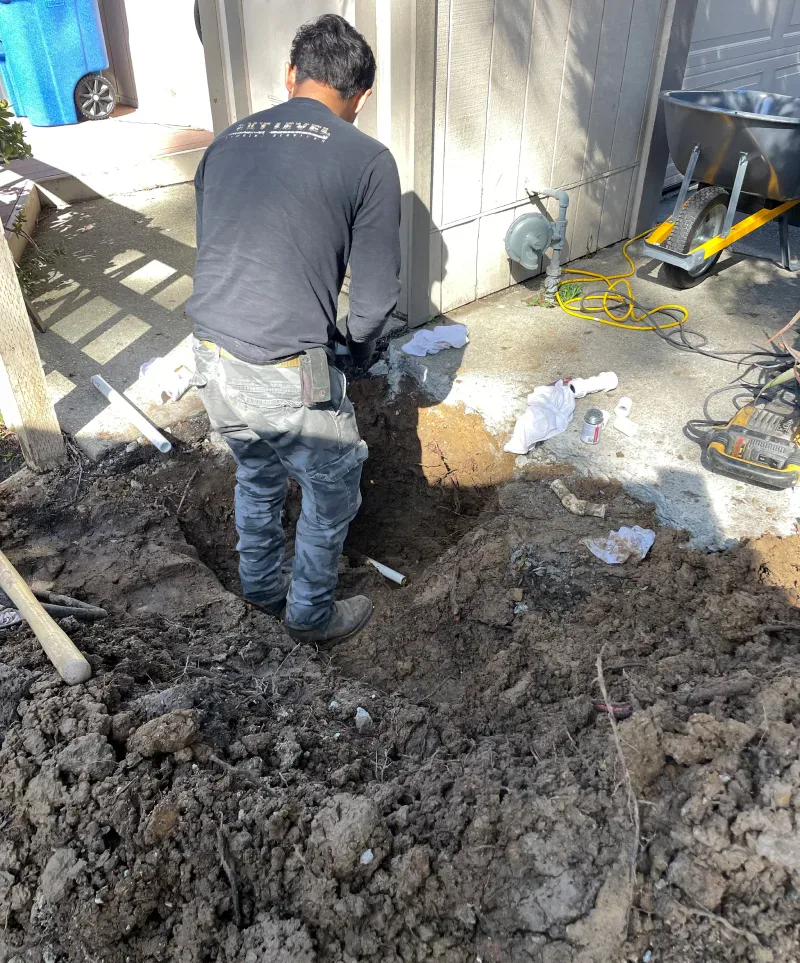
A leak in the buried line between your meter and your building is underground construction, and it starts with finding the pipe. Calling 811 won’t mark it. 811 notifies PG&E and other utilities to mark their own underground lines, and PG&E notes that customer-owned gas lines can’t be located by contacting 811. A licensed contractor or plumber has to locate yours.
Once the line is found, the route decides the method:
- If the line runs under lawn or open dirt with room to work, open-cut trenching is usually the simplest way in, with no pavement to break.
- If it runs under a driveway, a slab, a parking lot or mature landscaping, directional boring lets a crew install a new line from a pit at each end instead of cutting open everything in between. Our directional boring cost guide covers when that beats a trench.
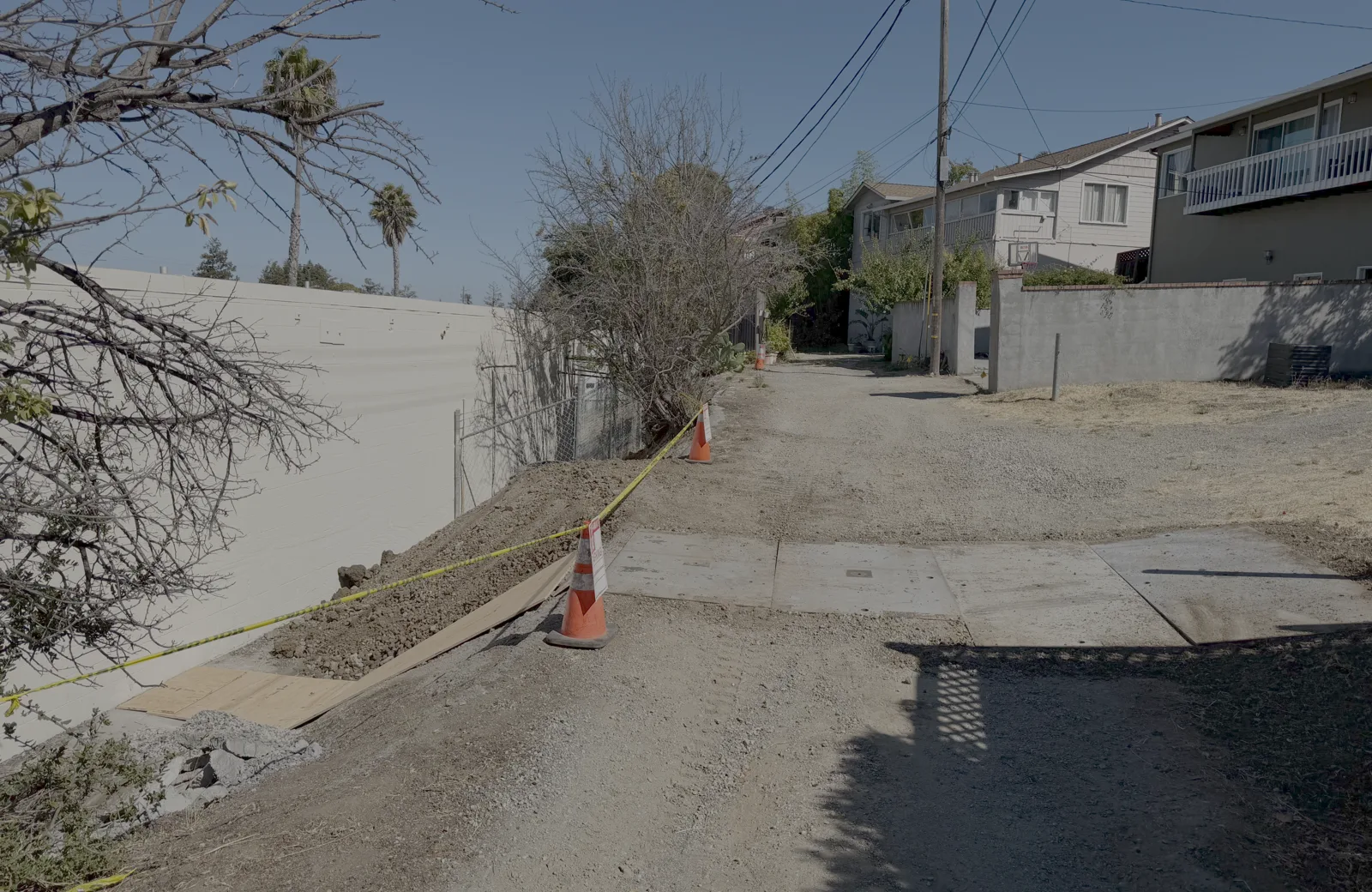
Steel plates over a Total UC gas trench crossing an alleyway easement in Belmont. The trench runs to the gas main.
Picture a restaurant whose gas service runs under its own customer lot. Trenched, the job means saw-cutting and repaving a strip of the lot, with that strip closed while the work happens. Bored, the crew works from a pit at each end and most of the lot stays open. The pipe is the same either way. What changes is how much of the lot gets torn up.
This is the part of gas work most people never see, and it’s the core of our underground construction services. Total Underground Construction is a Class A General Engineering contractor (CSLB License 1094194) and PG&E Applicant Installer qualified, with our current OQ numbers published on our PG&E trenching and conduit page.
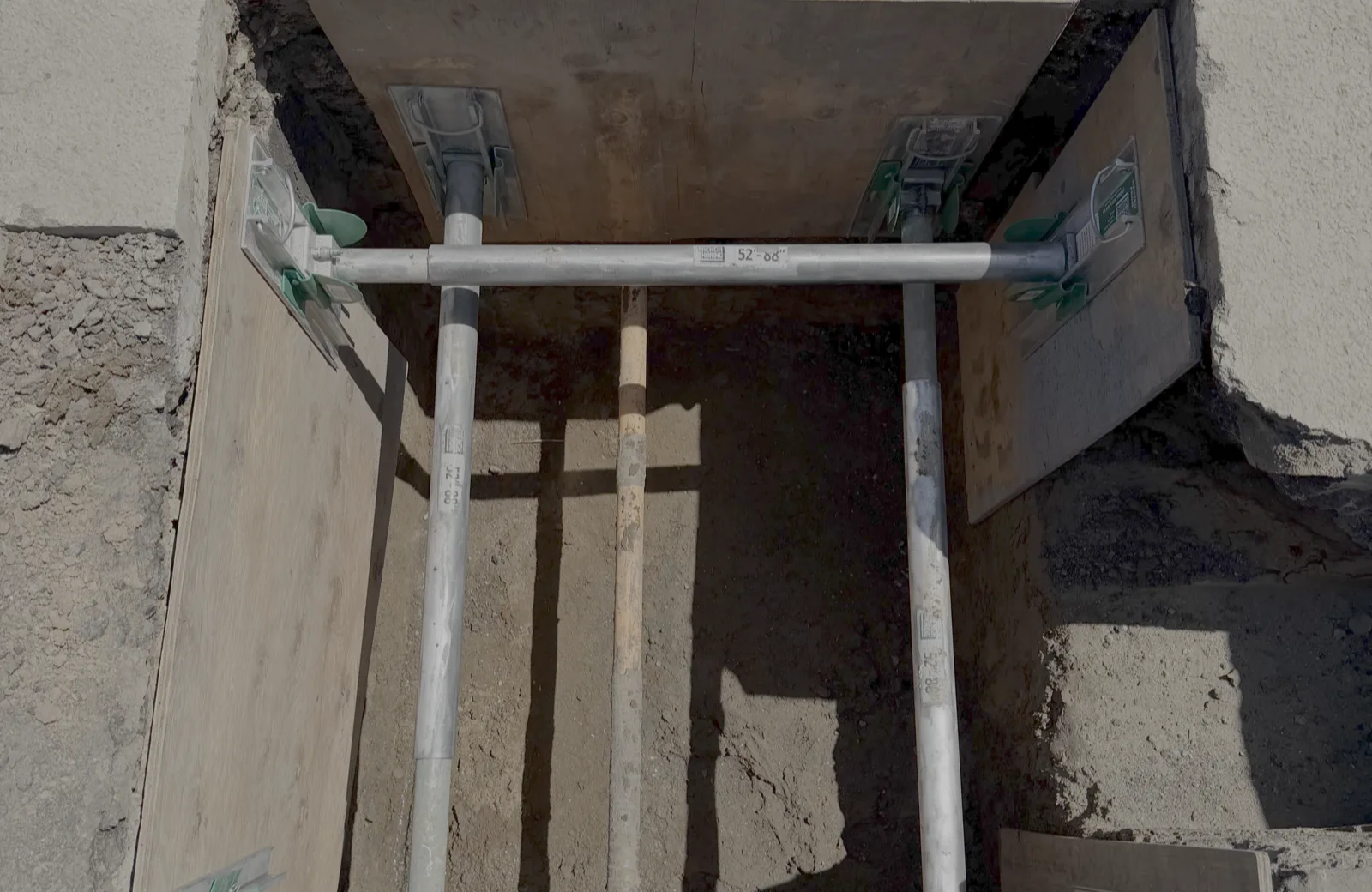
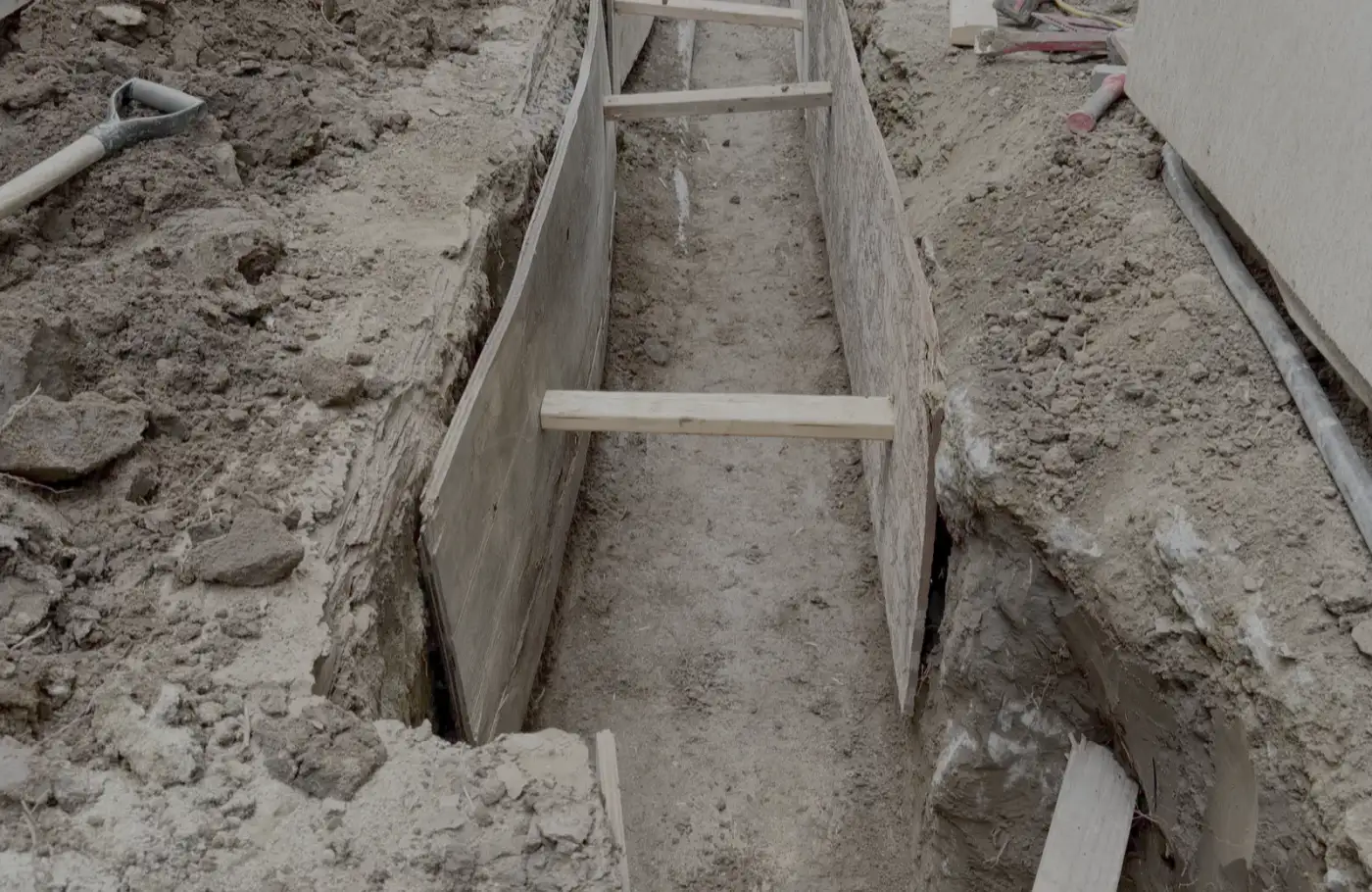
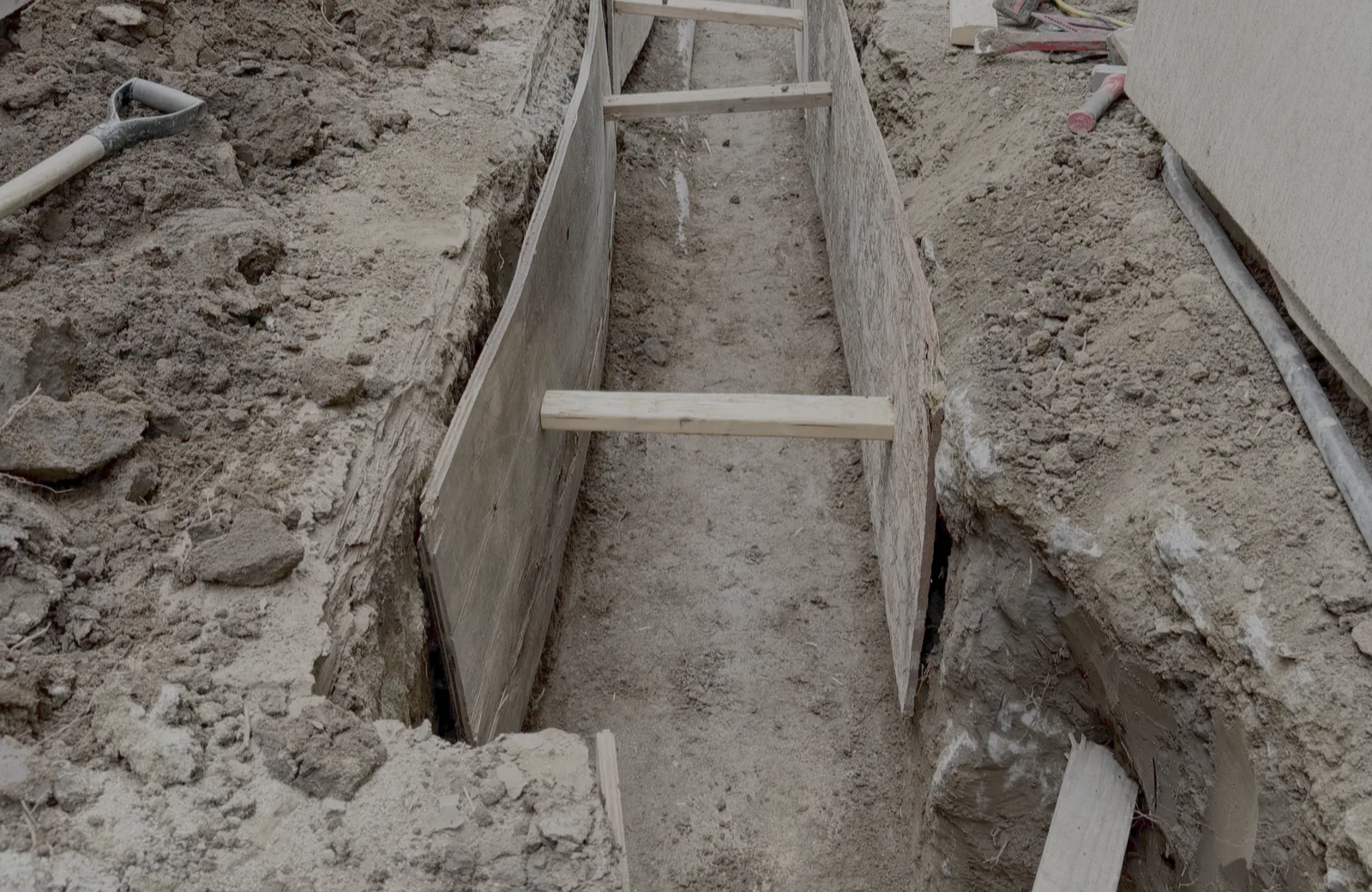
Shoring inside a Total UC excavation for a PG&E gas mainline upgrade.
Gas leak repair FAQs
Is a small gas leak an emergency?
Yes. PG&E’s guidance is the same for any gas smell: leave the area, call 911, then call PG&E at 1-800-743-5000. PG&E adds the odor so you can detect even small amounts, so a faint smell still counts.
Can you stay in a house with a gas leak?
No. Get everyone out and make your calls from a neighbor’s house or somewhere well away from the building. PHMSA warns that phones, light switches and garage door openers can ignite gas in the air.
Who do I call for a gas leak?
Call 911 first, then PG&E at 1-800-743-5000. If the leak turns out to be on your side of the meter, you’ll then need a licensed plumber or contractor to make the repair.
Does PG&E repair gas leaks?
PG&E maintains the gas system up to and including the meter. Past the meter, the piping is customer-owned, and the property owner is responsible for maintaining and repairing it.
Will tape or a sealant stop a gas leak?
Not as a repair. We don’t recommend tape or sealants of any kind on a leaking gas line. A leak needs a licensed repair followed by a pressure test.
How long does it take to fix a gas leak?
It depends on where the leak is. A leak in exposed pipe is a much smaller job than one in a buried line, which has to be located, dug up or bored, replaced and tested. If your gas has been shut off, it stays off until the repair is done and service is restored.
How do I get my gas turned back on?
Through PG&E or another qualified professional. PG&E says a PG&E representative or another qualified professional should do the safety check to restore gas service and relight your appliance pilots. Don’t turn it back on yourself.
Gas line repair from Total Underground Construction
Once PG&E has made the site safe and the leak is on your side of the meter, you need a licensed contractor who can find the leak and prove the repair holds. Total Underground Construction is an underground contractor based in San Leandro, and gas line work, including the buried lines between the meter and the building, is part of what we do across the Bay Area. See our gas line repair services or call (415) 350-3363 to get the repair scheduled.