What Is a Pressure Reducing Valve (PRV)?
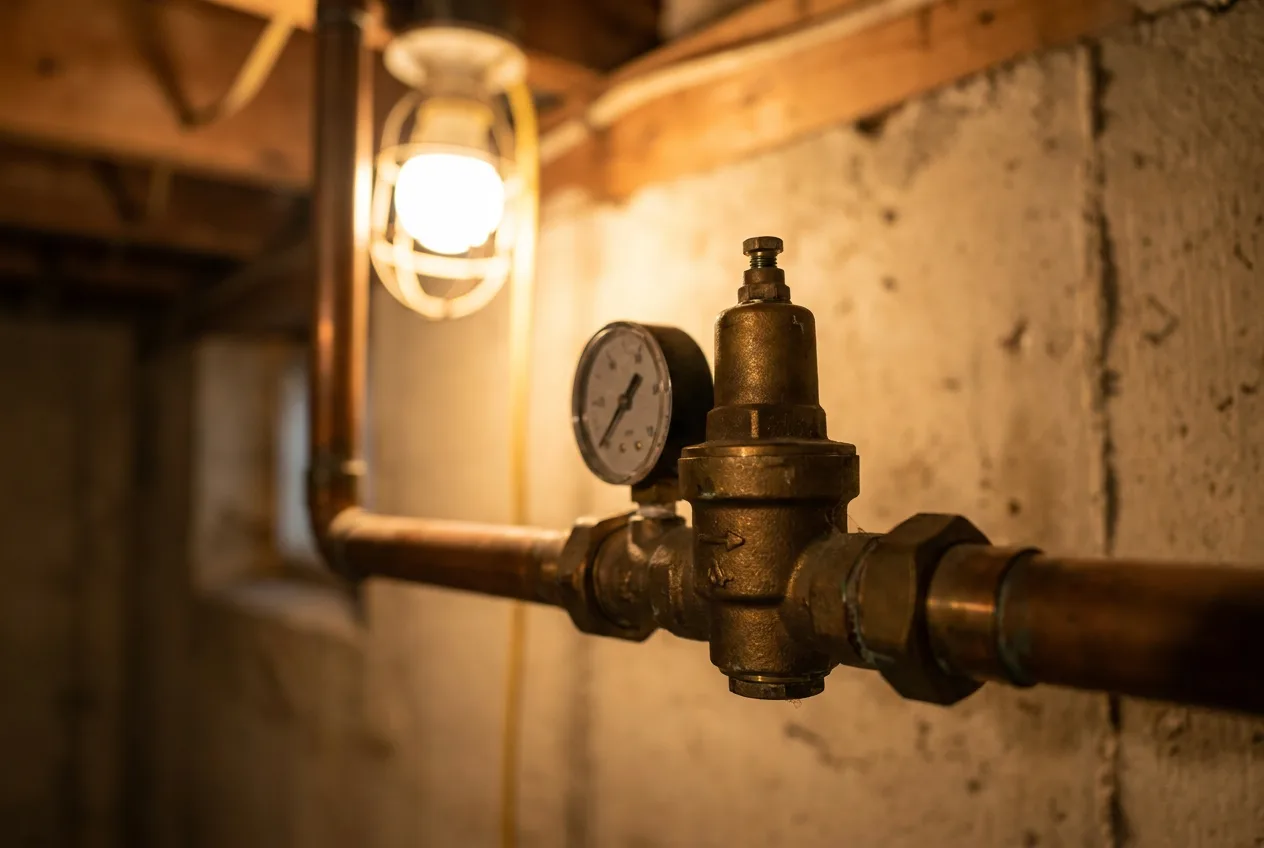
A pressure reducing valve represents “a mechanism located where the water supply enters the home that reduces higher or fluctuating pressure upstream to provide constant lower pressure downstream.”
PRVs differ from pressure relief valves (safety valves), which vent excess water rather than regulate pressure.
How a PRV Functions in a Plumbing System
PRVs are constructed from stainless steel or brass and contain an inlet, outlet, and spring-loaded diaphragm. Spring pressure opens the valve; outlet pressure closes it. An adjustment screw controls water pressure output.
High-pressure water compresses the diaphragm against spring tension. When outlet pressure drops below the set point, spring force opens the valve. Users can tighten or loosen the adjustment screw to increase or decrease outgoing water pressure.
The Role of a PRV in Your Plumbing System
- Most fixtures operate optimally at approximately 50 psi
- Safe maximum pressure is 80 psi per US code standards
- Municipal supplies sometimes exceed 150-200 psi
- Prevents pipe bursts, water heater damage, and appliance failure
- Protects against damaging pressure surges or drops
Signs Your PRV Might Be Failing
- Inconsistent water pressure (excessive or insufficient)
- Strange plumbing noises (rumbling, vibrating, hammering)
- Visible leaks or dripping around the valve
- Water heater running constantly or fluctuating temperatures
- Corrosion or rust on the exterior
- Age-related deterioration after several years
Failures can cause burst pipes, leaking faucets, running toilets, and premature appliance breakdown.
What To Do if Your PRV is Failing
Contact a Professional Plumber: Licensed plumbers can diagnose issues and recommend repair or replacement. They select appropriate valve types for specific systems.
Turn Off Water Supply: Shutting off the main supply prevents water waste and damage while awaiting repairs.
Installation Importance: PRV installation requires professional expertise to ensure correct positioning, adjustment, and optimal functioning.
Conclusion
PRVs are essential protective mechanisms when municipal water pressure exceeds 80 psi—often a plumbing code requirement. Even when not mandatory, they prevent damage to water heaters, fixtures, and appliances. Regular inspection and maintenance ensure reliable operation.
Total Underground Construction offers PRV replacement and comprehensive plumbing services throughout the Bay Area, including 24/7 emergency repairs.