If you are planning a renovation or addition, now is the time to get serious about fire sprinkler pricing. The 2025 California Fire Code took effect on January 1, 2026, expanding automatic sprinkler requirements for buildings exceeding 5,000 square feet and introducing updated fire detection standards. Meanwhile, California’s insurance market continues to tighten — the FAIR Plan now offers up to 12 wildfire hardening discounts, and major carriers are increasingly requiring fire protection measures for coverage in high-risk zones. If you have been researching sprinkler costs, the sooner you lock in a contractor, the more control you have over timing and price.
Installing a residential fire sprinkler system is one of the most effective investments a Bay Area homeowner can make for safety and property protection. According to the National Fire Protection Association (NFPA), fire sprinklers reduce the risk of death in a home fire by 81% and cut property damage by an average of 58%. But what does it actually cost?
Whether you are building a new home and need to meet California’s mandatory sprinkler requirement, retrofitting an older Bay Area property to qualify for insurance discounts, or planning a major renovation that will trigger code compliance thresholds, this guide breaks down every cost component of residential fire sprinkler installation in the Bay Area for 2026, including new construction versus retrofit pricing, system types, component costs, permit requirements by city, insurance savings, maintenance expenses, and the total cost of ownership over the life of your system.
How Much Does a Residential Fire Sprinkler System Cost in the Bay Area?
The total cost depends primarily on whether you are installing during new construction or retrofitting an existing home. Bay Area pricing runs higher than national averages due to labor costs, permit fees, and California-specific code requirements.
2026 Bay Area Cost Summary
| Installation Type | Cost Per Sq. Ft. | Total for 2,000 Sq. Ft. Home |
|---|---|---|
| New construction (integrated) | $1.50 — $3.50 | $3,000 — $7,000 |
| New construction (standalone) | $2.50 — $5.00 | $5,000 — $10,000 |
| Retrofit (existing home) | $3.50 — $7.00 | $7,000 — $14,000 |
| Retrofit (complex/multi-story) | $5.00 — $10.00 | $10,000 — $20,000 |
These ranges include materials, labor, permits, and inspection fees. The national average is approximately $1.00-$2.00 per square foot for new construction, making Bay Area costs roughly 50-100% higher due to prevailing wage rates, stricter California fire codes, and local permit requirements.
The Real Fear: Hidden Costs and Surprises
We understand the concern. You budget $10,000 for a retrofit and then the contractor finds galvanized water service that cannot deliver adequate flow, or your local jurisdiction requires a dedicated fire service meter connection that was not in the original bid. Here is how to protect yourself:
- Demand an itemized bid, not a lump-sum quote. Every component in the breakdown tables below should appear as a separate line item.
- Ask about flow testing upfront. If your home’s water pressure is below 40 PSI or flow rate is under 20 GPM, you may need a booster pump ($1,500-$4,000) or storage tank ($800-$2,500). A qualified contractor tests this before quoting.
- Confirm what “permit fees” means. Some contractors include permit costs in their bid; others add them as extras. Bay Area permit fees run $350-$1,500 depending on city. Get clarity in writing before you sign.
California Residential Fire Sprinkler Code Requirements
Understanding California’s fire sprinkler mandates is essential before budgeting your project.
California Building Code (CBC) Requirements
Since January 1, 2011, the California Building Code (CBC Chapter 9, Section 903.2) has required automatic fire sprinkler systems in all new one- and two-family dwellings and townhouses. This requirement applies to:
- All new single-family home construction
- New townhouse construction
- Additions that increase a home’s total area beyond 50% of the original square footage (varies by jurisdiction)
- Significant remodels that trigger a “substantial improvement” threshold
Additionally, the 2025 California Fire Code (effective January 1, 2026) requires automatic fire extinguishing systems in all occupancies where the total building area exceeds 5,000 square feet or is more than two stories in height. The updated code also mandates that homeowners provide either a local exterior waterflow alarm or interconnection of interior smoke alarms to a waterflow switch.
Existing homes are not required to retrofit sprinkler systems unless undergoing major renovations that trigger permit thresholds. However, many Bay Area homeowners choose voluntary installation for safety and insurance benefits.
If you are planning a major renovation — a kitchen expansion, an ADU addition, or a second-story build — check with your local building department before finalizing your budget. Additions exceeding 50% of existing floor area can trigger full sprinkler compliance in some Bay Area jurisdictions, and discovering this requirement mid-project adds both cost and delay.
NFPA 13D: The Residential Sprinkler Standard
Residential fire sprinkler systems must comply with NFPA 13D, the standard specifically designed for one- and two-family dwellings and manufactured homes. Key provisions include:
- Sprinklers required in all habitable rooms, closets, hallways, and attached garages
- Bathrooms under 55 square feet, attics, and small closets may be exempt
- System must deliver adequate water flow for a minimum of 10 minutes
- Maximum coverage area of 144-400 square feet per sprinkler head depending on hazard classification
- Residential sprinkler heads must be UL-listed and specifically rated for residential use
Local Amendments by Bay Area City
Individual Bay Area cities may impose additional requirements beyond the state minimum:
| City | Notable Local Requirements |
|---|---|
| San Leandro | CBC standard; plan review required through Building Division |
| Oakland | Enhanced requirements for hillside homes in fire zones |
| San Francisco | SFFD review required; seismic bracing for all risers |
| Hayward | CBC standard; backflow preventer testing annually |
| Fremont | CBC standard; separate fire line meter required for new construction |
| San Jose | Additional requirements for homes in Wildland-Urban Interface zones |
Always confirm current requirements with your local building department before finalizing plans and budgets.
Fire Sprinkler System Types Compared
Choosing the right system type significantly affects both installation cost and long-term performance.
Multipurpose (Integrated) System
A multipurpose system shares piping with the home’s domestic water supply. Cold water lines serve double duty, feeding both plumbing fixtures and sprinkler heads.
Pros:
- Lowest installation cost ($1.50-$3.50 per sq. ft.)
- Less piping material required
- Simpler installation during new construction
- No separate water supply needed
Cons:
- Water quality concerns if system sits stagnant in low-use areas
- Cannot be installed in homes with well water without additional treatment
- Requires backflow prevention at the main connection
Best for: New construction on municipal water with standard layouts.
Standalone System
A standalone system has its own dedicated piping network separate from the domestic water supply, using CPVC, steel, or copper pipe.
Pros:
- Independent from household plumbing
- No cross-contamination risk
- Can include dedicated water storage
- Works with well water systems
Cons:
- Higher installation cost ($2.50-$7.00 per sq. ft.)
- More piping material and labor
- Requires dedicated water supply connection or storage tank
Best for: Retrofits, homes on well water, or properties where code requires a separate fire service connection.
System Type Comparison Table
| Feature | Multipurpose | Standalone |
|---|---|---|
| Installation cost (new construction) | $1.50 — $3.50/sq. ft. | $2.50 — $5.00/sq. ft. |
| Installation cost (retrofit) | $3.50 — $5.50/sq. ft. | $5.00 — $7.00+/sq. ft. |
| Separate piping | No | Yes |
| Backflow preventer needed | Yes | Yes |
| Water storage tank | Not typically | Optional/sometimes required |
| Maintenance complexity | Lower | Higher |
| NFPA 13D compliant | Yes | Yes |
Detailed Component Cost Breakdown
Understanding individual component costs helps you evaluate contractor bids and identify where pricing may be inflated.
Sprinkler Heads
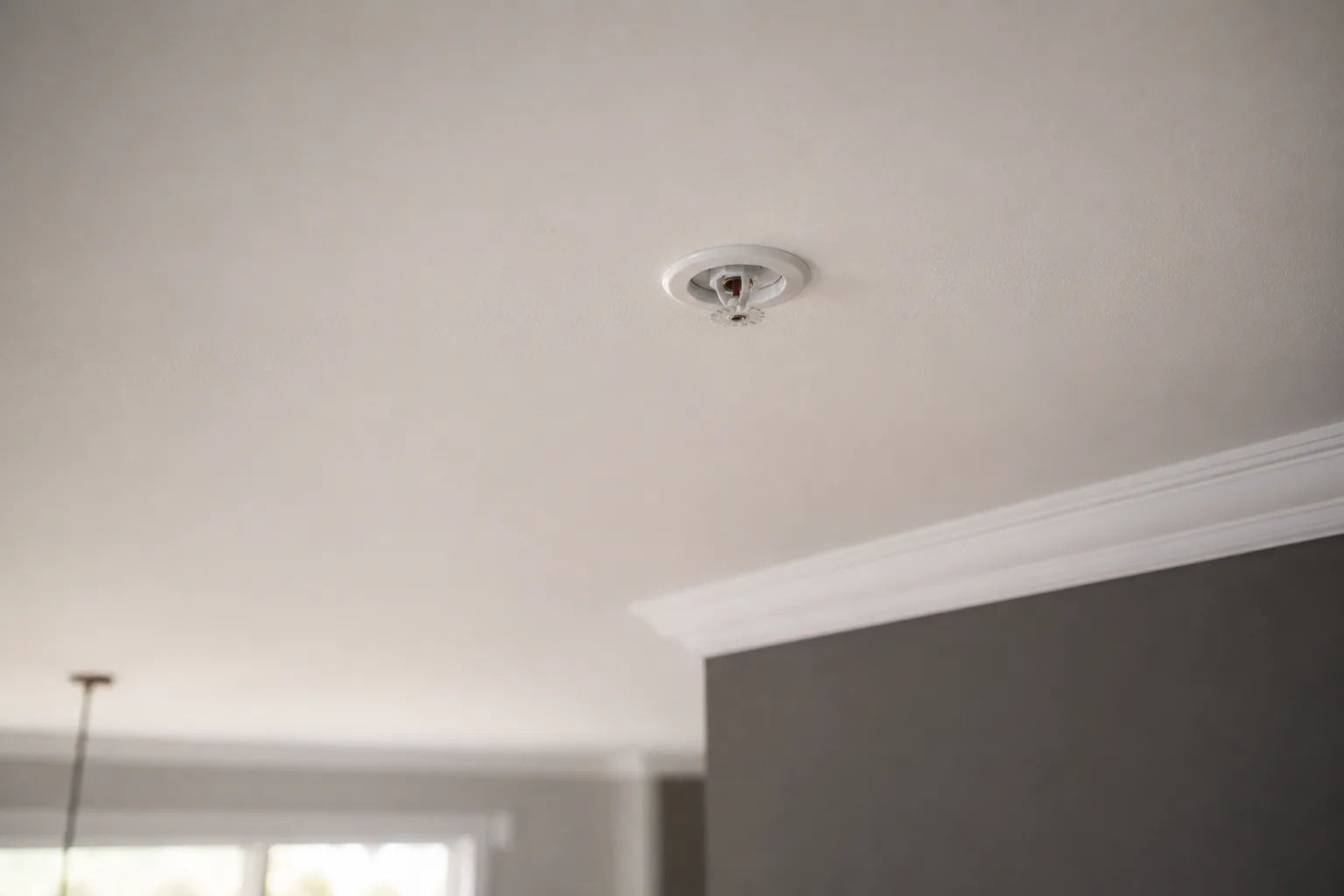
Residential sprinkler heads (pendent, sidewall, or concealed types) cost $12-$35 each installed, depending on style. Concealed heads with decorative cover plates cost more but blend with ceiling finishes. Most rooms require one to two heads. A typical 2,000-square-foot home needs 15-25 sprinkler heads.
| Head Type | Cost Per Unit | Typical Use |
|---|---|---|
| Pendent (exposed) | $12 — $18 | Standard rooms, garages |
| Sidewall | $15 — $25 | Rooms with finished ceilings where overhead access is limited |
| Concealed (flush mount) | $25 — $35 | Living areas where aesthetics matter |
| Recessed | $20 — $30 | Standard rooms with drop ceilings |
Piping Materials
| Material | Cost Per Linear Ft. (installed) | Notes |
|---|---|---|
| CPVC | $3 — $6 | Most common for residential; lightweight, corrosion-resistant |
| Copper | $8 — $14 | Durable but expensive; required by some local codes |
| PEX (cross-linked polyethylene) | $2 — $5 | Flexible, easy to route through existing walls for retrofits |
| Black steel | $10 — $18 | Commercial standard; sometimes used in garages and basements |
Backflow Preventer
Municipal water systems require a backflow preventer to protect the public water supply from contamination. A residential reduced-pressure backflow assembly costs $300-$800 installed, plus annual testing fees of $75-$150 per California Health and Safety Code requirements.
Alarm and Flow Monitoring
| Component | Cost Range |
|---|---|
| Water flow alarm switch | $80 — $200 |
| Alarm valve (wet system) | $150 — $350 |
| Pressure gauge | $25 — $50 |
| Tamper switch | $50 — $100 |
| Monitoring connection to fire alarm panel | $150 — $400 |
Fire Department Connection (FDC)
For homes where required by local code (typically larger residences or those on private water systems), a fire department connection costs $500-$1,500 installed.
Water Storage
If municipal water pressure or flow is insufficient, a storage tank and fire pump may be required:
| Component | Cost Range |
|---|---|
| Storage tank (300-500 gallon) | $800 — $2,500 |
| Fire pump (if needed) | $1,500 — $4,000 |
| Pressure tank (small systems) | $300 — $800 |
New Construction vs. Retrofit: A Detailed Comparison
The timing of your installation is the single biggest cost factor.
New Construction Installation
Installing during new construction is dramatically cheaper because:
- Piping routes through open walls and ceilings before drywall
- Sprinkler installation coordinates with plumbing rough-in
- No demolition, patching, or painting required
- Multipurpose systems share infrastructure with domestic plumbing
- Single permit process covers all trades
Typical timeline: 2-4 days for rough-in, 1 day for trim after finishes, 1 day for testing and inspection.
Total cost for 2,000 sq. ft. new home: $3,000-$7,000
Retrofit Installation
Retrofitting an existing home costs more because:
- Pipes must route through finished walls, attics, or crawl spaces
- Drywall removal, patching, and repainting may be necessary
- Existing water supply may need upgrading for flow requirements
- Separate permits for plumbing, fire, and potentially electrical work
- Furniture and contents must be protected during work
Typical timeline: 3-7 days depending on home size and accessibility.
Total cost for 2,000 sq. ft. existing home: $7,000-$14,000
Our recommendation: If you are building new, the sprinkler system is one of the best-value safety investments you will make — at $3,000-$7,000, it represents less than 1% of total construction cost and returns multiples in insurance savings and resale value. If you are retrofitting, the cost is higher but the math still works: a $10,000 retrofit on a $1.2 million Bay Area home pays for itself through insurance savings alone within 15-25 years, and you get the safety benefit from day one.
Insurance Premium Savings
One of the most compelling financial arguments for fire sprinklers is the reduction in homeowners’ insurance premiums. According to insurance industry data, sprinkler-equipped homes qualify for significant discounts:
| Insurance Provider | Typical Sprinkler Discount |
|---|---|
| State Farm | 5% — 10% |
| Allstate | 5% — 15% |
| USAA | Up to 15% |
| Liberty Mutual | 5% — 10% |
| Farmers | 3% — 10% |
| CSAA (AAA) | 5% — 12% |
For a Bay Area home with an annual premium of $2,500-$4,000, a 10% discount saves $250-$400 per year. Over 20 years, that totals $5,000-$8,000 in insurance savings alone, often exceeding the cost of installation in new construction.
Some specialty insurers offer discounts of up to 35% for comprehensive fire protection systems that include sprinklers, monitored fire alarms, and smoke detectors. Contact your insurance provider before installation to confirm available discounts and any system requirements for qualification.
New for 2026: The California FAIR Plan — the insurer of last resort for homeowners who cannot obtain coverage in the private market — now offers up to 12 wildfire hardening discounts applied to the wildfire portion of your premium. Homeowners who earn all qualifying discounts can save up to 16.4% off the wildfire portion of their premium. Fire sprinklers are recognized as a home-hardening upgrade under this program, making them even more valuable for Bay Area homeowners in fire-prone areas who are struggling to find or keep insurance coverage.
Permit Requirements and Fees
Permit Process
Bay Area fire sprinkler installations require:
- Plan submission: Hydraulic calculations and sprinkler layout drawings prepared by a licensed fire protection engineer or C-16 Fire Protection Contractor
- Plan review: Local building department and fire department review (2-4 weeks in most Bay Area cities)
- Rough-in inspection: Pressure testing of piping before walls are closed
- Final inspection: Flow testing, head placement verification, and system acceptance
Typical Bay Area Permit Fees
| City | Approximate Permit Fee |
|---|---|
| San Leandro | $400 — $800 |
| Oakland | $600 — $1,200 |
| San Francisco | $800 — $1,500 |
| Hayward | $350 — $700 |
| Fremont | $400 — $900 |
| San Jose | $500 — $1,000 |
These fees are typically included in contractor bids but confirm this in writing before signing a contract.
Maintenance Schedule and Costs
Fire sprinkler systems require regular maintenance to remain functional and code-compliant. NFPA 25 (Standard for the Inspection, Testing, and Maintenance of Water-Based Fire Protection Systems) outlines the following schedule:
| Maintenance Task | Frequency | Estimated Cost |
|---|---|---|
| Visual inspection of heads and piping | Monthly (homeowner) | Free |
| Flow test and alarm verification | Annually | $150 — $300 |
| Backflow preventer testing | Annually | $75 — $150 |
| Full system inspection (professional) | Annually | $200 — $400 |
| Sprinkler head replacement (if needed) | As needed / every 20 years | $15 — $50 per head |
| Control valve inspection | Quarterly | Included in annual service |
| Gauge calibration/replacement | Every 5 years | $50 — $100 |
Annual maintenance budget: $300-$600 per year for a typical residential system. This ensures your system remains operational and your insurance discounts stay valid.
Total UC provides comprehensive fire line inspection and maintenance services for residential fire sprinkler systems throughout the Bay Area.
Installation Timeline: What to Expect
New Construction Timeline
| Phase | Duration |
|---|---|
| Design and engineering | 1 — 2 weeks |
| Permit submission and review | 2 — 4 weeks |
| Rough-in installation | 2 — 4 days |
| Rough-in inspection | 1 — 3 days (scheduling dependent) |
| Trim installation (after finishes) | 1 day |
| Final testing and inspection | 1 day |
| Total from design to approval | 6 — 10 weeks |
Retrofit Timeline
| Phase | Duration |
|---|---|
| Design, engineering, and survey | 2 — 3 weeks |
| Permit submission and review | 3 — 6 weeks |
| Installation | 3 — 7 days |
| Drywall repair and painting | 2 — 5 days |
| Final testing and inspection | 1 — 2 days |
| Total from design to approval | 8 — 14 weeks |
Scheduling note: Skilled tradespeople in the Bay Area are in high demand, with plumbers, electricians, and fire protection contractors often booking 2-6 weeks out. If you have a target completion date, start the design and permitting process well ahead of it, especially for work planned in the busy summer months.
Why DIY Installation Is Not an Option
Professional installation is not optional for fire sprinkler systems. Here is why:
- NFPA 13D requires design by a qualified professional and installation by a licensed contractor
- California permits are issued only to licensed C-16 Fire Protection Contractors or appropriately licensed plumbing contractors
- Insurance coverage is voided if the system is not installed and inspected per code
- Hydraulic calculations must account for water pressure, flow rates, pipe friction loss, and head spacing — errors can result in a system that fails to suppress a fire
- Improper installation risks water damage from accidental discharge, inadequate coverage during a fire, or system failure when needed most
Your Next Steps
If you are considering a fire sprinkler system — whether for new construction compliance, a retrofit, or a renovation that may trigger the mandate — here is how to move forward:
- Determine your code requirement. Contact your local building department to confirm whether your project triggers the California sprinkler mandate. If you are building new, it is mandatory. If you are renovating, the threshold varies by jurisdiction.
- Call your insurance provider. Before committing to installation, confirm the exact discount you will receive for a sprinkler system. Ask whether monitored systems qualify for additional savings. Some Bay Area homeowners in WUI zones are finding that sprinkler installation is the difference between keeping coverage and losing it.
- Get a professional assessment. A qualified fire protection contractor will test your water pressure and flow rate, assess your home’s layout for optimal head placement, and identify any upgrades (booster pump, dedicated meter) that may affect cost. This assessment should be free with a reputable company.
- Compare bids on scope, not just price. Request itemized bids from at least two contractors. Compare line by line using the component costs in this guide. The lowest bid may be missing permit fees, backflow preventer costs, or drywall restoration.
What You Gain
Immediately: Code compliance (if required), peace of mind knowing your home is protected 24/7, and qualification for insurance discounts that begin with your next policy renewal.
Over time: $5,000-$12,000 in insurance savings over 20 years, a 2-4% increase in home resale value (see our guide to whether fire sprinklers increase home value), and the knowledge that a fire in your home is statistically 97% less likely to cause catastrophic damage.
Which Situation Sounds Like Yours?
”I am building a new home and need to meet the sprinkler requirement.”
Who you are: Homeowner or builder constructing a new single-family home or townhouse anywhere in California.
Your constraint: Sprinklers are mandatory. You need to keep costs down while meeting code, and you do not want the fire protection scope to delay your overall construction timeline.
What you need to know: A multipurpose (integrated) system at $1.50-$3.50 per square foot is the most cost-effective option for new construction because it shares piping with your domestic plumbing. The key is engaging the fire protection contractor during the design phase so sprinkler rough-in coordinates with plumbing, not after framing is complete.
Our recommendations:
- Choose a multipurpose system unless your water supply or local code requires standalone
- Include the sprinkler contractor in your pre-construction meeting with the plumber and GC
- Budget $3,000-$7,000 for a 2,000 sq. ft. home and confirm permits are included in the bid
”I want to retrofit my existing Bay Area home for safety and insurance savings.”
Who you are: Homeowner with a pre-2011 home in the Bay Area, likely motivated by insurance premium increases, difficulty renewing coverage, or awareness of wildfire and fire risks after recent California fire seasons.
Your constraint: You want the safety and insurance benefits but are concerned about installation disruption, drywall damage, and whether the investment pencils out financially.
What you need to know: PEX piping is the best choice for most retrofits because it is flexible enough to route through existing walls, attics, and crawl spaces with minimal demolition. Expect some drywall work, but a skilled contractor can minimize it by using attic and crawl space access points.
Our recommendations:
- Start with a water pressure and flow test — if your home cannot deliver 20 GPM at 40 PSI, you will need a booster pump, which adds $1,500-$4,000
- Ask about concealed sprinkler heads ($25-$35 each) for living areas where aesthetics matter
- Contact your insurer first to confirm the discount amount and any requirements for system monitoring
”I am renovating and just found out sprinklers may be required.”
Who you are: Bay Area homeowner doing a significant remodel — an addition, second story, or whole-house renovation — who discovered that the project scope triggers the fire sprinkler mandate.
Your constraint: You did not budget for sprinklers, and the requirement feels like an unwelcome surprise. You need to understand the actual cost impact and how to integrate it without derailing your renovation timeline.
What you need to know: The trigger point varies by jurisdiction, but generally, additions exceeding 50% of existing floor area or projects exceeding certain valuation thresholds require full sprinkler compliance. Since your walls are already open for renovation, installation costs are closer to new construction rates ($2.50-$5.00/sq. ft.) than full retrofit rates.
Our recommendations:
- Treat this as a new-construction scenario wherever walls are open — you will save 30-50% versus a post-renovation retrofit
- Coordinate the sprinkler rough-in with your plumbing rough-in to avoid rework
- Remember that while the upfront cost was not in your original budget, you gain insurance savings and resale value that offset the investment
”I need to protect my home to keep or qualify for insurance.”
Who you are: Bay Area homeowner who has received a non-renewal notice, a premium increase of 40% or more, or has been pushed to the California FAIR Plan due to fire risk in your area.
Your constraint: You need to demonstrate fire hardening to retain or obtain coverage, and you need to do it within your policy renewal window.
What you need to know: The California FAIR Plan now offers up to 12 wildfire hardening discounts (effective November 15, 2025) that can reduce the wildfire portion of your premium by up to 16.4%. Fire sprinklers qualify as a hardening upgrade. Major private carriers are also expanding fire mitigation discount programs for 2026.
Our recommendations:
- Request a list of qualifying fire hardening measures from your insurer or the FAIR Plan
- Prioritize sprinkler installation alongside other high-impact measures (Class A roof, enclosed eaves, ember-resistant vents)
- Document everything — installation certificate, inspection reports, maintenance records — and submit to your insurer immediately after final inspection
Frequently Asked Questions
Are fire sprinklers required in existing Bay Area homes?
No. California’s residential fire sprinkler mandate (CBC Chapter 9, Section 903.2) applies to new construction only, not existing homes. However, if you perform a major renovation that exceeds 50% of the home’s assessed value or significantly alters the floor plan, some Bay Area jurisdictions may require sprinkler installation as part of the remodel permit. Contact your local building department to confirm threshold requirements.
How much water does a residential fire sprinkler use if it activates?
Residential sprinkler heads discharge approximately 15-26 gallons per minute, and only the head(s) nearest the fire activate — not the entire system. The typical residential fire is controlled by one or two sprinkler heads. Compare this to fire department hoses that deliver 150-250 gallons per minute. Sprinklers use 85-95% less water than fire department response alone and cause dramatically less water damage.
Will fire sprinklers damage my home if they go off accidentally?
Accidental discharge is extremely rare. The odds of an accidental sprinkler activation are approximately 1 in 16 million per head per year, according to NFPA data. Residential sprinkler heads activate only when temperatures reach 135-165 degrees Fahrenheit at the head itself. Smoke, cooking steam, and minor heat sources do not trigger activation. When they do activate, the water damage from one or two heads is vastly less than the destruction from an uncontrolled fire.
Can I install fire sprinklers in just part of my home?
NFPA 13D requires sprinklers in all areas of the home as specified by the standard (habitable rooms, closets over 24 sq. ft., hallways, and attached garages). Partial installations do not meet code and will not pass inspection. However, certain small spaces like bathrooms under 55 square feet, attics without storage, and detached structures may be exempt depending on local code interpretation.
How long do residential fire sprinkler systems last?
With proper maintenance per NFPA 25, residential fire sprinkler systems last 40-50+ years. CPVC and copper piping have service lives exceeding 50 years in residential conditions. Sprinkler heads should be tested after 20 years and replaced if they fail laboratory testing. Control valves and backflow preventers may need rebuilding or replacement at 15-25 year intervals. Annual professional inspections catch developing issues before they compromise system reliability.
Get a Fire Sprinkler Installation Estimate
Total UC is a licensed fire line installation contractor serving the Bay Area. Whether you are building a new home requiring sprinkler compliance, retrofitting an existing property, or need inspection and maintenance for an existing system, our team provides accurate estimates and professional installation.
For a detailed comparison of commercial system costs, see our guide to commercial fire sprinkler system costs.
Ready to price your system? Contact Total UC today for a free consultation and estimate on your residential fire sprinkler project, and schedule your assessment early to secure the installation window you want.
Written by Joseph Dometita, Total UC