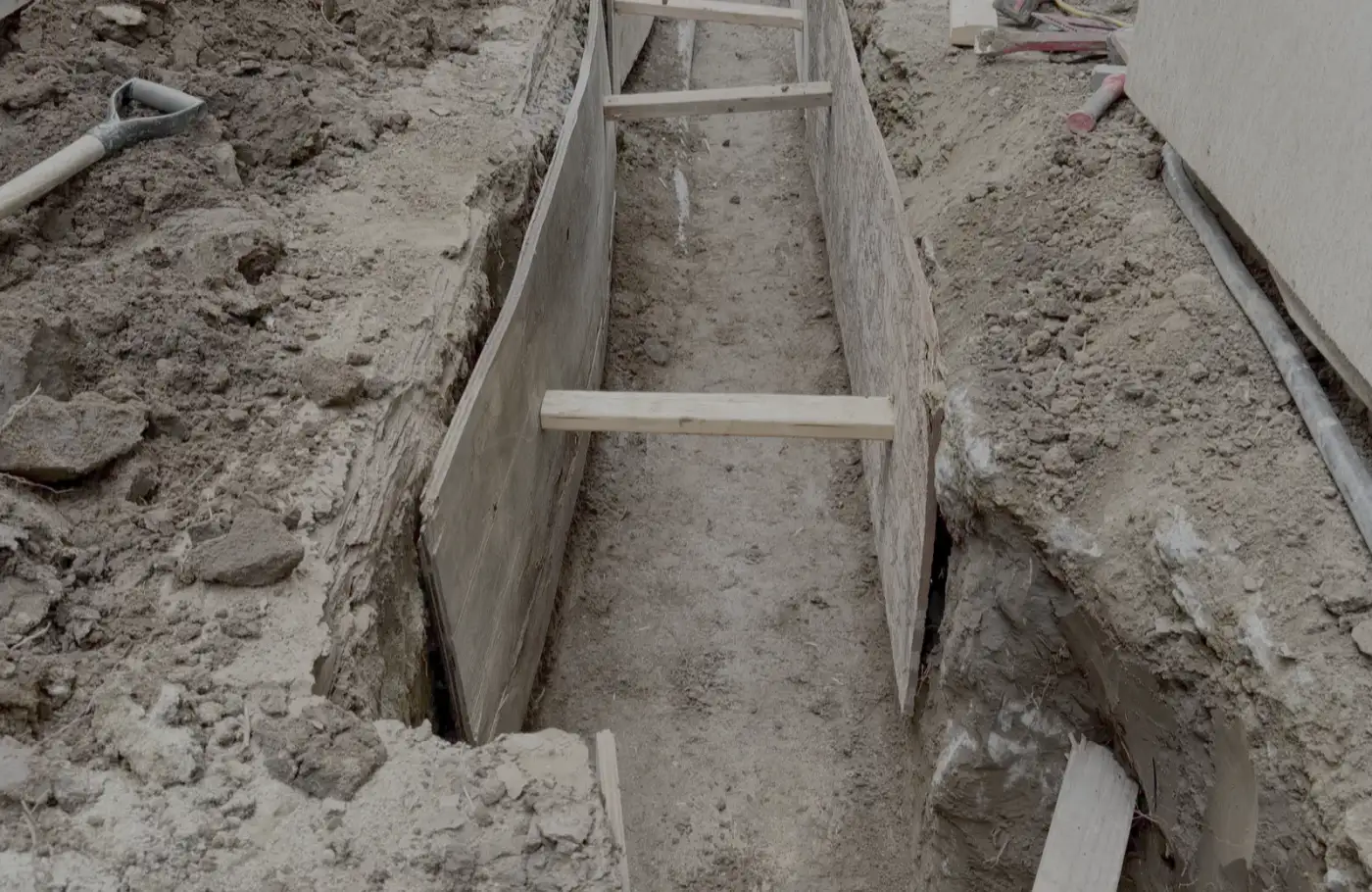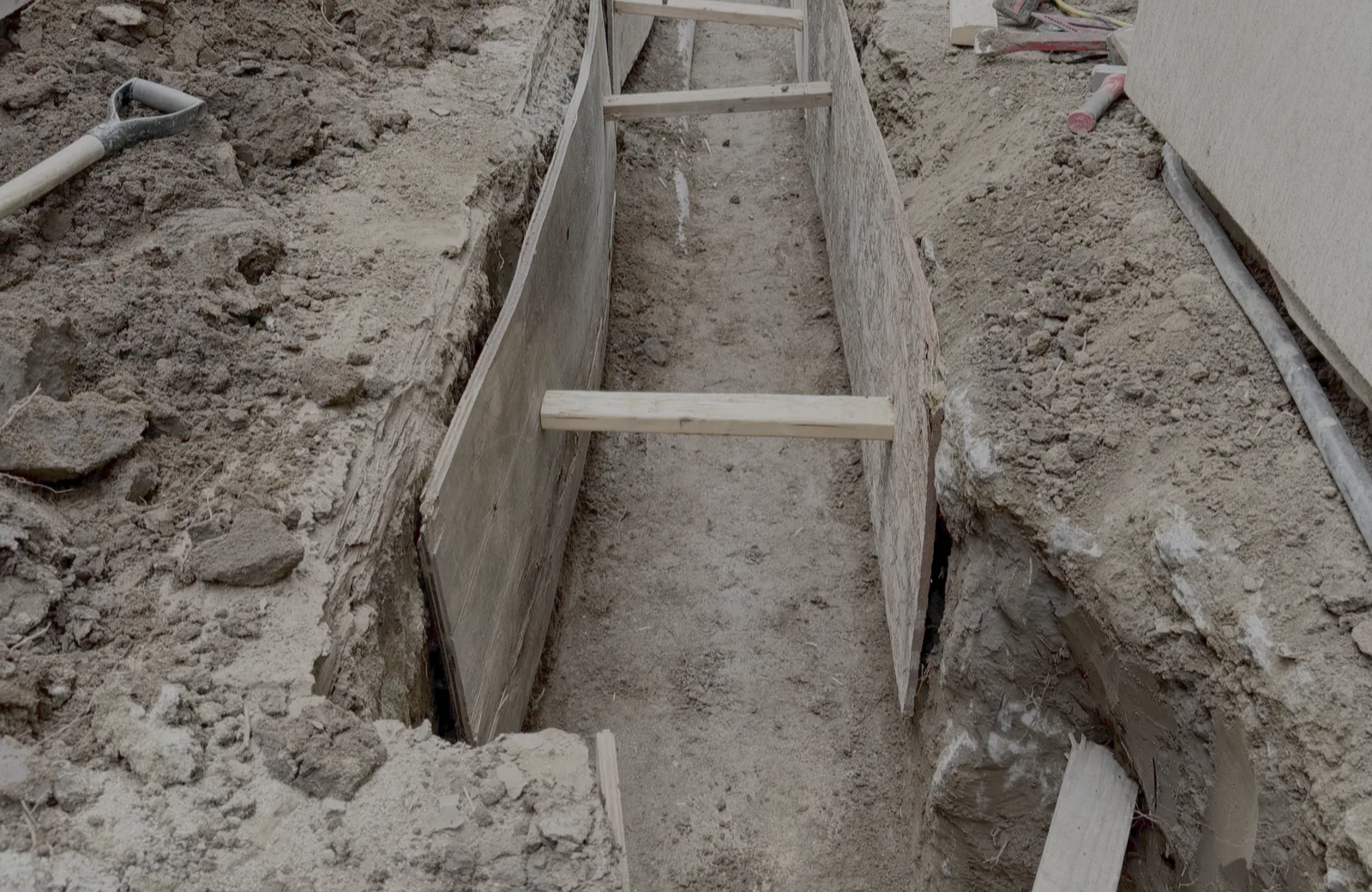
An underground pipe leak can waste thousands of gallons of water per month, drive up your utility bills, and cause serious structural damage to your Bay Area property. According to the U.S. Environmental Protection Agency (EPA), the average household leak wastes nearly 10,000 gallons of water annually, and 10% of homes have leaks that waste 90 gallons or more per day (source: EPA WaterSense).
Whether you suspect a slab leak under your San Leandro home or notice unexplained wet spots in your yard, knowing how to find leaks in underground pipes is the first step toward protecting your property and your wallet. In this guide, Total Underground Construction breaks down every detection method, their costs, when to call a professional, and the unique Bay Area soil conditions that affect your underground plumbing.
If you are a homeowner in the East Bay with an older home, a property manager overseeing multiple units, or a buyer doing due diligence before closing, this guide was written for you. Bay Area ground moves with the seasons: clay soils swell through the wet winter and shrink as they dry out, and that cycle cracks joints and widens existing pipe damage. Knowing when and how to check for leaks helps you catch a problem before it spreads.
When to Check for Underground Leaks
Bay Area weather swings between a wet winter and a long dry season. That cycle of saturation and drying puts enormous stress on buried pipes — especially the clay, cast iron, and galvanized steel lines found under older homes throughout San Leandro, Oakland, Hayward, and the broader East Bay.
Spring, as the ground comes out of the rainy season, is the sweet spot for leak detection. The ground has absorbed months of rain and is beginning to stabilize, making it easier for detection equipment to get accurate readings. Tree roots, energized by spring growth, are aggressively seeking moisture and may have infiltrated pipe joints over winter. And if you plan to sell a property in Oakland, Alameda, Albany, Emeryville or Piedmont, EBMUD requires a sewer lateral compliance certificate at the sale, so finding underground problems early gives you time to plan repairs before escrow.
Common Causes of Underground Pipe Leaks
Before you can detect a leak, it helps to understand why underground pipes fail in the first place. Here in the San Francisco Bay Area, several factors accelerate pipe deterioration.
Pipe Age and Material Degradation
Older homes across San Leandro, Oakland, and Hayward often have cast iron, galvanized steel, or clay sewer lines installed in the 1950s through 1970s. After 50-70 years of service, these materials become brittle, corroded, and prone to cracking. Copper pipes, while more durable, develop pinhole leaks from prolonged exposure to acidic soil and water chemistry common in Alameda County.
If your East Bay home was built before the 1980s and the underground plumbing has never been replaced, the pipes are likely nearing or past their expected service life. Many homeowners do not realize this until a leak drives up their water bill or a pre-sale inspection reveals the problem.
Bay Area Soil Movement and Seismic Activity
The San Francisco Bay Area sits along several active fault lines. Even minor seismic activity creates ground shifts that stress pipe joints and connections. The expansive clay soils found throughout San Leandro and surrounding cities expand during wet winters and contract during dry summers, creating cyclical pressure on buried pipes that eventually causes cracks and joint separations.
Each spring, the transition from a wet winter to drier conditions sets the soil contracting, pulling it away from pipe walls and destabilizing joints. Property managers with multi-unit buildings should be especially watchful during this transition period, as even one undetected leak can affect shared utility costs across an entire property.
Tree Root Intrusion
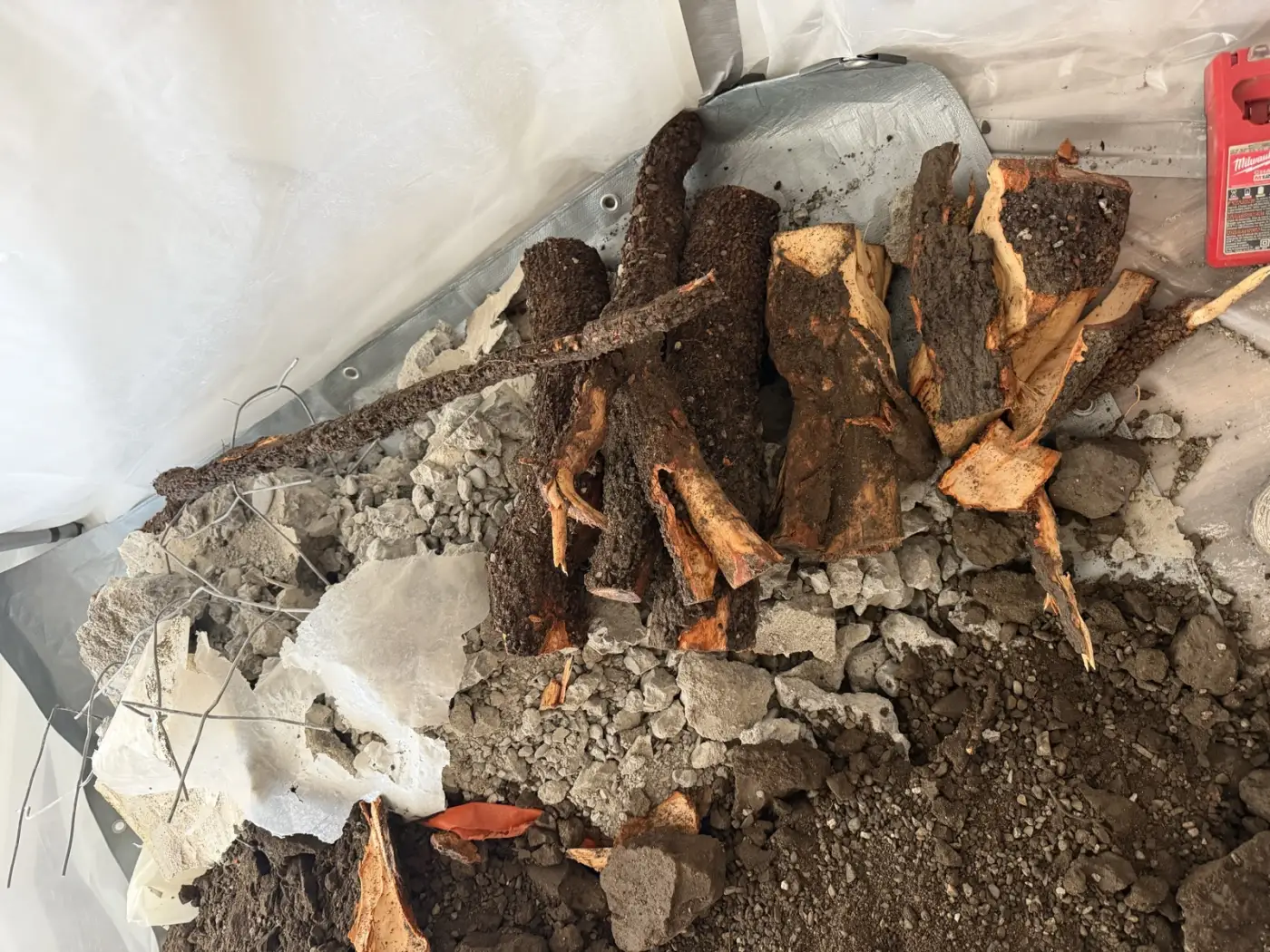
Mature oak, eucalyptus, and redwood trees common across the Bay Area send aggressive root systems deep underground seeking moisture. These roots infiltrate pipe joints, hairline cracks, and connection points, gradually widening openings and causing blockages and leaks. Root intrusion is one of the most common causes of sewer line damage in residential areas.
Spring is peak root growth season. Roots that may have been dormant over winter are now actively expanding and seeking water sources — including the moisture inside your sewer and water lines. If you have mature trees within 15 feet of your underground pipe runs, spring is the time to schedule a camera inspection.
Corrosion
Chemical reactions between metal pipes and surrounding soil or water create rust buildup that eats through pipe walls over time. Bay Area water chemistry and the mineral content of local soils can accelerate corrosion, particularly in galvanized steel and cast iron pipes.
High Water Pressure
Water pressure exceeding 80 psi places excessive stress on pipe walls, joints, and fittings. The American Society of Plumbing Engineers recommends maintaining household water pressure between 40-60 psi. Many Bay Area homes, particularly those at lower elevations, receive municipal water at pressures that can exceed safe thresholds without a properly functioning pressure regulator.
Poor Installation or Improper Joints
Pipes installed without proper sealing, incorrect slope grades, or inadequate bedding material are prone to premature failure. Joints that were not properly cemented, sealed, or aligned during initial construction allow water to escape gradually, worsening over time.
Clogged Lines Creating Back-Pressure
Blockages from grease buildup, mineral deposits, or accumulated debris create elevated pressure inside pipes. This internal pressure stresses pipe walls and joints, eventually forming cracks. In sewer lines, blockages can cause sewage to find alternative escape routes through any weak point in the system.
10 Warning Signs of an Underground Pipe Leak
Detecting an underground leak early saves you thousands in repair costs. Watch for these telltale indicators.
1. Unexplained Spike in Water Bills
This is often the first and most reliable sign. If your East Bay Municipal Utility District (EBMUD) water bill increases by 20% or more without a change in usage patterns, an underground leak is a likely culprit. For reference, the average San Leandro household water bill runs approximately $80-$120 per month in 2026. A moderate underground leak can add $50-$200+ to your monthly bill.
Quick water meter test: Turn off all water fixtures and appliances in your home. Check your water meter and note the reading. Wait 2 hours without using any water. If the meter has moved, you likely have a leak.
2. Sudden Drop in Water Pressure
If multiple fixtures experience reduced pressure simultaneously, water may be escaping through a break in your main supply line before reaching your home’s plumbing system.
3. Wet Spots or Puddles in Your Yard
Persistently damp or soggy areas in your yard, especially during dry weather, indicate water escaping from an underground pipe. You may notice areas of grass that are greener or grow faster than surrounding lawn.
4. Foundation Cracks or Settling
Slab leaks erode the soil beneath your foundation, causing uneven settling. Look for new cracks in walls, floors, or the foundation itself. Doors and windows that suddenly stick or won’t close properly can also indicate foundation movement caused by an underground leak.
5. Mold, Mildew, or Musty Odors
Persistent moisture from an underground leak creates ideal conditions for mold and mildew growth. You may notice musty smells in your home, particularly near ground-level rooms, or see mold appearing on baseboards and lower walls.
6. Sounds of Running Water
If you hear hissing, dripping, or the sound of running water when all fixtures are turned off, water may be escaping through a crack or break in an underground pipe.
7. Warm Spots on Floors
A hot water line leak beneath a slab foundation creates warm spots on floors. Walk barefoot on tile or hardwood floors and pay attention to areas that feel noticeably warmer than their surroundings.
8. Foul Odors in Your Yard
Sewage escaping from a damaged sewer line produces unmistakable sulfur or rotten-egg odors in your yard. This indicates a sewer leak that requires immediate professional attention due to health and contamination risks.
9. Discolored or Contaminated Water
Rusty, brown, or sediment-laden water coming from your taps suggests pipe corrosion or a break allowing soil to enter your water supply. Blue-green staining on fixtures may indicate copper pipe corrosion.
10. Insect or Pest Activity
Cockroaches, sewer flies, and rodents are attracted to moisture and can enter your home through breaks in sewer lines. A sudden increase in pest activity, particularly near drains, may indicate a damaged underground pipe.
Professional Leak Detection Methods Compared
When DIY observation points to a potential leak, professional detection equipment pinpoints the exact location and severity. Here is how the main methods compare for Bay Area homeowners.
| Detection Method | Best For | Accuracy | Typical Bay Area Cost (2026) | Disruption Level |
|---|---|---|---|---|
| Acoustic Listening | Water line leaks under pressure | High (within 1-2 ft) | $250 - $500 | Minimal |
| Thermal Imaging (Infrared) | Slab leaks, hot water leaks | Moderate-High | $300 - $600 | None |
| Video Camera Inspection | Sewer/drain line damage | Very High | $350 - $700 | Minimal |
| Tracer Gas Detection | Non-pressurized or intermittent leaks | Very High | $400 - $900 | Minimal |
| Ground-Penetrating Radar (GPR) | Complex or deep pipe systems | High | $500 - $1,200 | None |
| Moisture Meters & Sensors | Slab leaks, wall leaks | Moderate | $200 - $400 | None |
Acoustic Leak Detection
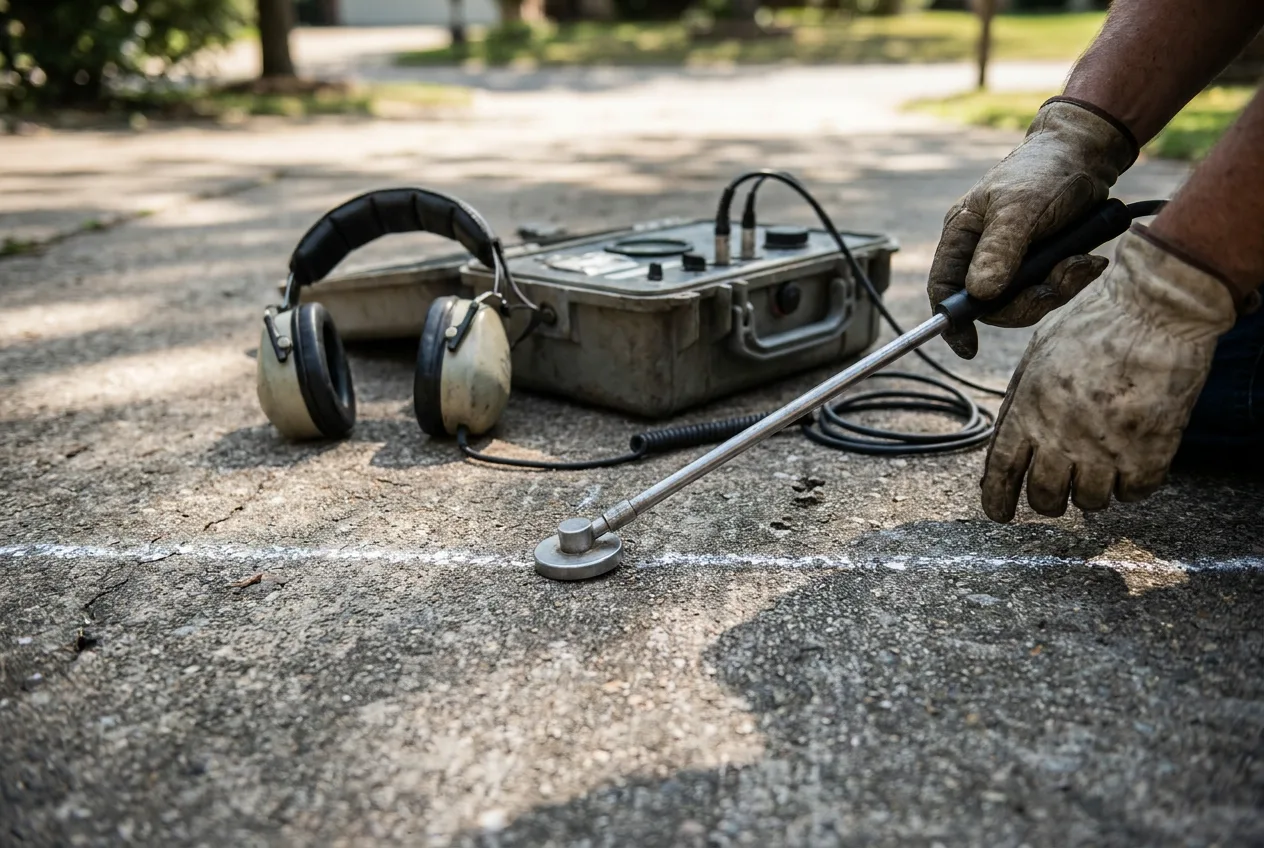
Acoustic detection uses sensitive microphones and ground sensors to listen for the sound of water escaping from pressurized pipes. The leak creates a distinct noise signature that trained technicians can differentiate from normal water flow, soil settling, and traffic vibrations.
How it works: A technician places highly sensitive listening devices (ground microphones or accelerometers) at access points such as hydrants, valves, and meters. The equipment amplifies the sound of escaping water and uses correlating software to triangulate the leak’s exact position.
Best for: Pressurized water supply lines, particularly those made of metal. Acoustic detection works well for leaks in main water lines running from the street to your home.
Limitations: Less effective on PVC or polyethylene pipes, which dampen sound. Background noise from traffic on busy San Leandro streets can interfere with readings, so testing is ideally performed during quiet hours.
Thermal Imaging (Infrared Camera)
Infrared cameras detect temperature variations on surfaces caused by leaking water. A hot water line leak creates a warm zone, while a cold water leak creates a cooler area compared to surrounding surfaces.
How it works: The technician scans floors, walls, and ground surfaces with a thermal camera that visualizes temperature gradients. Leaking water changes the thermal profile of concrete, soil, or flooring above the pipe.
Best for: Slab leaks, radiant heating systems, and hot water line leaks where temperature contrast makes detection straightforward.
Limitations: Cannot pinpoint leaks deep underground without a measurable surface temperature change. External factors like sunlight exposure and HVAC systems can create misleading thermal patterns.
Video Camera Inspection
A waterproof camera mounted on a flexible cable is fed through drain and sewer lines to provide real-time video of pipe interiors. This method identifies cracks, root intrusion, joint separations, corrosion, and blockages.
How it works: The camera is inserted through a cleanout or access point and pushed through the pipe. A locating transmitter in the camera head allows the technician to mark the exact above-ground position and depth of any damage found.
Best for: Sewer and drain line inspections, identifying the exact type and location of damage, pre-purchase home inspections, and verifying repair quality. Total UC uses advanced camera inspection as part of our sewer line testing and inspection services.
Limitations: Requires an access point and a pipe diameter large enough to accommodate the camera. Standing water or heavy blockages can obscure the camera view.
Tracer Gas Detection
A safe, non-toxic gas (typically a hydrogen-nitrogen mixture) is introduced into the pipe system. The gas escapes through any cracks or breaks and rises through the soil to the surface, where a sensitive detector identifies the leak location.
How it works: The pipe section is isolated and filled with tracer gas. A technician then walks the pipe route with a gas detector at ground level, pinpointing where gas concentrations are highest.
Best for: Non-pressurized lines (sewer, storm drain), intermittent leaks that are difficult to detect with other methods, and situations where pipes are too deep for thermal imaging.
Limitations: Wind can disperse the gas and reduce accuracy. Dense clay soils common in parts of the Bay Area may slow gas migration to the surface, requiring longer test times.
Ground-Penetrating Radar (GPR)
GPR transmits radar pulses into the ground and analyzes the reflected signals to map underground utilities, voids, and areas of saturated soil that indicate leaks.
How it works: A radar antenna is moved across the ground surface above the suspected pipe route. The equipment detects changes in soil density and moisture content, identifying areas where leaking water has saturated or eroded surrounding soil.
Best for: Locating pipes when their exact path is unknown, detecting voids caused by erosion, and surveying large commercial properties.
Limitations: Expensive for simple residential leaks. Results require expert interpretation. Highly mineralized clay soils in some Bay Area locations can reduce signal penetration.
DIY Leak Detection vs. Professional Detection: When to Call a Pro
Some initial leak detection steps are well within the ability of any homeowner. However, there is a clear line where professional equipment and expertise become necessary.
What You Can Do Yourself
- Water meter test: As described above, this confirms whether a leak exists somewhere in your system.
- Visual yard inspection: Walk your property looking for wet spots, sinkholes, unusually green patches, or areas where the soil has settled.
- Check exposed pipes: Inspect visible pipes in crawl spaces, basements, and under sinks for drips, moisture, or corrosion.
- Monitor water bills: Track usage patterns over several months to identify unexplained increases.
- Food coloring toilet test: Add food coloring to your toilet tank. If color appears in the bowl within 30 minutes without flushing, the flapper valve is leaking.
Many homeowners start with these DIY steps — and for good reason. They cost nothing and can confirm whether a problem exists. But there is an important difference between knowing you have a leak and knowing exactly where it is. Digging in the wrong spot turns a manageable repair into an expensive excavation project.
When to Call a Professional
Contact a professional leak detection service when:
- Your water meter test confirms a leak but you cannot locate it visually
- You suspect a slab leak (warm floors, foundation cracks, mold near ground level)
- You notice sewer odors in your yard or home
- Multiple signs point to a leak but the source is not visible
- Your property has older pipes (pre-1980s construction)
- You need to locate a leak before selling or purchasing a home
Our recommendation: If you have tried the DIY checks and the signs point to an underground issue, do not start digging. A professional leak detection assessment typically costs $250-$500 and can save you thousands by identifying the exact location before any excavation begins. The cost of detection is almost always less than the cost of one wrong dig.
Total UC provides comprehensive water leak detection in San Leandro using multiple technologies to ensure accurate identification of even the most hidden leaks.
Water Bill Impact: What a Leak Really Costs You
Understanding the financial impact of an underground leak motivates prompt action. Here is a breakdown based on 2026 EBMUD water rates for the San Leandro service area.
| Leak Severity | Estimated Water Loss | Monthly Cost Impact | Annual Cost Impact |
|---|---|---|---|
| Small drip (1/16” crack) | ~25 gallons/day | $15 - $25 | $180 - $300 |
| Moderate leak (1/8” crack) | ~100 gallons/day | $50 - $85 | $600 - $1,020 |
| Significant leak (1/4” crack) | ~400 gallons/day | $150 - $300 | $1,800 - $3,600 |
| Major break | ~1,000+ gallons/day | $400 - $800+ | $4,800 - $9,600+ |
Beyond your water bill, undetected leaks cause soil erosion, foundation damage, mold remediation costs, and landscape destruction. The average foundation repair in the Bay Area costs $8,000-$25,000, far exceeding the cost of early leak detection and pipe repair.
The real cost is not just water — it is what that water does to your property while you wait. A moderate leak running undetected for six months can erode enough soil to create voids under your foundation, attract root growth into the pipe, and create moisture conditions that foster mold throughout your ground floor. What starts as a $500-$2,500 pipe repair can escalate into a $15,000-$30,000 foundation and remediation project.
Underground Pipe Leak Repair Options and Bay Area Costs
Once a leak is located, repair costs vary based on the method used, pipe depth, and the extent of damage.
| Repair Method | Best For | Bay Area Cost Range (2026) | Timeline |
|---|---|---|---|
| Spot repair (excavation) | Single-point leak, accessible location | $800 - $2,500 | 1-2 days |
| Pipe relining (CIPP) | Multiple cracks, aging pipes | $3,000 - $8,000 | 1-2 days |
| Pipe bursting | Full line replacement, collapsed pipes | $4,000 - $12,000 | 1-3 days |
| Traditional excavation replacement | Severely damaged or collapsed lines | $5,000 - $15,000+ | 3-7 days |
| Water line repiping | Whole-house supply line replacement | $4,500 - $10,000 | 2-4 days |
For many Bay Area homeowners, trenchless pipe repair offers a cost-effective solution that avoids the disruption and expense of excavating driveways, landscaping, or foundations. Total UC specializes in trenchless methods that minimize property disruption while providing long-lasting repairs.
If your leak involves the main water supply line, our water line repair and repiping services cover everything from spot repairs to complete line replacement with modern materials.
Ground conditions matter for repair work. The months right after the rainy season are one of the best windows for underground pipe repair in the Bay Area. The soil is moist enough to excavate cleanly but not waterlogged, trenchless equipment performs optimally in these conditions, and you avoid the scheduling rush that comes when summer drought causes a wave of pipe failures from soil contraction. Getting a repair done while conditions are favorable typically means faster completion and lower total project cost.
Bay Area Soil and Terrain Considerations
The San Francisco Bay Area presents unique challenges for underground pipe systems that homeowners should understand.
Expansive Clay Soils
Much of San Leandro, Hayward, Fremont, and the East Bay flatlands sit on expansive clay soils. These soils swell when wet and shrink when dry, creating cyclical ground movement that puts constant stress on buried pipes. This expansion-contraction cycle is a leading cause of joint separations and pipe cracks in the region.
Seismic Activity
The Hayward Fault runs directly through the East Bay. Even small earthquakes (magnitude 2-3) that go largely unnoticed can shift soil enough to stress pipe connections. Following any significant seismic event, it is advisable to monitor your water bill and perform a meter test to check for new leaks.
High Water Tables
Parts of the Bay Area, particularly areas near the Bay shoreline in San Leandro, have high water tables. This makes excavation-based repairs more challenging and increases the advantage of trenchless methods. High water tables also mean that external groundwater pressure can infiltrate damaged sewer lines, increasing flow volumes and potentially overwhelming your system.
Hillside Properties
Homes in the Oakland and Berkeley hills, Castro Valley, and parts of San Leandro face additional challenges from slope movement, erosion, and gravity-fed water flow that can accelerate underground pipe damage.
How to Prevent Underground Pipe Leaks
Prevention is always less expensive than repair. These steps protect your Bay Area home’s underground pipes.
-
Schedule annual video inspections. A camera inspection every 1-2 years catches small problems before they become major failures. This is especially important for homes with pipes over 25 years old.
-
Install a water pressure regulator. If your home does not already have one, a pressure regulator keeps water pressure within the safe 40-60 psi range and costs $200-$400 installed.
-
Manage tree roots proactively. Plant new trees at least 10-15 feet from underground pipe runs. Consider root barriers for existing mature trees near sewer lines. Annual root treatment with copper sulfate or foaming root killer can slow root intrusion.
-
Monitor your water bill monthly. Set up online bill access through EBMUD and review monthly usage for unexpected increases.
-
Install a smart water monitor. Devices like Flo by Moen or Phyn Plus detect abnormal water flow patterns and can automatically shut off your main water supply if a major leak occurs. These cost $300-$600 installed and can save tens of thousands in water damage.
-
Address minor issues promptly. Small drips, slow drains, and minor pressure drops are warning signs. Addressing them early prevents escalation.
-
Know your pipe materials and age. If you are purchasing a home, request a sewer lateral inspection. If you own an older home, have a professional assess your pipe condition and remaining useful life.
Which Situation Sounds Like Yours?
Different people discover underground pipe leaks for different reasons. See if one of these scenarios matches your situation.
”My water bill jumped and I do not know why.”
You opened your EBMUD statement and the number was $50-$200 higher than normal. Nothing changed in your household — same number of people, no new appliances, no extra watering. This is the most common first sign of an underground leak, and the meter test described above is your immediate next step. If the meter confirms a leak, professional detection can pinpoint it in a single visit so you are not paying for wasted water another month.
”I am buying a home built in the 1960s and my inspector recommended a sewer scope.”
Smart move. Homes built in the 1950s through 1970s across San Leandro, Oakland, and Hayward typically have clay or cast iron sewer laterals that are 50-70 years old. A video camera inspection before you close can reveal root intrusion, cracked joints, and bellied sections that would cost $5,000-$25,000 to replace. This is also essential if the property is in an area with a point-of-sale lateral rule. The EBMUD area (Oakland, Alameda, Albany, Emeryville, Piedmont, El Cerrito, Kensington and the Richmond Annex), Berkeley, the Castro Valley Sanitary District and, since August 1, 2026, the Oro Loma Sanitary District all require a sewer lateral certificate before a sale closes.
”I tried snaking the drain myself, but the backup keeps coming back.”
Recurring backups after DIY drain clearing usually mean the problem is structural, not just a clog. Roots may be infiltrating a cracked joint, or a bellied section may be collecting debris faster than you can clear it. A camera inspection identifies whether you need a targeted repair or a full line replacement — ending the cycle of temporary fixes that never solve the underlying issue.
”I noticed a wet spot in my yard that will not dry, even though it has not rained recently.”
A persistently damp or soggy area in your yard when surrounding areas are dry is a classic sign of an underground water line leak. The longer it goes, the more soil erodes beneath the surface. If the wet area is near your foundation, the urgency increases — soil erosion near a foundation can cause settling and cracking that costs far more to repair than the pipe itself. Schedule a professional assessment before the ground dries out further this spring.
Your Next Steps
If any of the warning signs in this guide sound familiar, here is what to do right now:
-
Run the water meter test today. It takes two hours and zero dollars. Turn off everything, read the meter, wait, and read again. If it moved, you have a confirmed leak.
-
Document what you are seeing. Take photos of wet spots, note the dates of high water bills, and record any sounds or smells. This information helps your technician narrow down the detection approach.
-
Schedule a professional leak detection assessment. Total UC can typically schedule an inspection within days. The sooner you identify the exact location, the sooner you stop paying for wasted water and prevent further property damage.
-
Get a repair estimate before the problem grows. Underground leaks do not stabilize — they worsen. A crack that costs $800 to fix today may require a $5,000+ full section replacement in six months.
Timing matters too. Detection and repair are easiest once the ground has dried out after the rainy season. If you plan to sell a property in the EBMUD area, the sewer lateral certificate is due at the sale, so an early inspection keeps repairs out of your escrow timeline. Getting ahead of the problem saves you money and gives you more options.
Frequently Asked Questions
How much does underground leak detection cost in the Bay Area?
Professional leak detection in the San Leandro and greater Bay Area typically costs between $250 and $900 in 2026, depending on the methods required. A basic acoustic scan for a water line leak starts around $250-$500, while comprehensive detection using multiple technologies (thermal imaging, video inspection, tracer gas) ranges from $500-$900. Many plumbing companies, including Total UC, apply the detection fee toward the cost of repair if you hire them for the fix.
Can I find an underground leak myself without professional equipment?
You can confirm a leak exists using the water meter test: shut off all water, read the meter, wait 2 hours, and check again. Visual clues like wet yard spots, unusually green grass patches, foundation cracks, and high water bills all suggest a leak. However, pinpointing the exact location of an underground leak for repair requires professional equipment such as acoustic sensors, thermal cameras, or video inspection. Digging without accurate location data often leads to unnecessary property damage and higher overall costs.
How long can I wait before repairing an underground pipe leak?
Every day you wait, the leak gets worse. Underground leaks never fix themselves. A small leak wastes 25+ gallons daily and gradually erodes surrounding soil. Within weeks to months, a minor crack can expand into a major break, soil can erode to create voids under your foundation, and water damage can spread to create mold issues. The cost of repair escalates significantly the longer you wait. If you suspect a leak, schedule a professional inspection within days, not weeks.
Does homeowner’s insurance cover underground pipe leak repair?
Most standard homeowner’s insurance policies in California cover sudden and accidental water damage but do not cover the cost of repairing the pipe itself or damage caused by gradual leaks or deferred maintenance. Some policies offer optional “service line” coverage that covers underground pipe repair. Check your specific policy and consider adding service line coverage if you have older pipes. The cost is typically $50-$100 per year for coverage limits of $10,000-$15,000.
What are the signs of a slab leak specifically?
Slab leaks (leaks in pipes running beneath your concrete foundation) have distinct warning signs: warm or hot spots on the floor, the sound of running water when all fixtures are off, cracks in the foundation or walls, warped or buckled flooring, persistently damp carpet, mold or mildew at the base of walls, and a water bill that keeps climbing. If you notice two or more of these signs, contact Total UC for professional water leak detection as soon as possible.
Is spring really the best time for leak detection?
Usually, yes. The weeks after the rainy season ends are ideal in the Bay Area for several reasons. The ground has absorbed winter rain and is moist but not saturated, which means detection equipment (especially acoustic and thermal) produces more accurate readings. Soil conditions are also optimal for excavation or trenchless repair if a fix is needed — not too wet, not too dry. And you get ahead of summer, when soil contraction from drought causes a spike in new pipe failures and contractor schedules fill up.
Partner with Total UC for Expert Leak Detection and Repair
Total Underground Construction provides comprehensive underground leak detection, water line repair and repiping, sewer line testing and inspection, and trenchless pipe repair for residential and commercial properties across San Leandro and the greater Bay Area. Our team uses advanced detection technology to locate leaks accurately and recommend the most cost-effective repair solution for your situation.
If you suspect a leak or are getting ready to sell in the EBMUD area, now is the time to get your underground pipes inspected. Whether you are dealing with a suspected leak, preparing a property for sale, or just want peace of mind about your aging plumbing system, we can help.
Call Total UC today at (415) 350-3363 or request a free estimate to schedule a professional leak detection assessment.
Written by Joseph Dometita, Total Underground Construction. With decades of experience in Bay Area underground utility construction, Total UC delivers expert leak detection and repair services backed by industry-leading equipment and deep knowledge of local soil conditions and infrastructure.