How Much Does It Cost to Repipe a House?
Repiping a house in the Bay Area costs between $10,000 and $25,000 in 2026, with most homeowners paying around $12,000 to $18,000 for a standard two-bedroom or three-bedroom home. The final price depends on house size, number of fixtures, pipe material, accessibility, and whether your project requires significant restoration work after installation.
The Bay Area has some of the oldest residential plumbing infrastructure in California. Many homes in San Leandro, Oakland, Hayward, and surrounding cities were built between the 1920s and 1960s with galvanized steel, cast iron, or even lead pipes that have reached or exceeded their useful lifespan. If your home is more than 40 years old and has never been repiped, there is a strong chance the plumbing system is due for replacement. Whether you have lived in the same house for decades and watched water pressure slowly decline, or you recently purchased an older home and the inspection flagged aging pipes, repiping is one of the most impactful investments you can make in your property.
It is also worth noting the current material cost landscape. Construction input prices rose at a staggering 12.6% annualized rate through early 2026, driven by increases in copper, steel, and other materials. Steel tariffs raised to 50% on imports have pushed pipe costs higher, and copper prices have followed suit. If repiping is on your radar, pricing today is likely lower than it will be six months from now.
Total UC provides professional water line repair and repiping services throughout the Bay Area, using modern materials and trenchless pipe repair techniques that minimize disruption to your home.
2026 Repiping Cost by Home Size
The number of bedrooms, bathrooms, and fixtures in your home is the primary cost driver for a repiping project. Here are updated 2026 Bay Area estimates:
| Home Size | Estimated Cost Range | Typical Duration |
|---|---|---|
| Studio / 1-bedroom, 1-bath | $10,000 - $13,000 | 2-3 days |
| 2-bedroom, 1-bath | $12,000 - $16,000 | 3-4 days |
| 2-bedroom, 2-bath | $14,000 - $18,000 | 3-5 days |
| 3-bedroom, 2-bath | $16,000 - $22,000 | 4-6 days |
| 4-bedroom, 3-bath | $20,000 - $28,000 | 5-8 days |
| 5+ bedroom / custom | $25,000 - $35,000+ | 7-14 days |
These estimates include labor, materials (PEX piping), permits, and basic wall patching. They do not include full drywall restoration, painting, or flooring repair, which can add $2,000 to $8,000 depending on the extent of access cuts required. For homeowners worried about hidden costs that push the final bill well past the initial quote, asking for a detailed written estimate that separates labor, materials, permits, and restoration gives you full visibility into where every dollar goes.
Bay Area Repiping Permit Costs by City
Every Bay Area city requires a plumbing permit for whole-house repiping. Permit costs vary significantly by jurisdiction, and failing to pull a permit can create serious problems when you sell your home. Here are 2026 permit fee ranges for common Bay Area cities:
| City | Permit Fee Range | Typical Inspection Timeline |
|---|---|---|
| San Leandro | $250 - $500 | 3-5 business days |
| Oakland | $350 - $700 | 5-10 business days |
| San Francisco | $500 - $1,200 | 7-14 business days |
| Hayward | $250 - $500 | 3-5 business days |
| Fremont | $300 - $600 | 3-7 business days |
| San Jose | $350 - $700 | 5-10 business days |
| Berkeley | $350 - $650 | 5-10 business days |
| Alameda | $300 - $550 | 3-7 business days |
| Castro Valley (Alameda County) | $250 - $500 | 3-5 business days |
All repiping work in California must be performed by a licensed C-36 plumbing contractor. The California Contractors State License Board (CSLB) requires active licensure and workers compensation insurance for any plumbing project. Total UC is fully licensed and insured for residential and commercial repiping projects.
Permit fees typically cover the initial plan review and one or two inspections. Additional inspections, if needed, may incur fees of $75 to $200 per visit. During peak construction season (late spring through summer), permit review timelines can stretch longer than the ranges shown above, particularly in Oakland and San Francisco. Submitting your permit application sooner rather than later avoids added weeks of delay.
Signs Your Home Needs Repiping
Not every plumbing issue requires a full repipe. However, certain warning signs indicate that your pipes have reached the end of their functional life. If you have owned your Bay Area home for many years, some of these signs may have developed so gradually that they feel normal. They are not.
Discolored or Rusty Water
Brown, yellow, or reddish water coming from your taps is a strong indicator of internal pipe corrosion. This is especially common in homes with galvanized steel pipes, which begin corroding from the inside after 40 to 50 years. Running the water for several minutes may clear the discoloration temporarily, but the underlying corrosion will only worsen. Beyond the inconvenience, corroded pipes can affect water quality in ways that are not always visible, particularly if you have young children or family members with health sensitivities.
Frequent Leaks
If you are repairing pinhole leaks or joint failures more than once or twice a year, the entire system is likely deteriorating. Patching individual leaks becomes a losing battle when the pipe walls have thinned throughout the home. A water leak detection service can identify hidden leaks behind walls and under slabs. The cumulative cost of repeated leak repairs often exceeds the cost of a full repipe within just a few years, making it the less economical choice in the long run.
Low Water Pressure Throughout the House
Mineral deposits and corrosion narrow the interior diameter of old pipes, reducing water flow. If pressure is low at multiple fixtures (not just one faucet), the problem is systemic and usually indicates severely scaled or corroded supply lines. For anyone who has lived with gradually declining water pressure and assumed it was a water utility issue, the cause is almost always internal pipe corrosion.
Visible Pipe Corrosion
If you can see green patina on copper pipes, white mineral deposits on joints, or flaking rust on exposed galvanized pipes in your basement, crawl space, or utility room, the pipes need replacement.
Your Home Has Lead, Galvanized, or Polybutylene Pipes
Certain pipe materials are inherently problematic and should be replaced regardless of visible symptoms:
- Lead pipes: Found in homes built before the 1930s. Lead is a serious health hazard. The EPA’s Lead and Copper Rule (revised 2021, with updated action levels effective 2024) requires action when lead levels exceed 15 parts per billion in drinking water. California has received over $279 million in federal funding for lead service line replacement, and the new Lead and Copper Rule Improvements (LCRI) mandate full replacement of lead service lines within 10 years. If your home has lead pipes, there may be funding assistance available through your local water utility.
- Galvanized steel pipes: Common in homes built from the 1930s to 1960s. These pipes have a 40-70 year lifespan and corrode from the inside, restricting flow and contaminating water with rust and zinc.
- Polybutylene (PB) pipes: Used from the late 1970s to the mid-1990s. These gray plastic pipes are prone to sudden, catastrophic failure due to reactions with chlorine and other water treatment chemicals. Most homeowner insurance policies will not cover water damage from polybutylene pipe failure if the homeowner was aware of the pipe material.
Your Home is Being Renovated
A kitchen or bathroom remodel is an ideal time to repipe, especially if walls are already being opened. Combining repiping with renovation work can save 20-30% on labor costs compared to doing the projects separately. Spring and summer are prime renovation season in the Bay Area, and many homeowners bundle plumbing upgrades with kitchen or bathroom remodels. If you are already planning a renovation this year, adding a repipe to the scope now saves significantly versus doing it as a standalone project later.
PEX vs. Copper Piping: Which Should You Choose?
The two most common materials for modern residential repiping are cross-linked polyethylene (PEX) and copper. Both are approved under California Plumbing Code, and each has distinct advantages.
| Factor | PEX | Copper |
|---|---|---|
| Material cost per linear foot | $0.40 - $2.50 | $2.00 - $6.00 |
| Total project cost (3BR home) | $14,000 - $20,000 | $20,000 - $32,000 |
| Installation speed | Faster (flexible, fewer fittings) | Slower (rigid, requires soldering) |
| Lifespan | 40-50+ years | 50-70+ years |
| Freeze resistance | Excellent (expands without bursting) | Poor (prone to bursting when frozen) |
| Corrosion resistance | Excellent | Good, but can corrode in acidic water |
| Noise | Quiet (absorbs water hammer) | Can be noisy (water hammer, expansion) |
| UV resistance | Poor (cannot be exposed to sunlight) | Excellent |
| Recyclability | Limited | Fully recyclable, high scrap value |
| Bay Area preference | Most common for residential | Preferred for high-end renovations |
Why Most Bay Area Plumbers Recommend PEX
PEX has become the dominant choice for residential repiping in the Bay Area for several reasons:
- Cost savings of 30-50% compared to copper on material alone
- Faster installation means fewer labor hours and less disruption
- Flexibility allows routing through existing wall cavities with fewer access cuts
- Manifold systems allow individual fixture shutoffs, which is a significant upgrade for older homes
- Approved by all Bay Area building departments for interior potable water distribution
However, copper remains the standard for exterior water supply lines, connections to water heaters, and certain commercial applications. Some high-end remodels specify copper for its longevity and perceived quality. Your plumber can advise on the best material for your specific situation.
With copper prices rising sharply in 2026 due to tariffs and global demand, the cost gap between PEX and copper has widened further. For most residential repiping projects, PEX delivers the same reliability at a substantially lower cost. Our recommendation: unless you have a specific reason to choose copper (such as matching existing copper in a partial repipe or a high-end aesthetic preference), PEX is the smarter investment for Bay Area homeowners in the current market.
Nine Factors That Affect Repiping Cost
1. House Size and Number of Fixtures
The single biggest cost factor is the amount of piping needed. A one-bathroom home requires roughly 150-250 feet of pipe, while a three-bathroom home may need 400-600 feet. Each fixture (sink, toilet, shower, bathtub, dishwasher, washing machine, refrigerator ice maker) adds pipe runs and connections.
2. Number of Stories
Single-story homes are the most affordable to repipe because all pipes are accessible from below (crawl space or basement) or through walls at ground level. Multi-story homes cost more because:
- Vertical pipe runs between floors require additional planning
- Access through second-floor walls may require opening ceilings on the floor below
- More wall and ceiling restoration is needed after installation
Expect a 20-35% premium for two-story homes compared to single-story.
3. Pipe Material Selected
As shown in the PEX vs. copper comparison above, material choice has a major impact on project cost. PEX saves 30-50% on materials, and the faster installation further reduces labor costs.
4. Pipe Accessibility
Bay Area homes vary widely in their construction:
- Raised foundation with crawl space: Most accessible, lowest cost. Plumbers can route most piping below the floor without cutting into walls.
- Basement homes: Similar to crawl space, often with even more room to work.
- Slab-on-grade foundation: Most expensive. Pipes running under or through the concrete slab require either jackhammering (costly and disruptive) or rerouting through walls and attic spaces. Trenchless pipe repair technology can sometimes address slab plumbing without demolition.
- Homes with finished basements: Accessible but may require opening finished ceilings.
If you are not sure what foundation type your home has, your contractor will determine this during the initial site visit. Many first-time homebuyers in the Bay Area are surprised to learn that their home’s foundation type is the single biggest factor in whether a repipe is straightforward or complex.
5. Extent of Existing Pipe Damage
If corrosion or leaks have caused water damage to framing, subfloor, or drywall, those repairs add to the total project cost. Mold remediation, if needed, can add $2,000 to $10,000 depending on severity. California law requires licensed mold remediation for areas exceeding 10 square feet. This is one of the hidden costs that catches homeowners off guard, but a thorough pre-project assessment identifies any water damage before work begins so you know the full scope upfront.
6. Labor Costs
Bay Area plumbing labor rates reflect the region’s high cost of living. In 2026, licensed plumbers in the Bay Area typically charge:
- Journeyman plumber: $85 - $150 per hour
- Master plumber: $120 - $200 per hour
- Apprentice (supervised): $50 - $85 per hour
A standard three-bedroom repipe requires 40-80 labor hours across a team of 2-3 plumbers. Labor costs during peak construction season (May through September) can run 10-15% higher than off-season rates due to contractor demand. If your timeline is flexible, scheduling for late spring before the summer rush locks in better availability and potentially better pricing.
7. Restoration Work
Basic wall patching (covering access cuts with drywall compound) is typically included in repiping estimates. However, full restoration including texture matching, priming, and painting is usually a separate line item or handled by a separate contractor.
Estimated restoration costs:
- Basic patching only: Included in most estimates
- Drywall replacement and texture matching: $1,500 - $4,000
- Full painting (affected rooms): $1,000 - $3,000
- Flooring repair (if applicable): $500 - $2,000
- Ceiling repair (multi-story homes): $1,000 - $3,000
8. Code Compliance Upgrades
When a whole-house repipe is permitted, the building inspector may require additional upgrades to bring the plumbing system into compliance with current California Plumbing Code:
- Water heater seismic strapping ($50-$150)
- Expansion tank installation ($200-$400)
- Pressure regulator replacement ($300-$600)
- Hose bib vacuum breakers ($20-$50 each)
- Water shut-off valve replacement ($200-$500)
These upgrades improve safety and system performance but add to total project cost. Do not view these as unwelcome surprises. They are safety improvements that protect your home and bring it up to current standards, which is a net positive for any property owner.
9. Water Heater Connections
If your water heater is old or connected with outdated materials (galvanized nipples, flexible connectors that no longer meet code), the plumber may recommend replacing connections or the unit itself during the repipe. This is the most cost-effective time to address water heater issues since the water supply is already shut off and open. California also offers rebates of up to $1,750 for heat pump water heaters through the TECH Clean California program, which can offset the cost of upgrading your unit during the repipe. While some rebate programs are currently waitlisted, other incentive tracks remain active and your contractor can help you determine eligibility.
Repiping Project Timeline
Understanding the typical timeline helps homeowners plan for the disruption. Your water supply will be shut off during work hours on most days of the project. We know that living without water for several days is one of the biggest concerns homeowners have about repiping. Planning ahead makes the disruption manageable.
| Phase | Duration | Details |
|---|---|---|
| Initial consultation and estimate | 1-2 hours | Site visit, pipe assessment, detailed quote |
| Permit application and approval | 1-3 weeks | Varies by city (see permit table above) |
| Day 1: Preparation and demolition | Full day | Protect furnishings, cut access points, remove old pipes |
| Days 2-3: New pipe installation | 1-3 days | Route and connect new PEX or copper lines |
| Day 3-4: Connections and testing | Half to full day | Connect fixtures, pressure test, check for leaks |
| Inspection | 1-3 days after completion | City inspector verifies code compliance |
| Restoration | 1-3 days | Patch walls, texture, paint (if included) |
Total elapsed time from permit to completion: 3-6 weeks for most projects, with 3-8 working days of active construction.
During the repipe, you will have water available during evenings and early mornings on most days. Your plumber should provide a daily schedule so you can plan accordingly. Some homeowners choose to stay in a hotel during the most disruptive days, particularly if the home has only one bathroom.
The immediate result after a repipe is noticeable: full water pressure restored to every fixture, clean and clear water from every tap, and no more worrying about the next leak. The long-term outcome is even more significant: a modern plumbing system with a 40 to 50+ year lifespan, improved home value, and the peace of mind that comes from knowing your family’s water supply is safe, reliable, and code-compliant.
Warranty and Guarantees
Reputable repiping contractors provide warranties covering both materials and workmanship:
- PEX pipe manufacturer warranty: 25 years (most brands)
- Copper pipe: No defect issues expected within the pipe’s 50-70 year lifespan
- Workmanship warranty: 1-5 years is standard, covering leaks at connections
- Fixture connection warranty: Typically 1-2 years
California law (Business and Professions Code Section 7159) requires contractors to include warranty information in written contracts for home improvement projects exceeding $500. Get your warranty terms in writing before work begins.
Total UC provides comprehensive warranties on all water line repair and repiping projects. Ask about our specific warranty terms during your consultation.
How to Save Money on Repiping
- Get at least three written quotes from licensed C-36 plumbing contractors. Be wary of quotes significantly below market rate, as they may indicate unlicensed work or material shortcuts.
- Choose PEX over copper for interior distribution lines. The savings are significant with no compromise in quality for residential applications.
- Bundle with a renovation if you are already opening walls for a kitchen or bathroom remodel.
- Handle your own restoration if you are handy with drywall, texture, and paint. This can save $2,000-$5,000.
- Schedule during off-peak months (late fall and winter) when plumbing contractors are less busy and may offer competitive pricing.
- Ask about financing as many contractors offer payment plans for larger projects.
- Check for lead pipe replacement funding. If your home has lead pipes, California’s Lead Service Line Replacement Funding Program has received over $279 million in federal funds. Your local water utility can tell you whether your property qualifies for assistance.
Your Next Steps
A repipe is a significant project, but the process is straightforward when you work with an experienced contractor. Here is what to do from here:
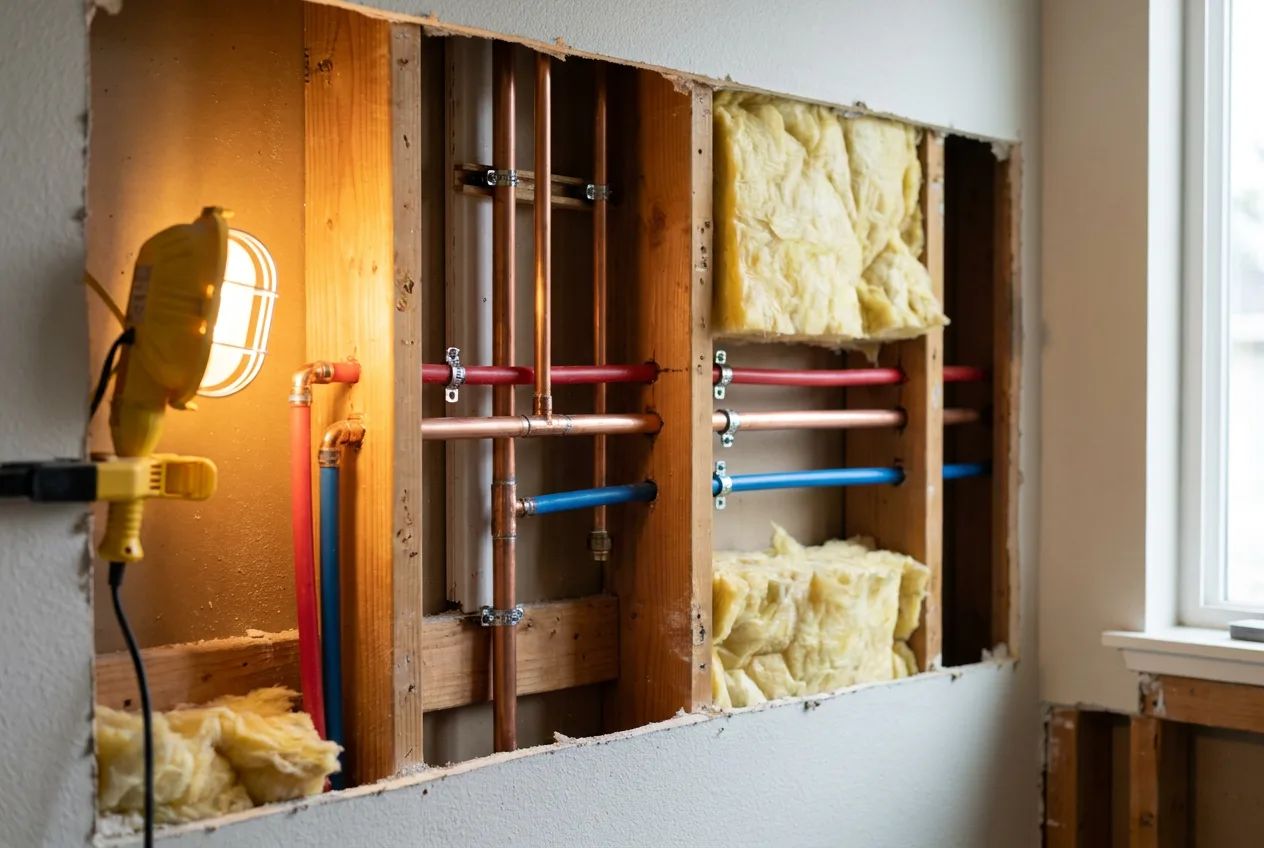
- Identify your pipe material. Check exposed pipes in your basement, crawl space, utility closet, or under sinks. Galvanized steel is gray and magnetic. Copper is reddish-brown. PEX is flexible colored plastic (red for hot, blue for cold). Polybutylene is gray and stamped with “PB.” If you are unsure, your contractor will identify the material during a site visit.
- Get a free in-home estimate. A reputable contractor will inspect your plumbing system, assess your home’s layout, and provide a detailed written quote covering materials, labor, permits, and restoration at no cost.
- Compare at least three quotes. Look beyond the bottom-line number. Compare what is included: Are permits handled? Is restoration included or separate? What warranty is offered? The cheapest quote is not always the best value.
- Schedule before summer demand peaks. Bay Area contractor schedules fill rapidly from May through September. Getting your estimate and permit application started in early spring positions your project for completion before the busiest part of the construction season.
You will walk away from the estimate appointment with a clear budget, a realistic timeline, and a complete understanding of what the project involves. There are no obligations and no pressure, just the information you need to make a confident decision.
Which Situation Sounds Like Yours?
Repiping needs vary based on your property, your timeline, and your goals. Here are common scenarios we see from Bay Area homeowners, along with specific recommendations for each.
”I just bought a house and the inspector flagged the plumbing.”
Who you are: A first-time homebuyer or someone who recently purchased a Bay Area home. The home inspection report mentioned galvanized pipes, low water pressure, or visible corrosion. You may have negotiated a price concession from the seller for plumbing issues.
Your constraint: You have already invested heavily in the purchase, and you want to address the plumbing properly but are watching your budget carefully. You may not know whether a full repipe is necessary or whether targeted repairs will suffice.
What you need to know: If the inspection identified galvanized or polybutylene pipes, a full repipe is almost always the right investment. These materials deteriorate systemically, and patching individual failures only delays the inevitable while costing more over time. If you negotiated a price concession or credit at closing for plumbing issues, apply it directly toward the repipe.
Recommendations:
- Request a detailed site assessment that includes pipe material identification throughout the home, not just the accessible sections.
- Choose PEX for maximum cost savings. A standard 2-3 bedroom repipe in PEX runs $12,000 to $18,000.
- If you are bundling with a post-purchase renovation (kitchen or bathroom update), coordinate the repipe with the remodel to save 20-30% on labor.
”We have lived here 30 years and the water pressure keeps getting worse.”
Who you are: A long-time Bay Area homeowner. Your home was built in the 1950s, 1960s, or 1970s and has the original galvanized or copper pipes. Water pressure has declined gradually, you notice rust-colored water occasionally, and you have repaired a few leaks over the years.
Your constraint: You want to stay in your home and are willing to invest in it, but you want to make sure the money is well spent. You may be hesitant about the disruption, especially if your home is your primary daily workspace.
What you need to know: After 40 to 60 years, galvanized pipes are almost certainly restricting your water flow by 40-70% due to internal corrosion and mineral buildup. The decline is so gradual that many homeowners do not realize how much pressure they have lost until after the repipe, when full pressure is restored. A repipe also eliminates the risk of a catastrophic pipe failure that could cause thousands of dollars in water damage.
Recommendations:
- Schedule a consultation during a week when you can be flexible. The plumber needs to inspect the entire home, including crawl spaces and utility areas.
- Plan for 4-6 working days of construction for a typical 3-bedroom home. Your contractor can work around your schedule, and water is typically restored each evening.
- Consider upgrading your water heater connections at the same time, especially if your water heater is more than 10 years old.
”I am preparing a property for sale and need to address the plumbing.”
Who you are: A homeowner or real estate investor preparing to list a Bay Area property. You know the plumbing is original and aging, and you want to eliminate it as a negotiation point during the sale.
Your constraint: You want to maximize return on investment while minimizing out-of-pocket expense. The property needs to pass inspection without red flags, and you may be working on a tight listing timeline.
What you need to know: In the current Bay Area market, homes with original galvanized or polybutylene pipes regularly receive reduced offers of $10,000 to $25,000 or more from informed buyers. A repiped home with a permit record and warranty documentation eliminates this negotiation entirely and signals to buyers that the property has been well maintained. The repipe typically pays for itself through a higher sale price and a smoother transaction.
Recommendations:
- Start the permit process immediately. Permit timelines stretch during peak season demand.
- Choose PEX for the fastest, most cost-effective installation.
- Request a completion certificate and warranty documentation you can provide to your listing agent for the property disclosures.
- Budget 3-4 weeks from start to finish, including permit and inspection time.
”I manage rental properties and need to protect my investment.”
Who you are: A landlord or property management company responsible for one or more Bay Area rental properties with aging plumbing. You may be dealing with tenant complaints about water quality, low pressure, or leaks.
Your constraint: You need to minimize tenant disruption and vacancy while protecting the long-term value of your investment. You also want to limit liability exposure from water damage or water quality issues.
What you need to know: Aging pipes in rental properties create both operational headaches and legal exposure. California landlord-tenant law requires habitable conditions, which include functioning plumbing and safe water. Repeated leak repairs, water damage claims, and tenant complaints are signals that a repipe is the more economical path forward. Repiping also increases the property’s appraised value and can support higher rental rates.
Recommendations:
- Coordinate the repipe with a natural tenant turnover period to minimize disruption.
- If the property is occupied, communicate the timeline clearly and offer accommodations during the most disruptive days.
- A repipe with PEX and a manifold system gives each unit individual shutoff capability, which simplifies future maintenance.
- Document everything for your property records, including permits, inspection reports, and warranties.
Frequently Asked Questions
How long does it take to repipe a house?
Active construction for a standard Bay Area home takes 3 to 8 working days depending on the size, number of stories, and pipe accessibility. The total timeline from permit application to final inspection is typically 3 to 6 weeks. Single-story homes with crawl space access are the fastest, while multi-story slab-on-grade homes take the longest. Your plumber should provide a detailed schedule before work begins.
Do I need a permit to repipe my house in California?
Yes. California Building Code requires a plumbing permit for any whole-house repiping project. The permit ensures the work is inspected for code compliance and safety. Unpermitted plumbing work can create serious problems during a home sale, as title companies and buyers increasingly verify permit history. Permit costs in the Bay Area range from $250 to $1,200 depending on the city. Total UC handles all permit applications as part of our water line repair and repiping service.
Is PEX pipe safe for drinking water?
Yes. PEX piping is approved for potable water distribution under California Plumbing Code and meets NSF/ANSI Standard 61 for drinking water system components. PEX has been used in residential plumbing since the 1980s in Europe and became widely adopted in the United States in the early 2000s. It does not leach harmful chemicals, does not corrode, and does not develop the mineral buildup that restricts flow in metal pipes. All PEX products used in California must bear the NSF 61 certification mark.
Should I repipe my entire house or just the problem areas?
If your home has galvanized steel, lead, or polybutylene pipes, a full repipe is almost always the better investment. These materials deteriorate systemically, meaning a leak in one area signals that the entire system is near failure. Partial repiping creates joints between old and new materials that can become failure points due to galvanic corrosion (when dissimilar metals contact each other). If your home has copper pipes with isolated pinhole leaks, a partial repipe of the affected section may be sufficient. A water leak detection assessment can help determine the extent of deterioration.
Will repiping increase my home value?
A full repipe typically increases home value by $5,000 to $15,000 in the Bay Area market, depending on the home’s size and the condition of the old plumbing. More importantly, it removes a major objection for buyers and home inspectors. Homes with galvanized or polybutylene pipes often receive lower offers or fail to sell at all in the current market. Real estate agents in the Bay Area consistently report that repiped homes sell faster and face fewer post-inspection renegotiations.