
"They installed a 100 foot pipe, 15 feet down with a 45 degree turn. It was an incredibly huge job. The job was done professionally, fast, efficiently and successfully. Joe and Orlando were professional, helpful and always there to answer my questions."
Licensed & Insured — LIC # 1094194 A – General Engineering
Backflow Preventer Guide
Everything you need to know about backflow preventers — what they are, how they work, the different types available, when they are required, and what annual testing involves.
Licensed & insured — LIC # 1094194 A – General Engineering
Certified backflow testers on staff
RPZ, DCVA, and PVB installation and testing
Bay Area backflow compliance experts
★★★★★ 5.0 on Google
★★★★★ 5.0 on Yelp
Free Estimate
Request a Service
Describe your project and we'll get back to you within 24 hours.
Backflow Preventer: The Complete Guide to Protecting Your Water Supply
Your drinking water should only flow in one direction — from the municipal supply into your home or business. When that flow reverses, contaminated water can enter the clean supply, creating a serious public health hazard. That is exactly what a backflow preventer is designed to stop.
Whether you are a property owner responding to a compliance notice, a contractor specifying equipment for a new build, or someone who just discovered a strange taste in their tap water, this guide covers everything you need to know about backflow preventers — what they are, how they work, the different types available, when they are required, and what annual testing involves.
What Is a Backflow Preventer?
A backflow preventer is a mechanical device installed on a water line to ensure water flows in only one direction. It acts as a one-way gate that blocks contaminated water from reversing course and entering the potable (drinkable) water supply.
Backflow happens when pressure conditions in a plumbing system change. Two scenarios cause it:
- Back-siphonage: A sudden drop in supply pressure — from a water main break, heavy fire hydrant use, or a pump failure — creates a vacuum that pulls water backward through the system.
- Back-pressure: Downstream pressure exceeds supply pressure, forcing water in reverse. This commonly occurs in boiler systems, elevated tanks, and pressurized irrigation lines.
Without a backflow preventer, fertilizers from irrigation systems, chemicals from industrial processes, or sewage from drain lines can contaminate the public water supply. Backflow incidents have caused documented outbreaks of illness across the United States, which is why most municipalities now mandate backflow prevention on commercial, industrial, and many residential properties.
How a Backflow Preventer Works
Every backflow preventer relies on the same core principle: it permits water to flow forward under normal pressure conditions and mechanically closes when it detects reverse flow or a loss of pressure.
The specific mechanism depends on the type of device, but all backflow preventers use some combination of check valves (spring-loaded discs that seat shut under reverse pressure), air gaps (physical separations between the water supply and potential contaminants), and relief valves (ports that dump water rather than allow it to flow backward).
The device is installed at the point of connection between the public water supply and the private plumbing system — often at the water meter, at an irrigation tie-in, or at any cross-connection where potable and non-potable systems meet.
Types of Backflow Preventers
There are three primary types of backflow preventers used in residential, commercial, and municipal applications. The type required for your property depends on the level of hazard and local code requirements.
Reduced Pressure Zone Assembly (RPZ)
The RPZ is the highest level of mechanical backflow protection available. It uses two independently operating check valves with a pressure-monitored relief valve between them. If either check valve fails, the relief valve opens and discharges water to the atmosphere rather than allowing contamination to pass through.
Best for: High-hazard applications including commercial buildings, industrial facilities, fire sprinkler systems connected to potable water, and properties with chemical injection systems. Most Bay Area municipalities require RPZ assemblies for commercial properties.
Key consideration: RPZ valves discharge water when the relief valve activates. They must be installed in a location where drainage is available — never in a pit or enclosed space where flooding could occur.
Double Check Valve Assembly (DCVA)
The double check valve assembly uses two independently operating check valves in series. If one valve fails, the second provides backup protection. Unlike the RPZ, there is no relief valve, so the device does not discharge water.
Best for: Low-to-moderate hazard applications including residential water service lines, fire sprinkler systems (where allowed by code), and underground irrigation systems that do not use chemical injection.
Key consideration: Because there is no relief valve, a DCVA cannot protect against high-hazard cross-connections. Local codes determine whether a DCVA is sufficient for your application.
Pressure Vacuum Breaker (PVB)
The pressure vacuum breaker is the simplest and most affordable backflow preventer. It uses a single check valve and an air-inlet valve that opens when supply pressure drops, breaking the siphon effect. PVBs only protect against back-siphonage — they do not protect against back-pressure.
Best for: Residential irrigation systems, hose bibb connections, and low-hazard applications where back-pressure is not a concern.
Key consideration: PVBs must be installed at least 12 inches above the highest downstream outlet. They cannot be installed below grade or in a pit.
When Do You Need a Backflow Preventer?
Backflow prevention is required by law in most jurisdictions. In California and throughout the Bay Area, the following situations typically require a backflow preventer:
- Commercial properties — Nearly all commercial water connections require an RPZ or DCVA at the meter.
- Irrigation systems — Any dedicated irrigation line connected to potable water requires backflow prevention, especially systems with fertilizer injection.
- Fire sprinkler systems — Fire suppression systems tied to the domestic water supply require backflow protection to prevent stagnant, chemically treated water from entering the potable supply.
- Multi-story buildings — Booster pumps and elevated storage can create back-pressure conditions that demand backflow prevention.
- Properties with auxiliary water sources — Wells, rainwater harvesting systems, or reclaimed water connections that exist alongside a potable supply.
- Medical and dental facilities — Equipment with cross-connections (autoclaves, vacuum systems, dental chairs) requires dedicated backflow protection.
Even if you are not sure whether your property requires a backflow preventer, your local water district can tell you. In the Bay Area, most water districts maintain a list of properties that require backflow prevention and conduct periodic surveys to identify unprotected cross-connections.
Toilet Backflow and Residential Concerns
Toilet backflow is one of the most common residential backflow concerns. When a sewer line backs up — whether from a blockage, root intrusion, or municipal sewer overload — sewage can reverse direction and enter the building through the lowest fixtures, typically toilets, floor drains, and basement sinks.
Toilet backflow is not addressed by a standard backflow preventer on the water supply line. It requires a backwater valve (sometimes called a sewer backflow preventer) installed on the building's sewer lateral. This device allows sewage to flow out but closes automatically if sewage tries to flow back in.
If you are experiencing toilet backflow or sewer backups, this is a plumbing issue that requires a professional assessment of your sewer line and potentially the installation of a backwater valve.
Annual Backflow Testing Requirements
Once a backflow preventer is installed, it must be tested annually by a certified backflow tester. This is not optional — it is a legal requirement in virtually every California jurisdiction.
What happens during a backflow test:
- The tester shuts off the water supply to isolate the device.
- Using a differential pressure gauge kit, the tester checks each component of the assembly — the first check valve, the second check valve, and (on RPZ assemblies) the relief valve.
- Each component must hold within specific pressure tolerances. If any component fails, the device must be repaired and retested before it is returned to service.
- The tester submits the test report to the local water district. Failure to submit passing test results can result in fines or water service disconnection.
Testing typically takes 15 to 30 minutes per device and should be performed by a tester certified through the American Backflow Prevention Association (ABPA) or the American Water Works Association (AWWA).
Most Bay Area water districts send annual reminders when your test is due. If you miss the deadline, the water district can — and often will — shut off your water until a passing test is filed.
Signs Your Backflow Preventer Is Failing
Backflow preventers are mechanical devices with moving parts, seals, and springs. They wear out. Watch for these warning signs:
- Discolored or foul-tasting water — If contaminants are entering your supply, you may notice changes in water color, taste, or odor.
- Reduced water pressure — A stuck or partially closed check valve can restrict flow.
- Water discharging from the relief valve — On RPZ assemblies, continuous discharge from the relief port indicates a check valve failure. Intermittent spitting during pressure fluctuations can be normal, but steady flow is not.
- Failed annual test — If your tester reports that a component is out of tolerance, the device needs repair or replacement.
- Visible corrosion or damage — Physical deterioration of the housing, fittings, or test cocks compromises the device's integrity.
Do not ignore these signs. A failed backflow preventer is not just a code violation — it is a direct threat to your water safety.
Backflow Preventer Installation
Proper installation is critical. A backflow preventer installed incorrectly can fail to protect your water supply, even if the device itself is in perfect working condition. Installation requirements include:
- Correct device selection based on hazard level and local code
- Proper elevation and orientation — PVBs must be above the highest outlet; RPZs need adequate drainage; all devices must be installed in the correct flow direction
- Accessibility for annual testing — The device must be accessible to testers with enough clearance for gauge connections
- Freeze protection where applicable
- Permits and inspection — Most jurisdictions require a plumbing permit for backflow preventer installation, and the water district must approve the installation before putting the device in service
This is not a DIY project. Backflow preventer installation requires a licensed plumbing contractor who understands local codes, cross-connection control requirements, and the specific installation standards for each device type.
Backflow Preventer Cost
Costs vary based on the type of device, the size of the water line, and the complexity of the installation:
- Pressure Vacuum Breaker (PVB): $150 to $400 for the device; $300 to $600 installed
- Double Check Valve Assembly (DCVA): $200 to $600 for the device; $500 to $1,200 installed
- Reduced Pressure Zone Assembly (RPZ): $400 to $1,200 for the device; $800 to $2,500+ installed
Larger pipe sizes (1.5 inches and above) cost significantly more. Commercial installations with vault or enclosure requirements can run $3,000 to $5,000 or higher.
Annual testing typically costs $75 to $200 per device. Repairs, when needed, generally range from $150 to $500 depending on the parts required.
Why Hire a Licensed Contractor for Backflow Work
Backflow prevention sits at the intersection of plumbing, public health, and regulatory compliance. There are good reasons to work with a licensed, experienced contractor:
- Code compliance — A licensed contractor knows what your jurisdiction requires and installs the correct device the first time.
- Proper sizing and placement — An undersized or poorly located device will fail testing or restrict water flow.
- Permit handling — Your contractor pulls the permit, schedules the inspection, and files the paperwork with the water district.
- Warranty and accountability — Licensed contractors stand behind their work. If something fails, you have recourse.
At Total Underground Construction, backflow preventer installation and testing is a core part of what we do. We work on underground utility systems across the Bay Area — water mains, sewer laterals, irrigation lines, and the backflow devices that protect them. Our crews are licensed, insured, and experienced with every type of backflow assembly used in residential, commercial, and municipal applications.
Whether you need a new backflow preventer installed, an existing device tested, or a failed assembly repaired and recertified, Total UC handles it from permit to final inspection.
Customer Reviews
What Our Clients Say
Trusted by homeowners, developers, and municipalities across the Bay Area.
"I failed an inspection required by City of San Mateo's lateral sewer line ordinance. Joe gave me a quote with a few contingencies for what he could not see until excavating, and the contingent items were not necessary, so the quote held. Permits and all phases were perfectly sequenced, and we passed inspection."
"An excellent experience working with Joe on my water service, city side upgrade. He went above and beyond to push the project through, even as the city changed the sequence and timing of several technical and administrative steps. His communication and follow through were exceptional."
"Joe was up front about cost and schedule, and was careful to make sure that the job was truly necessary. His crew was thorough, prompt, and great to interact with. They rolled with some unexpected hiccups on our end."
"We needed a pipe dug out of a concrete driveway in order to clear the sewer line. Joe explained everything and the work was done in one day."
"They came out to assess the situation and proposed a cost effective solution. They drove out that night to get the sewer line into a passable condition so we would not be without water, free of charge. During the project they had four guys working and completed the sewer line replacement in a single day."
"I had a leak under my house and Joe came out within hours. They replaced galvanized pipes within 24 hours, very professional."
"Our old galvanized water lines were badly corroded and needed replacing with copper. They were prompt and knowledgeable, got the work done with minimal inconvenience, and constantly kept us advised what was being done."
FAQ
Frequently Asked Questions
In California and most Bay Area jurisdictions, backflow preventers must be tested annually by a certified tester. Some water districts require testing more frequently for high-hazard installations. Your water district will notify you when your test is due, but it is ultimately the property owner's responsibility to ensure testing is completed on time.
No. Backflow preventer installation requires a plumbing permit in virtually all California jurisdictions, and the work must be performed by a licensed plumbing contractor. Improper installation can result in device failure, code violations, and contamination of the public water supply.
A well-maintained backflow preventer typically lasts 10 to 25 years, depending on the type, water quality, and environmental conditions. Internal components (check valve springs, seals, and diaphragms) wear faster and usually need replacement every 5 to 10 years. Annual testing catches component wear before it causes a failure.
The device must be repaired by a licensed professional and retested until it passes. Your water district sets a deadline for completing repairs — typically 30 days. If you do not submit a passing test report by the deadline, the water district can disconnect your water service.
Many do. If your home has an irrigation system, a fire sprinkler system, a swimming pool with an autofill connection, a well or secondary water source, or solar heating with an antifreeze loop, you likely need backflow prevention. Your local water district can confirm whether your property is on their backflow prevention program.
A check valve is a single component that blocks reverse flow. A backflow preventer is a tested, approved assembly that uses multiple check valves and (in some types) relief valves to provide verified protection against backflow. Simple check valves are not an acceptable substitute for a backflow preventer where code requires one because they cannot be tested and their failure cannot be detected without disassembly.
Our Process
How It Works
Three straightforward steps from first call to finished project.
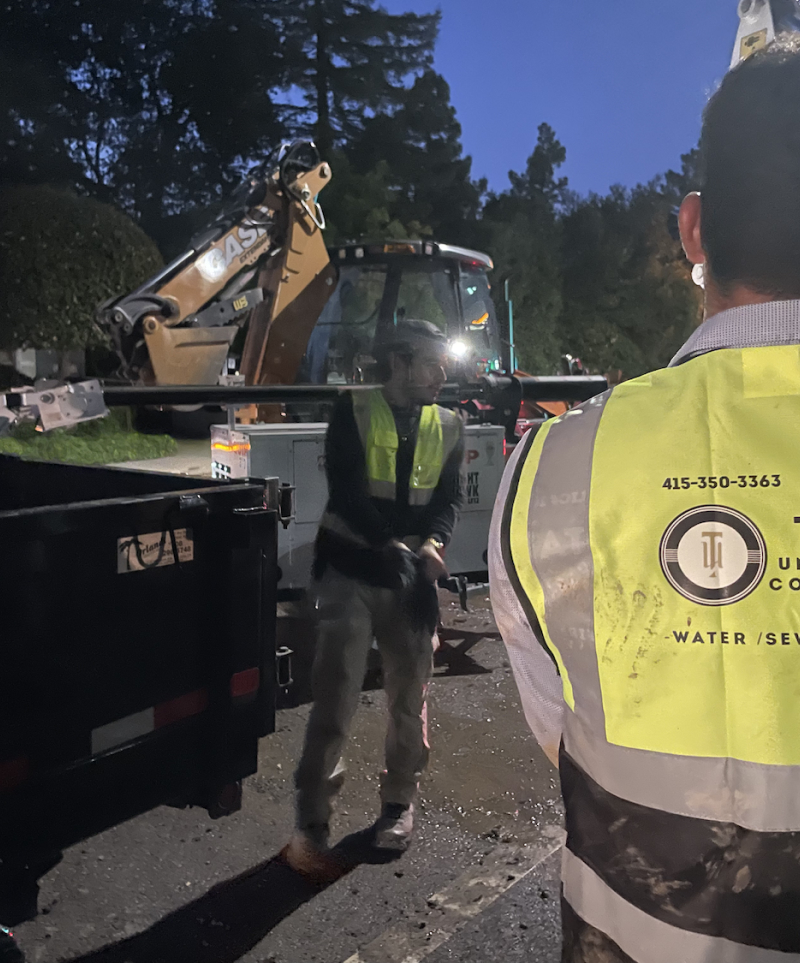
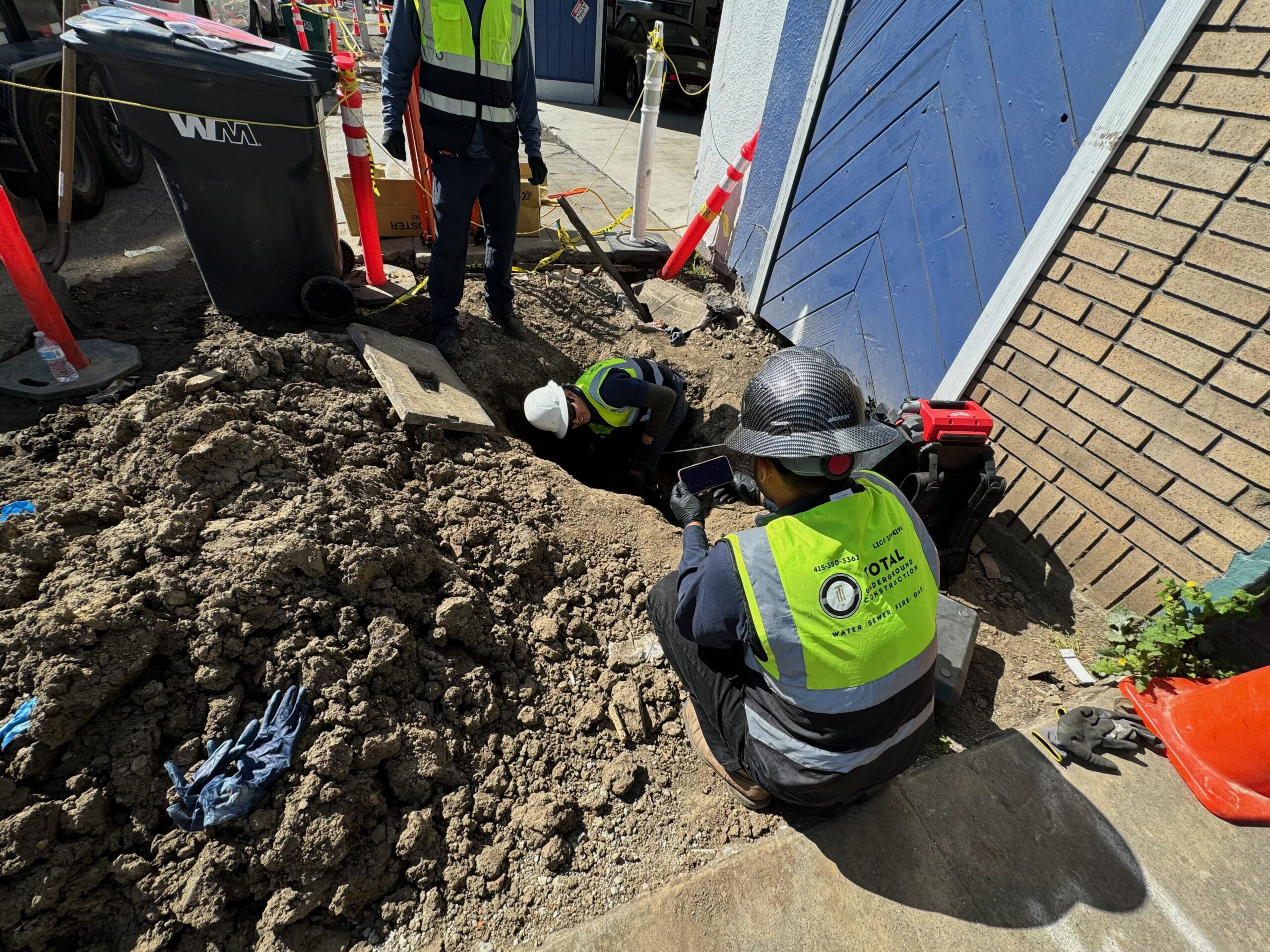
Diagnose & Inspect
We assess the project site, review plans, and use camera inspection or utility locating to understand exactly what's underground before we touch anything.
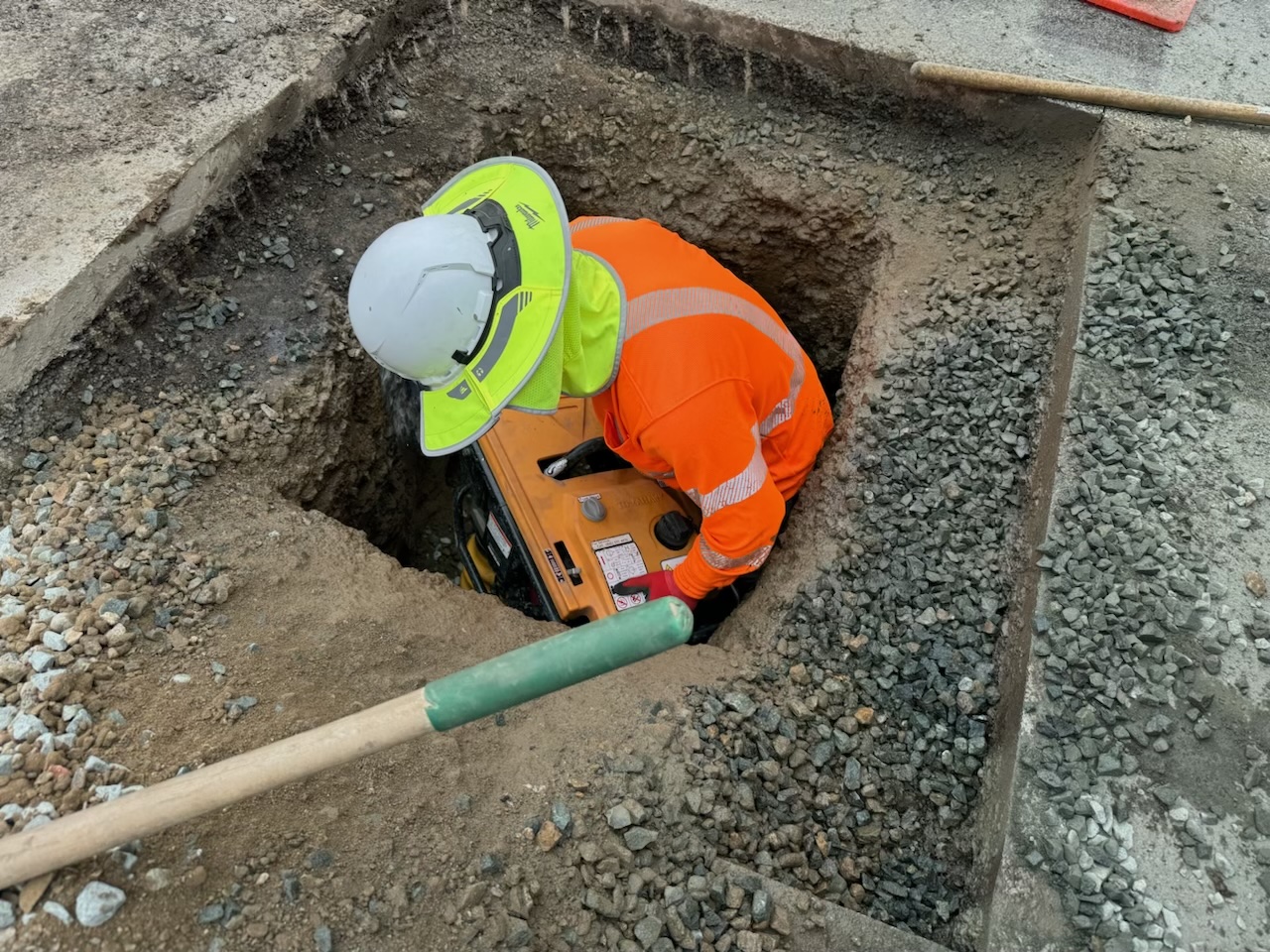
Quote & Plan
You receive a clear, itemized estimate with no surprises. We handle permits, coordinate with utilities, and schedule the crew around your timeline.
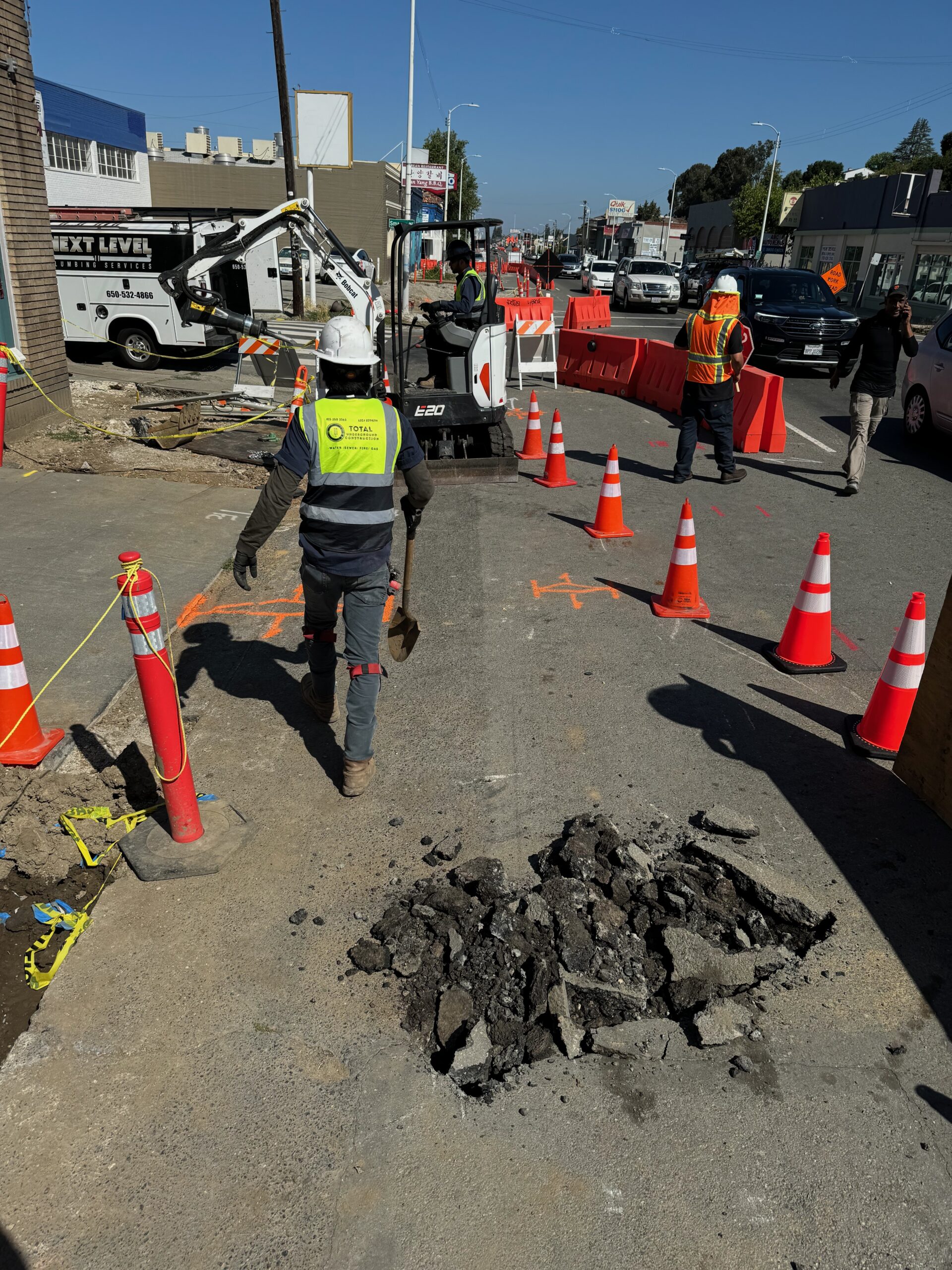
Service & Cleanup
Our self-performing crews complete the work to spec and code. Site is restored and cleaned up — we don't leave until the job looks right.
Coverage
Service Areas
Serving 10+ Bay Area counties from our San Leandro headquarters.
Alameda County
San Leandro · Oakland · Fremont · Hayward · Berkeley + 8 more
Contra Costa County
Walnut Creek · Concord · Richmond · Antioch · Pittsburg + 5 more
San Francisco
San Francisco
San Mateo County
Daly City · San Mateo · Redwood City · South San Francisco · Burlingame + 4 more
Santa Clara County
San Jose · Santa Clara · Sunnyvale · Mountain View · Palo Alto + 5 more
Napa County
Napa · American Canyon · St. Helena · Calistoga
Solano County
Vallejo · Fairfield · Vacaville · Benicia · Suisun City + 1 more
Sonoma County
Santa Rosa · Petaluma · Rohnert Park · Windsor · Healdsburg + 1 more
Get Started Today
Ready to Get Started?
Whether it's an emergency repair or a planned infrastructure project, Total UC is ready to mobilize. Call us now or submit your project details for a free estimate.
LIC # 1094194 A – General Engineering — Licensed, Bonded & Insured
Free Estimate
Request a Service
Describe your project and we'll get back to you within 24 hours.